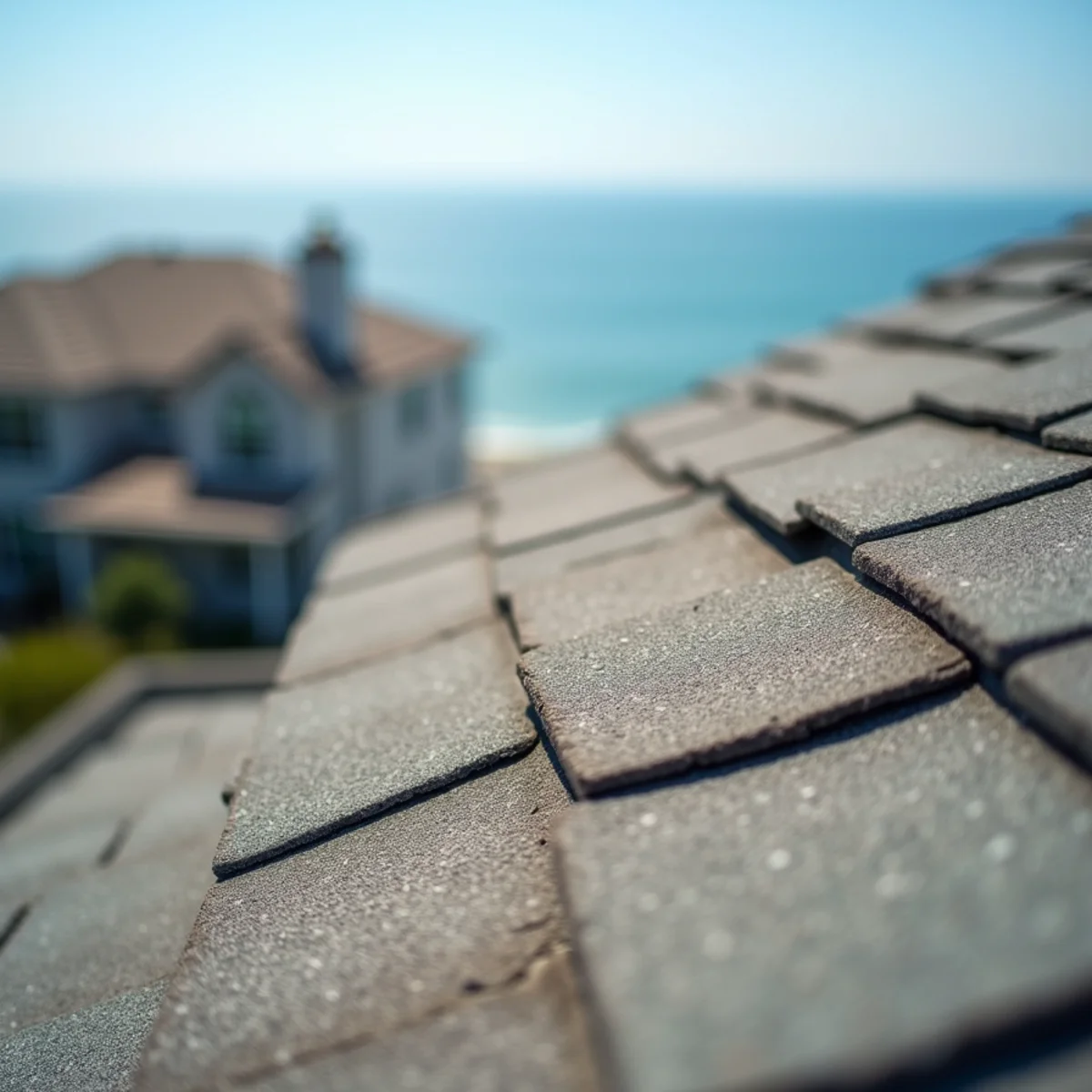
Asphalt shingles are the most popular and affordable roof in the country, so it is natural to want them on a coastal home, and just as natural to wonder whether they can really take the salt and sun near the ocean. The short answer is yes, with the right specification, though there are real trade-offs to understand first. This guide explains where asphalt shingles fit on coastal homes, what to insist on, and what performance to expect the closer you live to the water.
Where shingles fit near the coast
Asphalt shingles earn their popularity honestly. They are the most budget-friendly roofing material, they suit a huge range of home styles, they come in countless colors, and repairs are straightforward. For many Oceanside homes, particularly ranch-style houses and homes set a little back from the immediate shoreline, a well-chosen shingle roof is a sensible, good-looking option.
The concern people raise is durability near salt water, and it is a fair one. Shingles are not the longest-lived roof even inland, and coastal conditions do add stress. But whether they can work and whether they will last as long as tile or metal are two different questions. Shingles can absolutely work on a coastal home; the key is specifying them for the environment rather than grabbing the cheapest bundle and hoping. Done thoughtfully, asphalt shingles on coastal homes are a practical middle path between cost and performance.
It helps that shingles are forgiving to live with. If a section is damaged by a falling branch or a strong gust, matching and replacing a few shingles is quick and comparatively inexpensive, and the repair blends in. That easy serviceability is a quiet advantage on the coast, where the occasional wind event can lift a shingle here or there and you want a fix that does not turn into a major project.
Wind rating and algae resistance
Two shingle features matter more near the coast than anywhere else. The first is wind rating. Wind rating is a manufacturer's measure of how much wind a shingle is built to withstand before it lifts or tears, and the higher the rating, the better the shingle resists the gusty Santa Ana events that periodically rake Oceanside roofs. Wind does not always cause an obvious leak; it can loosen or lift shingles in ways you cannot see from the ground, which is why starting with a high-wind-rated product is worth it.
The second feature is algae resistance. The marine layer keeps roofs damp, especially on shaded, north-facing planes, and that dampness invites the dark streaks of algae and the growth of moss. Algae-resistant shingles are made to slow that growth, keeping the roof cleaner and reducing moisture that would otherwise sit against the surface. We avoid quoting specific wind-speed numbers or life spans as hard facts, since those figures vary by product and belong in the manufacturer's documentation, but the categories to ask for are clear: high wind rating and algae resistance.
Why fasteners and flashing matter most
Here is the part that most price-focused shopping misses entirely. On a coastal shingle roof, the shingles are rarely the first thing to fail; the metal is. Fasteners, the nails holding the shingles down, and flashing, the shaped metal that seals joints around chimneys, walls and vents, are the small parts that salt air corrodes fastest. A shingle roof can look perfectly intact while a corroded nail loses its grip or a rusted flashing joint quietly opens a path for water.
So the single most important coastal upgrade is not a fancier shingle; it is corrosion-resistant fasteners and flashing, paired with a quality underlayment, the water-resistant layer over the wood decking that forms the roof's true waterproof barrier. Standard galvanized nails and ordinary flashing that would last for years inland can give out considerably sooner near the water, and industry guidance on coastal installation consistently points to these hidden metal parts as the weak link. Spend a little extra here and the whole roof lasts longer.
When you specify a coastal shingle roof, this short list covers what actually moves the needle:
- A high-wind-rated shingle suited to gusty conditions
- Algae-resistant shingles for the damp, shaded planes
- Corrosion-resistant fasteners rather than standard galvanized nails
- Corrosion-resistant flashing at every wall, chimney, skylight and vent
- A quality underlayment across the whole deck
Expected performance by exposure
How long a shingle roof lasts near the coast depends heavily on where you are on the salt gradient. As a rule, the closer to the ocean, the shorter the expected life, because salt exposure and marine dampness are most intense at the water and ease as you move inland. A shingle roof a few miles inland in Oceanside faces a gentler environment than one a block from the sand.
We keep those expectations qualitative on purpose. Anyone who promises an exact number of years for a shingle roof at a given address is guessing, because real service life turns on the product, the exposure, the quality of installation and how well the roof is maintained. What is dependable is the direction of it: right at the coast, plan for a somewhat shorter life and lean harder on corrosion-resistant components; further inland, shingles stretch closer to their usual performance. Setting that expectation up front is part of an honest conversation about whether shingles are the right call for your home.
Making shingles last coastally
If you choose asphalt shingles for a coastal home, a few habits get the most out of them. Most are simple, and together they add up to real extra years.
- Book a periodic professional inspection so early corrosion at flashing and fasteners is caught before it leaks; late summer, before the winter rains, is a practical time
- Keep gutters and valleys clear so water drains instead of pooling against metal and shingle edges
- Treat moss and algae on shaded planes before they hold moisture against the roof
- Have lifted or damaged shingles replaced promptly, especially after a strong wind event
- Rinse salt off accessible surfaces where it is practical and safe to do so
None of this is exotic; it is the same proactive attention that helps any coastal roof, applied to a material that rewards it. For a budget-conscious homeowner, that combination, the right shingle, corrosion-resistant hardware and a bit of upkeep, is what turns asphalt shingles from a compromise into a genuinely suitable choice near the ocean. If you are weighing shingles against tile or metal, or planning a replacement, a straightforward on-site evaluation can tell you how your particular exposure should shape the decision, with no pressure to spend more than the situation calls for.
Frequently asked questions
Sources & further reading
- Manufacturer wind-rating documentation
This article is general guidance. Confirm current code, permit, Title 24, insurance and warranty specifics with the relevant authority for your project.