Loading…
Roof Types
Flat & Low-Slope Roofing in Oceanside, CA
Membrane systems for flat sections, decks and modern designs — drainage is everything.
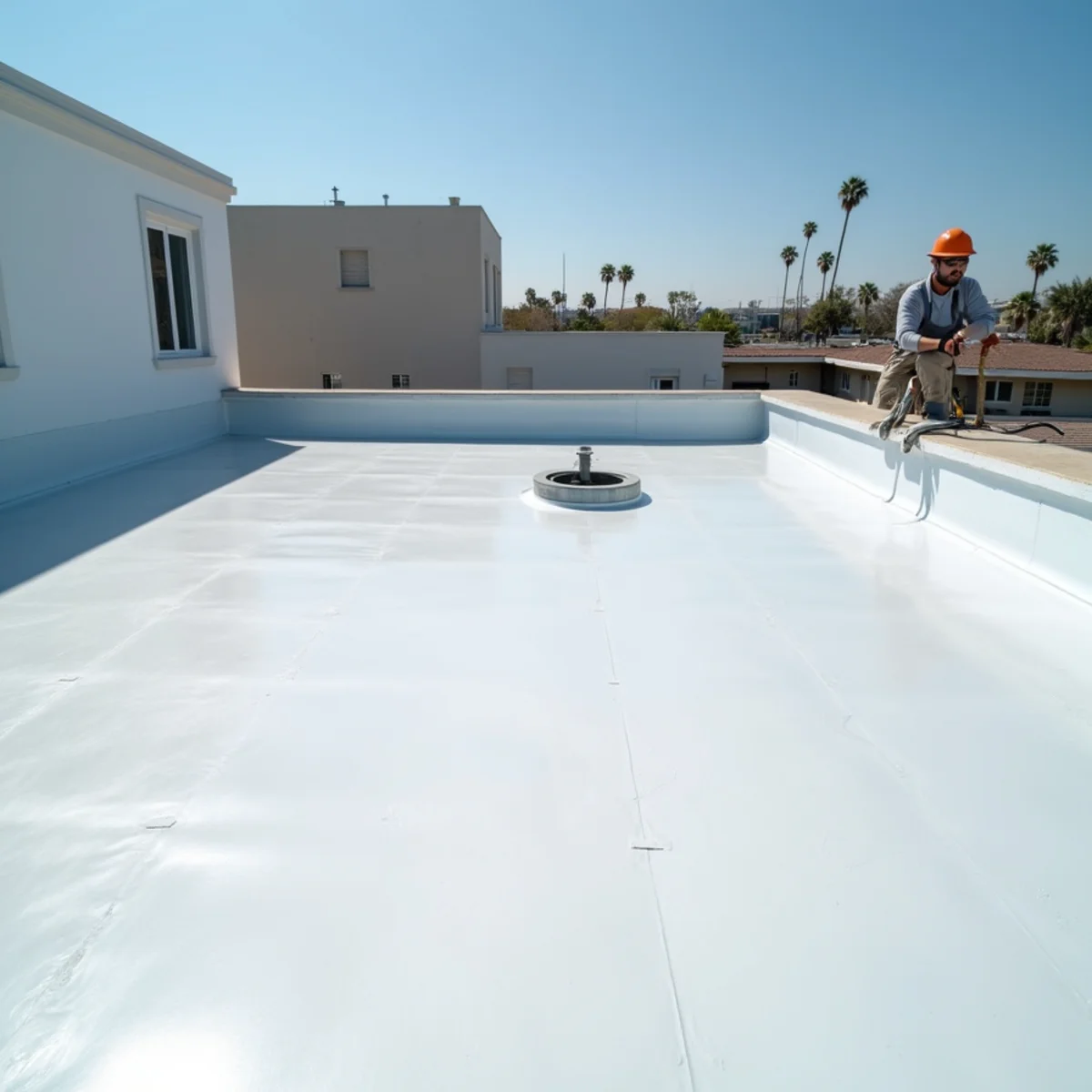
Flat and low-slope roofs — over garages, additions, rooftop decks and modern designs — rely on membrane systems rather than shedding water by steep pitch. Drainage design and seam integrity are the two things that matter most, especially in a damp coastal climate.
Flat Roofing on Oceanside Homes
If you own a building in Oceanside with a garage roof, a room addition, a rooftop deck, a mid-century home, or a commercial storefront, chances are part or all of that roof is flat or low-slope. Choosing a flat roof is less about picking one product off a shelf and more about matching a whole waterproofing system to how your roof drains, how much sun it takes, whether people live or work beneath it, and how salt-laden coastal air will work on it over the years. Get the system and the drainage right, and a flat roof holds up quietly for a long time. Get them wrong, and water finds a way in.
This guide walks through what low-slope roofing actually is, the membrane systems worth considering, why drainage does the heavy lifting, and how Oceanside's coastal conditions shape every one of those decisions. There is no single best flat roof, only the one that fits your building, and the aim here is to help you weigh the trade-offs honestly rather than steer you toward whatever is easiest to sell.
What flat and low-slope roofing really mean
A flat roof is never perfectly flat. What roofers call low-slope simply means the roof is too shallow to shed water the way a steep house roof does. A pitched roof works by speed: gravity pulls rain down the slope and off the eaves before it can work its way in. A low-slope roof has almost none of that advantage, so it cannot lean on pitch to stay dry. Instead it depends on two things — a continuous membrane, which is a single sealed skin of waterproof material rolled or bonded across the entire surface, and deliberate drainage that carries water off the roof rather than letting it sit.
Because the whole surface is doing the waterproofing, a flat roof is only as good as its weakest seam and its lowest corner. Ponding — water that stays put for more than a day or two instead of draining — is the quiet enemy of every low-slope roof. It is heavy, it invites algae and growth, and it works on the membrane and its seams around the clock. Much of what separates a flat roof that lasts from one that fails early comes down to how well it moves water and how carefully its details are sealed.
Choosing a system, not just a material
Most flat-roof decisions come down to which membrane system suits your building, and each has a place where it earns its keep. None is right for every roof. Here is how the common options compare in plain terms, so you can see where each one fits before anyone quotes you a job.
Single-ply membranes
Single-ply means the roof is waterproofed by one manufactured sheet rather than several layers built up on site. The sheets come in wide rolls and are joined into one continuous surface, usually by heat-welding the overlaps so the seams fuse into a bond as strong as the membrane itself. Thermoplastic single-ply membranes are often light in color and reflect a large share of the sun, which suits big, sun-exposed commercial roofs where cooling matters. Synthetic-rubber membranes are a long-proven, flexible alternative that handles temperature swings well. Single-ply keeps the roof relatively light and quick to install; its weak point is the quality of the seam welds and the hand-sealed details around anything that pokes through.
Self-adhered modified bitumen
Modified bitumen is an asphalt-based membrane blended with rubber or plastic modifiers that make it more flexible and durable than plain asphalt. On the coast the self-adhered version is often the sensible pick — sheets with a factory-applied adhesive backing that stick down on their own, with no torch and no kettle of melted asphalt. That flameless install is a genuine advantage over an occupied building or near dry coastal brush, and self-adhered systems tend to bond reliably even when the marine layer keeps the deck damp. Modified bitumen also stands up to foot traffic better than some thinner membranes, which matters on a roof people walk to service equipment.
Built-up and coated systems
Built-up roofing — the classic layered approach, sometimes called tar-and-gravel — bonds several plies into a thick, redundant membrane, and it still performs on the right roof, though it is heavier and more involved to install. Spray-applied foam and liquid-applied coatings sit at the other end: a seamless surface that can be rolled or sprayed over a sound existing roof to renew it, add reflectivity, and buy years before a full replacement. A coating is not a cure for a failing roof, but over a membrane that is still fundamentally sound it is often the most cost-effective next step.
Drainage is the design, not a detail
On a low-slope roof, drainage is not an afterthought — it is the whole design. Water needs a clear path off the roof, and it leaves one of three ways: through roof drains set into the field of the roof, through scuppers, which are openings cut into an edge or parapet wall that let water spill off the side, or through gutters at the eave. Just as important is positive slope — enough fall built into the roof to actually move water toward those outlets. Where the structure is dead flat or has settled, roofers rebuild slope with tapered insulation or with crickets and saddles, the wedge-shaped build-ups that steer water around obstacles and away from low spots.
When any of that falls short you get ponding, and in Oceanside ponding bites harder than it does inland. The marine layer keeps a roof damp for hours after sunrise, so a low spot that would dry quickly in a drier climate can stay wet far longer here. Standing water is heavy, accelerates wear on the membrane and its seams, and eventually finds a flaw to slip through. Clear drains, working scuppers, and real slope toward them are much of the difference between a coastal flat roof that holds up and one that gives out early.
How Oceanside's coast tests a flat roof
A coastal low-slope roof takes stress from every direction, and each one calls for a specific answer rather than a generic membrane laid down the same way it would be inland.
Salt air and corrosion
Salt-laden air corrodes the metal flashing, edge trim, and fasteners that seal a membrane where it turns up against parapets, curbs, and penetrations. Flashing is simply the material that seals the membrane wherever it changes direction, and once it corrodes it stops sealing — the leak that follows rarely announces itself until there is a stain on a ceiling below. Near the water, corrosion-resistant fasteners and flashing hold up far better than standard galvanized components, which give out sooner in salt air.
Marine-layer moisture
The marine layer keeps the surface and the deck beneath it damp long after inland roofs have dried. That persistent moisture is hard on any spot already holding water, and it favors installation methods that bond in damp conditions — one more reason self-adhered and flameless systems often suit occupied coastal buildings. Beneath the membrane, proper underlayment and venting help manage condensation so moisture is not trapped against the deck, where it would quietly do damage out of sight.
Sun, UV, and wind
Over years, ultraviolet light hardens and shrinks some membranes until they pull tight against corners and fasteners, which is part of why reflective surfaces and coatings earn their place on a sun-exposed roof. Coastal wind adds uplift, especially at the edges and parapet walls where a gust can get under the membrane, so how the roof is fastened and terminated at the perimeter matters every bit as much as the field in the middle.
Seams, flashing, and penetrations decide it
If a flat roof leaks, the odds are overwhelming that it started at a seam, a piece of flashing, or a penetration rather than in the open field of the membrane. Seams are where two sheets join; on welded systems the quality of the weld is most of what separates a roof that holds up from one that does not. Penetrations are everything that pokes through the roof — vent pipes, conduit, rooftop units, skylights — and every one of them is sealed by hand. Hand-sealed details age faster than the sheet around them, which is why a flat roof done right is really a flat roof detailed right, corner by corner and pipe by pipe.
Energy, cool roofing, and California Title 24
Reflectivity is worth understanding, because a flat roof is often a large, exposed surface baking in the sun. A reflective, light-colored membrane or coating bounces much of that sunlight back before it becomes heat, which can ease the cooling load and keep the space below more comfortable through Oceanside's warm inland afternoons. How reflective a roof is gets captured in a rating called the Solar Reflectance Index, or SRI — a single number available across materials, not a separate product you buy.
California's Title 24 energy standards require cool-roof performance for many low-slope roofs, using that SRI value as the measuring stick, though whether a given project must comply depends on the roof, the insulation, the type of work, and the climate zone. The standards are also updated on a cycle, so rather than assume a particular version governs your roof, confirm the current edition, its effective date, and how it applies with the authority having jurisdiction — we would encourage any owner to do the same. Reflectivity also works best paired with adequate insulation, which on a flat roof often lives in the tapered layer above the deck.
Rooftop decks and usable space
One of the real advantages of a flat roof is the level, usable space it creates — a rooftop deck, a patio, or simply a flat surface for equipment. That usefulness comes with a caveat: foot traffic and furniture are hard on a membrane, so a roof meant to be walked on needs a system chosen for durability and, often, a protection layer such as pavers or walk pads over the waterproofing. If you are planning to use the roof as living space, that intention should shape the system from the start rather than be bolted on as an afterthought.
Maintenance and the early warning signs
A flat roof rewards attention and punishes neglect. None of this is difficult, but skipping it is how small problems quietly become expensive ones.
- Keep drains, scuppers, and gutters clear so water never has a reason to pond.
- Inspect seams and flashing periodically, since these are the first places a flat roof lets go.
- Watch for blisters, the spots where trapped air or moisture lifts the membrane, along with splits and alligatoring, the cracked, scaly surface that ages an asphalt-based roof.
- Address ponding and any interior stain early, while the fix is still small and cheap.
- Remember that a sound membrane can often be recoated to add years before a full replacement is needed.
Repair, recoat, or replace?
When a flat roof gives trouble, there are usually three paths, and the right one depends on how much life the membrane has left. A localized leak on an otherwise sound roof is a repair — patch the seam or flashing, correct the drainage that caused it, and move on. A roof that is weathered and losing reflectivity but still watertight is often a candidate for a recoat, where a liquid-applied coating renews the surface and buys years without a tear-off. A membrane that is brittle, widely split, or holding water it will not shed has usually reached replacement.
Replacement itself comes in two forms. An overlay installs a new system over the old one where the deck and existing roof allow it, which saves the cost and disruption of removal. A tear-off strips the roof to the deck, which lets us inspect and correct what is underneath — often the honest choice on a coastal roof where trapped moisture or a compromised deck would undermine anything laid over it. The point is to match the work to what the roof actually needs, not to default to the biggest job.
How to decide, and what to ask
There is no universal best flat-roof system. The right one depends on your building, its drainage, how much sun the roof takes, whether the space below is occupied, and whether you plan to use the roof as living space. A few questions cut straight to what matters: How is water draining off this roof today, and where does it pond? Is the building occupied during the work, which would favor a flameless, low-odor method? Does the roof take enough sun that a reflective surface would earn its keep? Will people walk on it? And can the system be recoated later to stretch its service life?
We will walk you through the answers for your specific roof, weigh the trade-offs in plain language, and be straight about where one system fits and where another would serve you better — no surprises, just the system that suits your building and the coast it sits on.
Advantages
- Enables flat and usable roof areas
- Modern, clean appearance
- Repairable and often recoatable
Limitations to weigh
- Ponding water if drainage is poor
- Seam and flashing detailing is critical
- Shorter service life than tile or metal
Coastal considerations
- Self-adhered modified bitumen performs well in persistent marine dampness and avoids open-flame installation.
- Correct drainage is essential; standing water is harder on coastal roofs exposed to constant moisture.
Maintenance
- Keep drains and scuppers clear
- Inspect seams and flashing
- Address ponding and blisters early
Common repairs
- Seam and membrane repair
- Flashing repair at parapets and penetrations
- Drainage correction
- Recoating a sound roof
Energy considerations
Reflective membranes and coatings (for example, white TPO) reduce heat gain on sun-exposed roofs.
Questions to ask before choosing this material
- Which membrane system suits my roof and climate?
- How will drainage be handled to avoid ponding?
- Is a self-adhered system appropriate for an occupied building?
- Can this roof be recoated later to extend its life?
Frequently asked questions
In practice they mean nearly the same thing. Flat is the everyday word; low-slope is the accurate one, because a roof that looks flat still carries a slight, deliberate pitch to move water toward a drain. Both rely on a continuous waterproof membrane rather than shedding water by steep pitch the way a sloped roof does.
Ponding is water that sits on the roof for more than a day or two instead of draining, and it usually points to a drainage or slope problem — a blocked drain, a missing scupper, or a low spot the roof has settled into. It is worth addressing, since standing water is heavy and works on the membrane and seams over time. We look at both the leak and the drainage cause so water sheds properly.
It depends on the building. Self-adhered modified bitumen suits damp, occupied buildings and installs without an open flame; reflective single-ply membranes suit large, sun-exposed commercial roofs. What matters most on the coast is drainage, careful seam and flashing detailing, and corrosion-resistant components — more than the label on the membrane.
It varies with the system, the quality of installation, drainage, and exposure. A membrane roof generally gives a solid stretch of service, though typically less than tile or metal, and a coastal roof at the wetter, sunnier end benefits from attentive maintenance. A sound membrane can often be recoated to add more years before replacement. We give realistic expectations for your specific roof rather than a one-size number.
Often it can be repaired. A localized leak on an otherwise sound roof is a repair; a weathered but still-watertight roof may be a candidate for a recoat that renews the surface; only a brittle, widely failing membrane usually needs full replacement. We recommend the smallest step that actually solves the problem.
They can be, with the right choices. The coast is hard on flashing and fasteners through salt-air corrosion and keeps roofs damp through the marine layer, so corrosion-resistant components, sound drainage, and an installation method suited to damp conditions matter. Chosen and detailed well, a flat roof performs on the coast; neglected, it fails faster here than inland.
Many low-slope roofs fall under Title 24 cool-roof requirements, which use an SRI reflectance value as the measuring stick, but whether yours must comply depends on the roof, insulation, type of work, and climate zone, and the standards are updated on a cycle. We confirm the current edition and how it applies with the authority having jurisdiction rather than assuming.
Yes, a flat roof can support a rooftop deck or patio, and that usable space is one of its advantages. Because foot traffic and furniture are hard on a membrane, a roof meant to be walked on should be built for it from the start — a durable system plus a protection layer such as pavers or walk pads over the waterproofing.
Flat-roof systems often sit in a moderate range relative to the material landscape, and installation can be faster than steep-slope work. But the real long-term cost driver is drainage and detailing — a poorly drained flat roof that ponds and leaks can cost far more in repairs than any upfront savings. We weigh the whole picture, not just the install.
Related services
Next step
Considering Flat Roofing?
Let's talk through whether it's the right fit for your Oceanside property.