Loading…
Roof Types
Metal Roofing in Oceanside, CA
A long-lasting, low-maintenance coastal performer when the right alloy is used.
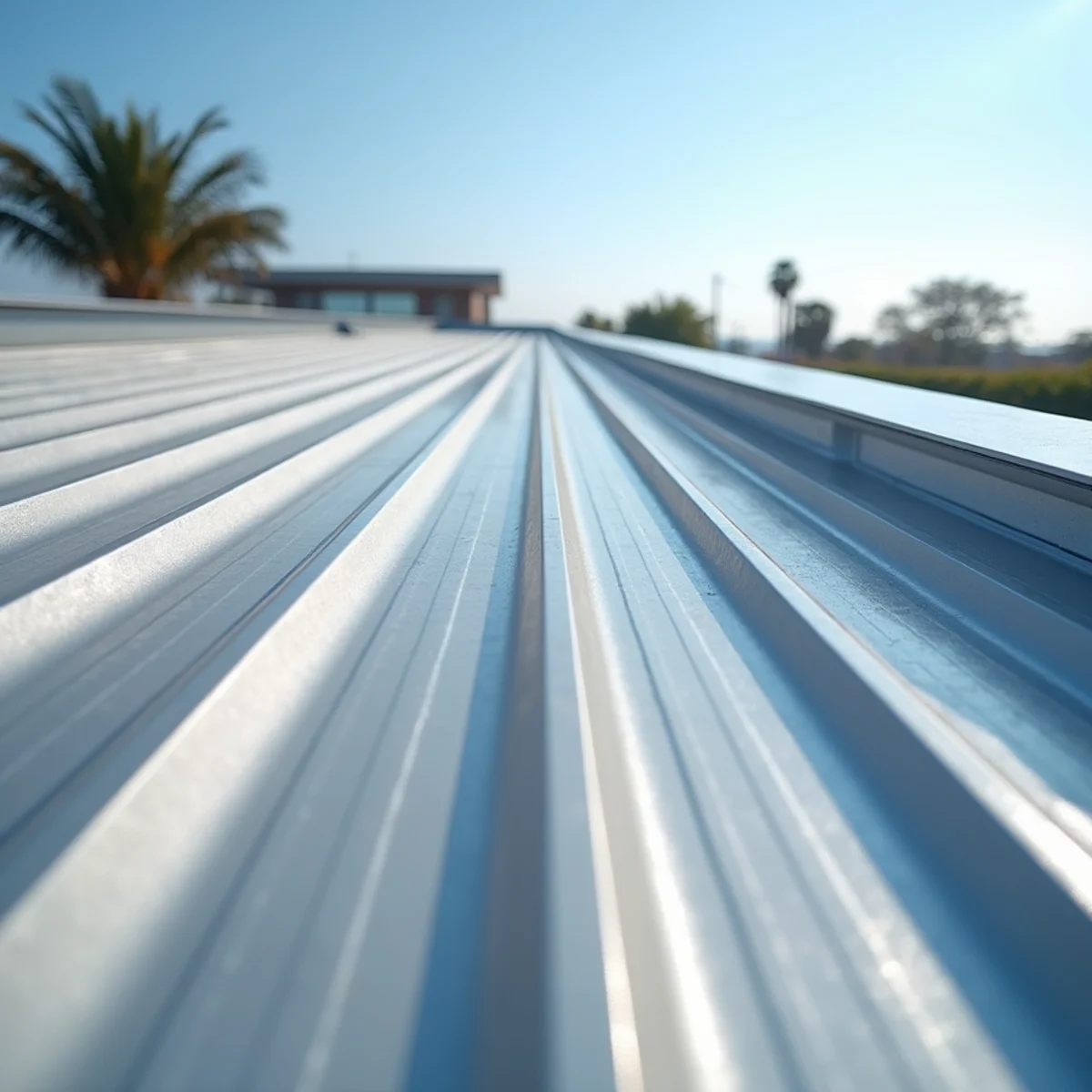
Standing-seam metal roofing is increasingly popular in Oceanside because it stands up so well to salt, sun and wind, with a long service life and low maintenance. The important detail near the ocean is alloy selection: corrosion-resistant steel or aluminum, and avoiding materials that react poorly to direct salt spray.
Metal Roofing on Oceanside Homes
A standing-seam metal roof draws more interest along the Oceanside coast every year, and the reason is straightforward: specified correctly, it stands up to the three forces that wear other roofs down here — salt, sun and wind — while asking little of you in return. The catch lives in those two words, specified correctly. Metal is the one roofing material where the decisions made before a single panel goes up matter more than the material category itself. The wrong metal in a salt-spray zone can corrode within a few seasons, while the right metal on the house next door holds its finish for decades.
So what follows is less a pitch than a walk-through. We will cover what a standing-seam roof is and how it sheds water, which metals belong near the ocean and which do not, how your distance from the surf changes the answer, and the quiet details beneath the panels — underlayment, condensation control, fasteners and flashing — that decide whether a coastal metal roof holds up. Metal suits some Oceanside homes beautifully and is a poor fit for others, and we will be straight with you about both.
What a standing-seam metal roof actually is
"Standing seam" describes how the roof goes together. Long metal panels run in one piece from the ridge at the top down to the eave at the edge, and where two panels meet, their edges fold up into a raised, interlocking seam that stands above the flat of the panel. That raised seam does two things at once: it locks the panels together, and it lifts the watertight joint up and away from where the water actually flows. Rain runs down the flat channels between the seams and off the eave, never sitting against the joint.
The other defining feature is concealed fasteners. On a standing-seam system the clips and screws that hold the panels down are tucked under the seam rather than driven through the exposed face of the roof. Fewer holes through the surface means fewer places for wind-driven rain and salt to find a way in — which is exactly why this profile has become the coastal default. It is a clean, modern look and a genuinely effective way to move water off a roof in a wet, windy, salt-laden environment.
Standing seam versus other metal profiles
Metal roofing is not one thing. Exposed-fastener panels — the corrugated or ribbed sheets you see on barns and outbuildings — are the most affordable metal option, but the screws pass through the face of the panel with a rubber washer at each one. Every washer is a small gasket that ages, and near salt spray those many penetrations become many things to watch. Metal shingles and stone-coated steel tiles are a different branch: pressed panels that mimic shake, slate or barrel tile, useful when a home's style or an association calls for a traditional look in a lighter, metal form.
For most coastal Oceanside homes where longevity and weather-tightness are the goal, standing seam earns its place by keeping the fasteners out of the weather. But the right profile still depends on your budget, your home's look and how exposed the roof is — a low-visibility section may not need the same system as a beachfront main house.
Choosing the right metal for salt air
Here is the decision that outranks all the others on the coast. An alloy is simply the specific metal makeup of the panel — what it is made of and what protects it — and near salt spray it is the single most important choice you will make. Two panels can look identical on the sample rack and behave completely differently three years into life a block from the beach. The question is never just metal or not, but which metal, and it turns almost entirely on how that metal defends itself against corrosion.
Aluminum: the self-protecting choice near the surf
Aluminum has a quiet advantage that makes it the strongest performer in direct salt spray: it protects itself. When aluminum meets air it forms a thin, tight oxide layer on its own surface, and that layer shields the metal beneath from salt and moisture — and if it gets scratched, it re-forms. Aluminum does not lean on a separate coating to fend off corrosion the way steel does, which is why, right at the water, it is usually the metal we steer coastal homeowners toward. It is typically finished in color for looks and extra protection, but its corrosion resistance is built into the metal itself, not painted on.
Coated steel: value with a distance caveat
Steel is stronger and stiffer than aluminum and generally costs less, but bare steel rusts, so roofing steel is protected by a metallic coating — most often an aluminum-zinc alloy coating. That coating performs well and is a sound, economical choice a comfortable distance back from the ocean. The honest caveat is what happens at cut edges and under long exposure very close to the surf: the zinc in the coating slowly sacrifices itself to protect the steel, and in a constant salt-spray environment it gives out sooner than it would inland. Coated steel is often the better value for inland Oceanside neighborhoods; the closer you get to the water, the more aluminum's built-in defense justifies its higher cost.
Copper, zinc and the risk of mixing metals
Copper and architectural zinc are premium metals with long track records, but copper in a direct salt-spray zone develops a green patina that some owners prize and others dislike, so it is a look-first decision rather than a default near the beach. More important for any metal roof is a hazard called galvanic corrosion: when two dissimilar metals touch in the presence of salty moisture, one of them corrodes faster than it would alone. That is why the fasteners, flashing and even the gutters have to be compatible with the panel — mismatched metals, or ordinary galvanized hardware where stainless is called for, can quietly eat a roof from its details inward. Coastal building guidance generally points to corrosion-resistant fasteners, often stainless steel, near the shoreline for exactly this reason.
Where your home sits on the coast-to-inland gradient
Oceanside is not one climate but a gradient. A home taking direct salt spray off the water lives in a harsher environment than one a mile or two back, which in turn sees more salt than an inland neighborhood where heat, not corrosion, is the main concern. The right metal specification slides along that gradient. On or very near the beachfront, aluminum with a high-performance factory finish and stainless fasteners is the conservative, long-view choice. A mile or two inland, coated steel becomes a reasonable and more economical option. Further inland still, the metal question relaxes and the conversation shifts toward heat and reflectivity.
This is why there is no single coastal metal roof answer, and why we start by asking where your property sits and how exposed it is. A roof that is perfect three miles inland can be an expensive mistake a hundred feet from the sand, and matching the specification to your actual exposure is the difference between a roof you install once and one you fight with.
Coastal wind and how the roof is detailed
Oceanside gets both steady onshore wind and the occasional strong gust, and wind is where metal quietly excels — provided the seams are done right. On many standing-seam systems the seams can be mechanically folded closed with a seaming tool rather than just snapped together by hand, which locks the panels into a continuous, wind-tight assembly with strong resistance to uplift, the force that tries to peel a roof off in a gale. For an exposed coastal roof that mechanical seam is worth asking about; it is a large part of why metal is favored where wind drives rain sideways.
Thermal movement, flashing and oil-canning
Metal moves. Panels expand in the afternoon heat and contract on cool marine nights, and a roof that fights that movement instead of allowing it will loosen fasteners and telegraph stress over time. Good detailing lets the panels slide — the clips, the way the seams are formed, and the flashing (the metal that seals where the roof meets walls, penetrations, valleys and edges) all have to accommodate that daily give and take. This is where craftsmanship shows, and where a cheap installation shows its age first.
One cosmetic note worth setting expectations on: broad, flat metal panels can show a faint waviness in raking light, a characteristic called oil-canning. It is a visual trait of flat metal, not a defect or a leak, and panel choice — narrower pans, striations or a textured profile — along with careful handling keeps it to a minimum.
Condensation and what goes under the panels
There is a form of moisture on a metal roof that has nothing to do with rain, and on the coast it deserves real attention. Metal changes temperature fast, and on a cool, damp Oceanside night the underside of the panels can drop below the dew point — the temperature at which moisture in the air condenses — the same way a cold glass sweats on a warm day. Left unmanaged, that condensation drips onto the roof deck and can quietly rot the wood, doing the damage a leak would without a drop of rain getting through the panel.
The answer is the layer you never see: a proper underlayment, the water-resistant membrane rolled over the wood decking before the metal goes on, paired with sensible ventilation. On many good coastal assemblies the panels sit on battens or a vented layer so air can move beneath the metal and dry any moisture that forms. Skipping this is one of the few ways a well-made metal roof can still disappoint, which is why we treat underlayment and ventilation as part of the roof, not an afterthought.
Energy, reflectivity and Title 24
Metal handles heat well, and it can be made to handle it very well. A reflective or "cool" metal finish bounces more of the sun's energy off the roof instead of letting it soak into the attic, a property measured by a value called the Solar Reflectance Index, or SRI — the higher the number, the cooler the roof runs. Paired with a vented assembly that lets air carry heat away beneath the panels, a reflective metal roof can ease cooling loads, which matters more in the warmer inland Oceanside neighborhoods than right on the fog-cooled coast. If your project falls under California's Title 24 energy standards, a cool-roof performance level may come into play; the rules have exceptions for certain slopes and insulation levels, so confirm the current edition and how it applies to your roof with the local authority before you plan around it.
Maintenance and repairs on the coast
A coastal metal roof is low-maintenance, not no-maintenance, and the upkeep it asks for is light. The most useful habit near the ocean is simply rinsing the roof — especially the shaded, low-flow areas where salt can accumulate. A good rain does much of this, but the spots the rain misses benefit from an occasional wash. Beyond that, keep debris out of the valleys and gutters so water and salt do not pond and sit against the metal, and have the seams, fasteners and flashing looked over periodically so small things are caught while they are still small.
When a metal roof does need a repair, it is usually specific rather than wholesale: renewing sealant at a detail, tightening or replacing a fastener, addressing flashing, or swapping a panel that took an impact from a falling branch. The factory finish can be touched up where it is scratched so bare metal is not left exposed to the salt air. Handled this way, a coastal metal roof tends to be quiet for long stretches between small, targeted bits of attention.
Cost, longevity and long-term value
Metal asks for a higher upfront investment than asphalt shingles — it sits in the upper category alongside tile — and near the coast the corrosion-resistant alloys and fasteners add to that. What you buy for it is service life: a well-specified metal roof can last a very long time, comfortably outliving several shingle roofs, which changes the math when you look past the first invoice to the cost of the roof across the years you will own the home. It is also light relative to tile, so it rarely raises the structural questions a tile conversion does.
Two modern points are worth knowing. First, standing-seam panels are unusually solar-friendly: special clamps grip the raised seams so solar panels can be mounted without drilling a single hole through the roof, which keeps the weather-tight surface intact — a real advantage on the coast. Second, whether a metal roof can go over an existing roof or needs a full tear-off depends on your structure and local code; near the ocean there is often good reason to tear off and inspect the decking first, and any of this should be confirmed with the local authority and, where required, a permit.
Metal, tile or shingle: choosing for the coast
No material is the right answer for every coastal home, and metal is no exception. Against asphalt shingles, metal costs more upfront but lasts far longer and handles wind and fire better, while shingles remain the friendlier budget choice and the easier, cheaper repair. Against tile — clay or concrete — metal is much lighter and sidesteps tile's structural weight questions, but tile offers a traditional Spanish or Mediterranean look that suits many Oceanside streets where metal would feel out of place.
A useful way to frame it: metal tends to fit coastal-contemporary and modern homes, beachfront properties, and owners who want the longest low-maintenance service life and plan to stay. Tile fits traditional architecture and buyers who want lasting character over a membrane they will renew periodically. Shingles fit budget-conscious replacements and inland homes where salt is lighter. The right roof is the one matched to your home's style, your exposure and how long you plan to own it — not a single winner for the whole coast.
Is a metal roof right for your Oceanside home?
If your home is contemporary or coastal-modern, sits close to the water, or you simply want a long-serving roof you rarely have to think about, metal is well worth putting on the table. If your home's architecture calls for tile, your budget is tight, or the roof is a low-visibility section where a simpler material would do, it may not be the right spend. A handful of questions will tell you most of what you need to know before you commit:
- Given my exact distance from the ocean, which metal — aluminum or coated steel — are you recommending, and why?
- Are the fasteners, flashing and gutters corrosion-resistant and compatible with the panel to avoid galvanic corrosion?
- What underlayment and ventilation go under the panels to manage coastal condensation?
- Will the seams be mechanically seamed for wind, and how are valleys, penetrations and edges detailed for thermal movement?
- Is a reflective or cool-roof finish appropriate for my home, and if Title 24 applies, can you confirm the current requirement with the local authority?
- Is this a tear-off or an overlay, and does the work require a permit?
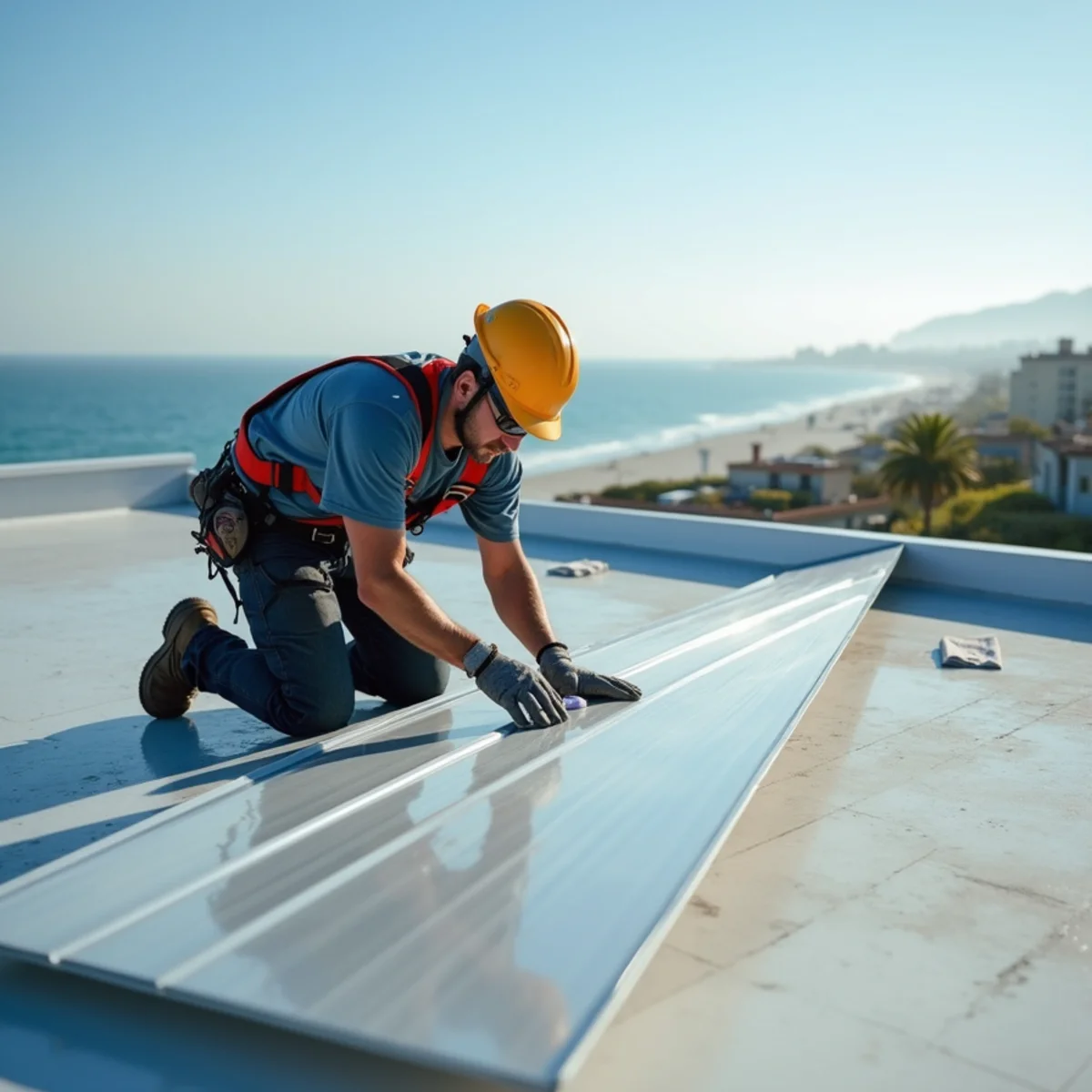
Advantages
- Excellent coastal durability with the right alloy
- Long service life, low maintenance
- Fire-resistant
- Sheds water and resists wind well
Limitations to weigh
- Higher upfront cost than shingles
- Alloy choice is critical near salt spray
- Requires proper underlayment to manage condensation
Coastal considerations
- Use corrosion-resistant coated steel (an aluminum-zinc-coated steel) or aluminum; avoid copper in direct salt-spray zones where it may develop a patina some owners dislike.
- Proper underlayment is still essential to prevent condensation beneath the panels.
Maintenance
- Periodic inspection of seams and fasteners
- Keep debris off valleys
- Touch up finish where damaged
Common repairs
- Sealant and fastener attention
- Panel or flashing repair after impact
- Addressing condensation from underlayment issues
Energy considerations
Reflective and ENERGY STAR-rated metal options can reduce heat gain and support Title 24 goals.
Questions to ask before choosing this material
- Which alloy and finish are you recommending for my distance from the ocean?
- How will you manage condensation with underlayment?
- How do panels detail around penetrations and valleys?
- Is a reflective/cool option appropriate for my project?
Frequently asked questions
It depends on how close you are to the surf. For homes taking direct salt spray, aluminum is usually the strongest choice because it forms its own protective oxide layer and does not rely on a coating to resist corrosion. A mile or two back from the water, aluminum-zinc coated steel becomes a sound, more economical option. Whichever metal you choose, the fasteners and flashing near the shoreline should be corrosion-resistant, often stainless steel.
Not all metals behave the same. Aluminum resists salt corrosion on its own and is well suited to beachfront exposure. Coated steel is protected by an aluminum-zinc coating that performs well inland, but very close to constant salt spray that coating wears at cut edges sooner than it would further from the water. Just as important, the fasteners, flashing and gutters must be corrosion-resistant and compatible with the panel so the roof does not corrode at its details.
Much less than people expect. The loud-metal-roof image comes from bare panels over open framing, like a barn. A residential standing-seam roof is installed over solid decking with underlayment beneath it, and that assembly muffles rain so it sounds comparable to other roof types from inside the home.
No. A metal roof does not make a lightning strike more likely. Metal is also non-combustible, so if lightning did strike nearby, a metal roof is less likely to ignite than some other materials — a point in its favor rather than a concern.
Sometimes, depending on your roof structure and local code, and a lighter metal roof can make an overlay feasible where a heavier material would not. Near the coast, though, there is often good reason to tear off first so the wood decking can be inspected and the underlayment and ventilation done correctly. Whether an overlay is allowed and whether a permit is required should be confirmed with the local authority.
For coastal homes, standing seam is usually the stronger choice because its fasteners are concealed under the raised seams, leaving far fewer holes through the surface for wind-driven rain and salt to reach. Exposed-fastener panels cost less but rely on a rubber washer at each screw, and near salt spray those many gasketed penetrations are more to maintain over time.
Standing-seam metal can work on lower slopes than many people assume, provided the right seam type and detailing are used — low-slope simply means a roof with only a gentle pitch. A truly flat roof, however, is better served by a membrane system designed to hold water back rather than shed it. We match the system to your actual slope.
Metal costs more upfront than asphalt shingles and generally sits in the upper investment category alongside tile. The value shows over the long run, because a well-specified metal roof can last a very long time and needs little upkeep, which changes the picture when you look at the cost across the years you own the home rather than the first invoice alone.
Yes, and it is one of metal's modern advantages. Special clamps grip the raised seams, so solar panels can be mounted without drilling holes through the roof. Keeping the weather-tight surface unpunctured is especially valuable on the coast, where every penetration is a place salt and moisture could otherwise work in.
Related services
Next step
Considering Metal Roofing?
Let's talk through whether it's the right fit for your Oceanside property.