Loading…
Roofing Services · Residential
Residential Roofing in Oceanside, CA
Repair, replacement, installation and maintenance for Oceanside homes.
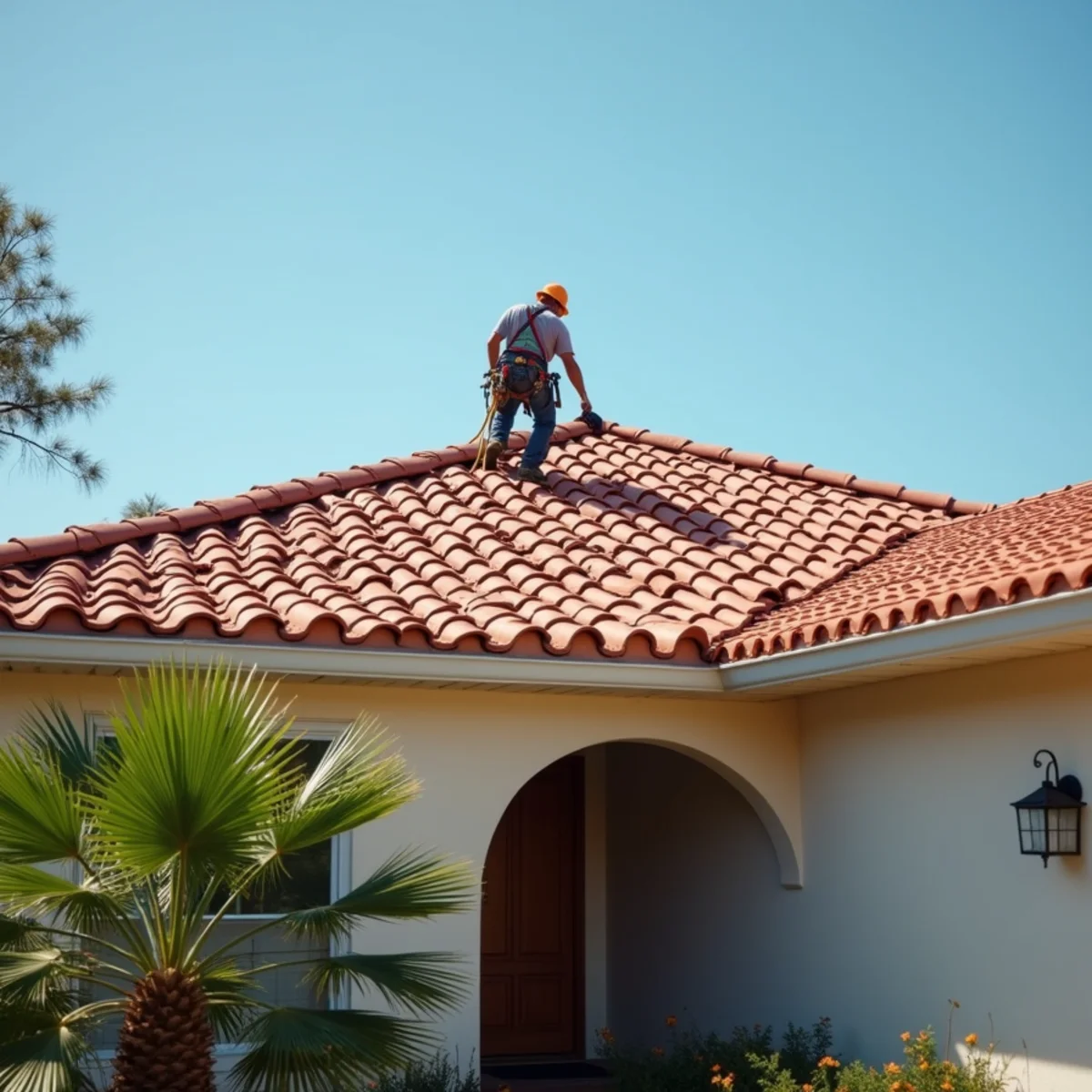
Your home is likely your largest investment, and the roof is its first defense against Oceanside's salt, sun and marine moisture. We handle the full range of residential roofing — from a single repair to a full replacement — with straightforward recommendations for your home's style and coastal exposure.
Understanding residential roofing in Oceanside
Residential roofing covers everything it takes to keep a home's roof doing its job over the long run — a targeted repair, a full replacement, a fresh installation on a new build or addition, and the steady inspection and maintenance that keep small problems from becoming ruined ceilings. In Oceanside, that work carries an extra layer, because a roof that would shrug off weather a hundred miles inland lives here in salt air, marine-layer damp, hard coastal sun and the occasional Santa Ana wind. This page walks through how a home's roof actually works, how the coast wears on it, the materials and methods that hold up, and how to think clearly about repairing, replacing or maintaining the roof over your head — so you can plan calmly rather than react to a leak.
What residential roofing actually covers
It helps to see residential roofing not as a single service you call about once, but as a continuum you tend to over the years. The same crew that traces a stubborn leak also plans a full replacement, ties a new roof onto an addition, and keeps a sound roof sound with routine care. Treating those as one ongoing relationship rather than separate emergencies is the most useful shift a homeowner can make, because a roof rewards steady attention far more than it rewards waiting for a crisis.
- Roof repair — fixing a specific leak, a cracked run of tile or a failed section of flashing without disturbing the parts still doing their job.
- Roof replacement — stripping the covering down to the decking and rebuilding the system when a roof has reached the end of its service life.
- New installation — roofing a new build, second story or addition with coastal durability designed in from the first nail.
- Inspection and maintenance — documented check-ups, gutter clearing and small corrections that head off the big repairs.
- The roof's edges and openings — flashing, gutters, fascia and soffit, skylights and ventilation, which tend to fail sooner than the open field of the roof.
Your roof is a system, not just a surface
The shingles, tile or metal you see from the street shed most of the rain, but they are only the visible layer of a system, and the pieces beneath them are the ones that truly keep water out. Underlayment is the water-resistant membrane laid over the decking; it is the real waterproof barrier when wind drives rain past the surface. Decking is the wood sheeting the whole roof is nailed to, usually plywood or oriented strand board. Flashing is the metal that seals the joints the flat materials cannot close — around chimneys, walls, valleys, skylights and vents — and it is one of the most common places leaks begin. Ventilation, meaning balanced intake low on the roof and exhaust high, lets heat and moisture escape the attic so the layers above last longer. Gutters and drainage carry the water off and away. When one part struggles, the others feel it, which is why good roofing looks at the whole system and not just the shingle that caught your eye.
How Oceanside's coast wears on a roof
Everything the ocean sends inland reaches the roof first, and four forces do most of the aging near the water:
- Salt air. Airborne salt settles on nails, flashing and fasteners and speeds their corrosion, so hardware that would last decades a few miles inland can loosen or perforate years sooner within sight of the water. A corroded fastener stops gripping and corroded flashing stops sealing — often quietly, until it rains.
- Marine-layer moisture. The morning marine layer keeps roof surfaces damp long after inland roofs have dried, feeding moss and mildew on shaded, north-facing planes and slowly aging the underlayment beneath.
- Coastal sun and UV. Strong, steady sunlight breaks down the binders in asphalt and dries out the sealants around penetrations and skylights, so a roof's flexible parts stiffen and crack sooner here.
- Santa Ana wind. Offshore wind events can lift or loosen shingles and tiles — a force roofers call wind uplift — without leaving an obvious leak, which is why a look after a strong blow often turns up more than the one spot you noticed.
Roofing materials that hold up near the water
There is no single best roof. Each material trades cost, appearance, weight and longevity differently, and the right one depends on your home's style and how close it sits to the ocean. That said, some choices clearly suit the coast better than others, and it is worth understanding the trade-offs before a salesperson frames them for you.
Sloped-roof options: shingle, tile and metal
- Asphalt shingle is the most affordable and flexible choice and the most common by far. Near the water it is worth choosing a high-wind-rated, algae-resistant product, since salt, sun and marine damp are hard on ordinary shingles.
- Clay and concrete tile carry the look many Oceanside homes are known for and are very long-lived, because the tile itself resists salt and UV well. The catch is that the underlayment beneath the tile wears out first, often long before the tile shows any sign — so tile roofs are really maintained from underneath.
- Standing-seam metal is a strong coastal performer when the right alloy is specified; aluminum and certain coated steels resist salt far better than ordinary galvanized metal. It sheds water and wind well and suits contemporary designs.
Flat, low-slope and cool-roof options
Not every home roof is steeply pitched. Garages, additions, rooftop decks and modern designs often have flat or low-slope sections, meaning the roof is nearly level and cannot shed water by pitch alone, so drainage has to be deliberate. Single-ply membranes and self-adhered systems handle these areas and perform well in the marine layer's persistent damp, and self-adhered products avoid open-flame installation on an occupied home. Separately, cool-roof options — reflective products that bounce more sunlight rather than absorbing it — are worth weighing for comfort in the warmer inland neighborhoods and for meeting California's energy standards, which we cover further below.
Matching the roof to your Oceanside home
Oceanside's housing is refreshingly varied, and no single approach fits all of it. The right recommendation follows your home's age, style and where it sits on the gradient from beach to inland. Spanish, Mediterranean and Santa Barbara-style homes carry clay or concrete tile, and the work usually centers on renewing the underlayment beneath tiles that may still have decades left — preserving the character while bringing the waterproofing current. This is a common consideration in the older coastal core, such as the South Oceanside bungalows. Ranch and traditional homes with asphalt shingle are well served by high-wind-rated products and sound attic ventilation. Newer homes in planned communities often come with design standards to work within and a builder's warranty worth protecting through proper upkeep. As a rule of thumb, the closer to the water, the more corrosion resistance and wind rating matter; the further inland, the more heat and ventilation move to the front.
Signs your roof is asking for attention
Roofs rarely fail all at once. They send signals, and catching them early is almost always cheaper than waiting for the ceiling to prove the point. Any of the following is worth a closer look — all of them can be spotted from the ground or the attic, so there is never a reason to climb up yourself:
- Ceiling or wall stains that spread, darken or reappear after rain — even a faint ring means water has already found a path in.
- Shingles that are curled, cracked or missing, and granules (the sandy protective coating) collecting at the bottoms of downspouts.
- Clay or concrete tiles that have cracked, chipped or slipped out of line, exposing the underlayment to sun and rain.
- Rust streaks, gaps or lifted metal at the flashing around chimneys, walls, skylights and vents.
- A musty smell, damp insulation or daylight showing through in the attic.
- Sagging lines along the ridge or across a plane, which can point to trouble in the decking below and deserve prompt attention.
- Leaks returning in new places each season, or a second and third repair in a short span — the pattern itself is the message. If a leak is active or a storm has just passed, call (209) 758-8550 to check current urgent-service availability rather than waiting.
Repair or replace? Thinking it through
The question we hear most is some version of do I fix this or replace it, and the honest answer turns on the roof's overall condition rather than a rule of thumb. A contained problem on a roof with good life left is usually a repair. A roof leaking in new spots each season, gone brittle across the field, or nearing the end of its expected life is usually worth evaluating for replacement, because repeated repairs on a tired roof can quietly add up to more than a new roof would cost. A few questions tend to settle it:
- How old is the roof, and how does that compare with its material's expected service life?
- How many times has it needed work over the last few years?
- Is the underlayment beneath the tile failing, or is the damage only on the surface?
- How widespread is the problem once someone looks closely, and is the decking underneath still sound?
- How long do you plan to stay in the home?
What drives the cost and scope
Every roof is priced by its own particulars, so a figure from a neighbor's project or an online average rarely maps onto yours. We will not quote a number sight unseen, because doing so honestly means looking at the roof first. The main factors that move the scope — and with it the cost — are these:
- Size, pitch and number of stories — a larger, steeper, taller roof takes more material, time and safe-access effort.
- The material you choose — shingle, tile, metal and membrane differ in upfront cost, weight and how long they last.
- How many layers come off — tearing off multiple old layers is more work than a single one.
- What the tear-off reveals — soft or rotted decking, common on older coastal homes, adds work that can only be seen once the covering is off.
- Access, disposal and permits, plus the number of valleys, penetrations and skylights, which all add detail and labor.
The process, from first look to final cleanup
Whatever the scope, the shape of the work is consistent, and knowing it ahead removes most of the anxiety. We start by evaluating the roof and documenting what we find with photos, and where a roof is hard to reach safely we rely on an available method that helps us assess it without unnecessary foot traffic. From there we walk you through the options for your home's style, budget and exposure in plain language. On a replacement we coordinate the permit, help you prepare the property, then tear off the old covering and inspect the decking — and if we find rot, we stop, show you exactly what is there, and provide a clear written change order before replacing any of it. The new roof goes back together in layers, with corrosion-resistant flashing and fasteners suited to salt air, and we finish with a final walkthrough, a thorough cleanup and a magnetic sweep for stray nails, plus documentation for your records. We keep you informed at every stage, so there are no surprises from the first conversation to the last nail swept out of the driveway.
Permits, code and California's energy standards
A residential reroof that involves tear-off generally needs a permit, and we coordinate that paperwork rather than leaving it to you; confirming the current requirements with the City of Oceanside is part of the job. California's Title 24 energy standards also shape many new and replacement roofs, calling for cool-roof performance on certain projects — measured by a value called the Solar Reflectance Index, which is essentially how much sunlight a surface reflects rather than absorbs. There are exceptions tied to roof slope and attic insulation, and because the standards are revised on a cycle, we confirm the current edition and how it applies to your specific roof rather than assuming. If solar panels are anywhere in your plans, say so early: a roof detailed to be solar-ready from the start spares you the cost of removing and reinstalling roofing to add them later.
Common mistakes worth avoiding
A handful of avoidable missteps account for a large share of the coastal roofs that fail early. Knowing them helps you ask better questions of anyone you hire:
- Patching the stain instead of the source — a patch placed under the drip usually misses the real entry point uphill, so the leak comes back with the next rain.
- Renewing the surface but not the underlayment — on tile especially, tiles can be reset over a failing membrane and leak again within a season.
- Using standard fasteners and flashing near the coast — ordinary hardware corrodes fast in salt air, while corrosion-resistant components are worth the small premium.
- Deferring maintenance and gutter clearing — clogged drainage backs water under the roof edge and rots fascia and decking.
- Ignoring ventilation — trapped attic heat and moisture work on a roof from below and shorten its life.
- Choosing on price alone — the lowest bid that skips underlayment, flashing or a written scope is rarely the cheapest roof over its lifetime.
Maintenance that keeps a coastal roof going
The best roof repair is the one you never need, and near the coast that is largely a matter of rhythm. An annual inspection is a reasonable baseline by the ocean, with an extra look after a major wind or rain event. Late summer — roughly August into September — is a practical window, after the marine layer's dampest months and before the winter rains arrive. Between visits, the preventive work is unglamorous but effective: keeping gutters and downspouts clear so water leaves the roof cleanly, treating moss and mildew on shaded, north-facing planes, and refreshing the sealants at penetrations and skylights that coastal sun dries out. Routine attention on a coastal roof reliably costs less than the reactive repairs it prevents, and it also protects any manufacturer warranty whose terms depend on documented upkeep.
How to choose a roofing contractor in Oceanside
Whoever you hire, a few checks separate a roof that holds up from one that disappoints. These are fair to ask of any contractor you are considering, us included:
- Are they licensed and insured for roofing work in California, and will they show the documentation? You can verify any contractor's license with the state licensing board, the CSLB.
- Will they put the scope, materials and warranty terms in writing before the work starts?
- How will they handle the flashing at your specific chimneys, valleys and skylights?
- What underlayment do they recommend for a coastal roof, and why that one?
- What is the plan if they find rotted decking during tear-off?
- How will they protect landscaping and clean up nails when they finish?
- Do they understand Oceanside's coastal conditions and permit process, or are they applying generic, inland advice?
When roofing pairs with other work
Some of the smartest roofing decisions happen when a roof is already open or already being worked on, because the access is there and the labor overlaps. A reroof is the ideal moment to correct attic ventilation, since the roof is off anyway. Planning for solar now — even if the panels come later — avoids removing and reinstalling roofing to add them. Gutter, fascia and soffit repairs often ride along with roof work, because drainage and the roof edge are so closely tied that fixing one without the other rarely lasts. And skylights are best re-flashed or replaced while the surrounding roofing is being handled, not after. Bundling related work this way tends to cost less and disrupt less than tackling each piece on its own schedule.
Straightforward guidance for your Oceanside roof
Our aim on every residential roof is the same: look carefully, explain what we find in plain language, and help you take the next sensible step — not talk you into the biggest project on the board. We document what we see, walk you through the options for your home's style, budget and coastal exposure, and tell you honestly whether a repair is a lasting fix or a stopgap. Whether the answer is a single afternoon's repair or a full replacement built for salt and sun, the standard holds from the first phone call to the final walkthrough: clear guidance, no pressure, and no surprises. When you are ready to talk it through, call (209) 758-8550.

Signs you may need residential roofing
- An aging roof you're unsure about
- A leak or storm damage that needs attention
- A historic or Spanish-style home with tile that needs specialized care
- A newer home needing maintenance to protect its warranty
What's included
- Roof repair and leak diagnosis
- Full roof replacement with tear-off and deck inspection
- New installation for additions and custom homes
- Tile re-bedding and skylight replacement
- Inspection and maintenance plans
Our process
- 01
Understand
We learn what's happening and evaluate the roof.
- 02
Options
We present practical options for your home's style, budget and exposure.
- 03
Complete
We schedule and complete the work, keeping you informed.
- 04
Clean up
We finish with a thorough cleanup and documentation.
Materials commonly involved
- Asphalt shingle
- Clay and concrete tile
- Standing-seam metal
- Flat and low-slope membranes
Oceanside coastal considerations
- Oceanside homes range from historic South O bungalows to newer planned communities — the right roofing approach differs by age, style and exposure.
- Coastal and inland zones face different pressures; we account for both in our recommendations.
What affects the scope of your project
- Home style and roof geometry
- Chosen material
- Condition discovered on inspection
- Access and permits
Every roof is different. The best next step is a property-specific evaluation — we'll explain what we find in plain language and lay out practical options.
Frequently asked questions
It covers the full arc of caring for a home's roof: repairing a specific leak, cracked tile or failed flashing; replacing a roof that has reached the end of its life; installing a roof on a new build or addition; and the inspection and maintenance that keep small issues from becoming big ones. It also includes the roof's edges and openings — flashing, gutters, fascia and soffit, skylights and ventilation.
It depends on the roof's overall condition, not a single rule. A contained problem on a roof with good life left is usually a repair. A roof that leaks in new spots each season, has gone brittle across the field, keeps needing repairs, or is nearing the end of its expected life is usually worth evaluating for replacement, since repeated repairs on a tired roof can add up to more than a new one. A documented inspection is the honest way to tell.
There is no single best choice. Clay and concrete tile resist salt and UV very well, with the underlayment beneath being the part that needs periodic renewal. Standing-seam metal performs strongly when the right alloy is specified. High-wind-rated, algae-resistant asphalt shingle is a practical, affordable option. The best fit depends on your home's style, weight limits and how close it sits to the water.
There is no reliable flat figure, because cost is driven by the roof's size, pitch and number of stories, the material you choose, how many old layers must come off, what the tear-off reveals about the decking, and access, permits and roof complexity. Rather than quote a number sight unseen, we look at the actual roof and build a scope around it, so the estimate reflects your home instead of an average.
A residential reroof involving tear-off generally requires a permit. We coordinate that paperwork as part of the project and confirm the current requirements with the City of Oceanside, since local rules and California's energy standards can change. It is always worth verifying current requirements with the City for your specific project.
It varies widely by material, installation quality and exposure, and salt air, marine-layer damp and UV can shorten the life of components that would last longer inland. Tile roofs tend to be very long-lived, though the underlayment beneath them wears out sooner; quality metal is also durable; asphalt shingle is more affordable but generally the shortest-lived of the common options. Rather than promise a number, we assess your roof's actual condition.
An annual inspection is a reasonable baseline for a coastal roof, with an extra look after any major wind or rain event. Late summer, roughly August into September, is a practical window — after the marine layer's dampest months and before the winter rains. Regular check-ups catch corroding flashing, damp underlayment and clogged drainage while they are still small and inexpensive to address.
Ask whether they are licensed and insured in California and will show the documentation, whether they will put the scope, materials and warranty terms in writing, how they will detail flashing at your chimneys and skylights, what underlayment they recommend for a coastal roof and why, what happens if they find rotted decking, and how they protect landscaping and clean up. Clear, written answers are a good sign.
In most cases the character can be preserved. Much of the work on a tile roof happens underneath — renewing the underlayment and flashing beneath tiles that may still have decades of life — while keeping or carefully resetting the existing tile. Where individual tiles must be replaced, we match the profile and color as closely as available and show you the options before installing anything.
Related services
Relevant roof types
Next step
Discuss Residential Roofing in Oceanside
Tell us what you're seeing and we'll help you decide the sensible next step.