When a roof starts leaking or loses a few tiles in a windstorm, the first question most homeowners ask is whether it can just be patched. It's a fair instinct: a repair is faster, cheaper, and less disruptive than a full replacement. But the honest answer almost never rests on the spot in front of you. It rests on the condition of the whole roof — how old it is, what shape the layers underneath are in, and whether the same trouble is likely to reappear somewhere else next season.
There's no single rule that settles it, and any roofer who quotes a replacement before looking closely is guessing. What follows is the framework we actually use to weigh repair against replacement: the signs that point each direction, the questions that tip the balance, and why a proper look at the hidden layers — not just the surface — is what makes the call. We'll walk you through it so you can decide with no surprises.
Start with the whole roof, not the leak in front of you
A leak is a symptom, not a verdict. The real decision is whether the roof, as a system, still has useful life left. A young roof with one bad flashing joint is a clear repair. An old roof leaking in its third new spot is telling you something very different — even though the visible symptom looks the same. So before you fixate on the single problem, step back and ask what it says about everything around it. That shift, from symptom to system, is where a sound decision starts.
Signs that usually point to a repair
Repair tends to be the sensible path when the problem is contained and the rest of the roof is still sound:
- An isolated leak that traces back to one clear source
- Localized flashing failure — flashing is the metal that seals joints and transitions around chimneys, walls, valleys, and vents, and it can wear out on its own while the field of the roof is fine
- A small area of wind damage, such as a handful of lifted or missing shingles after a Santa Ana event
- A few cracked or slipped tiles, with sound tile and underlayment around them
- A single penetration issue — a worn pipe boot or vent seal
The common thread is that the surrounding roof is still doing its job and the roof is comfortably within its service life. In those cases a targeted repair restores the system without spending on what isn't broken.
Signs that make replacement worth weighing
Replacement moves onto the table when the problems stop being isolated:
- Widespread deterioration — brittle, curling, or bald shingles across many slopes rather than one corner
- Recurring leaks that show up in new places, a strong sign the waterproofing is failing generally rather than at one point
- Extensive underlayment failure (more on that layer below)
- Decking that feels soft or spongy underfoot, sags, or shows water staining
- A roof at or near the end of the service life expected for its material
- A history of repeated patches that no longer hold
One of these alone rarely forces a replacement. Several together usually mean you'd be paying to chase failures around a roof that's simply worn out — money often better put toward starting fresh.
The hidden layers that actually decide
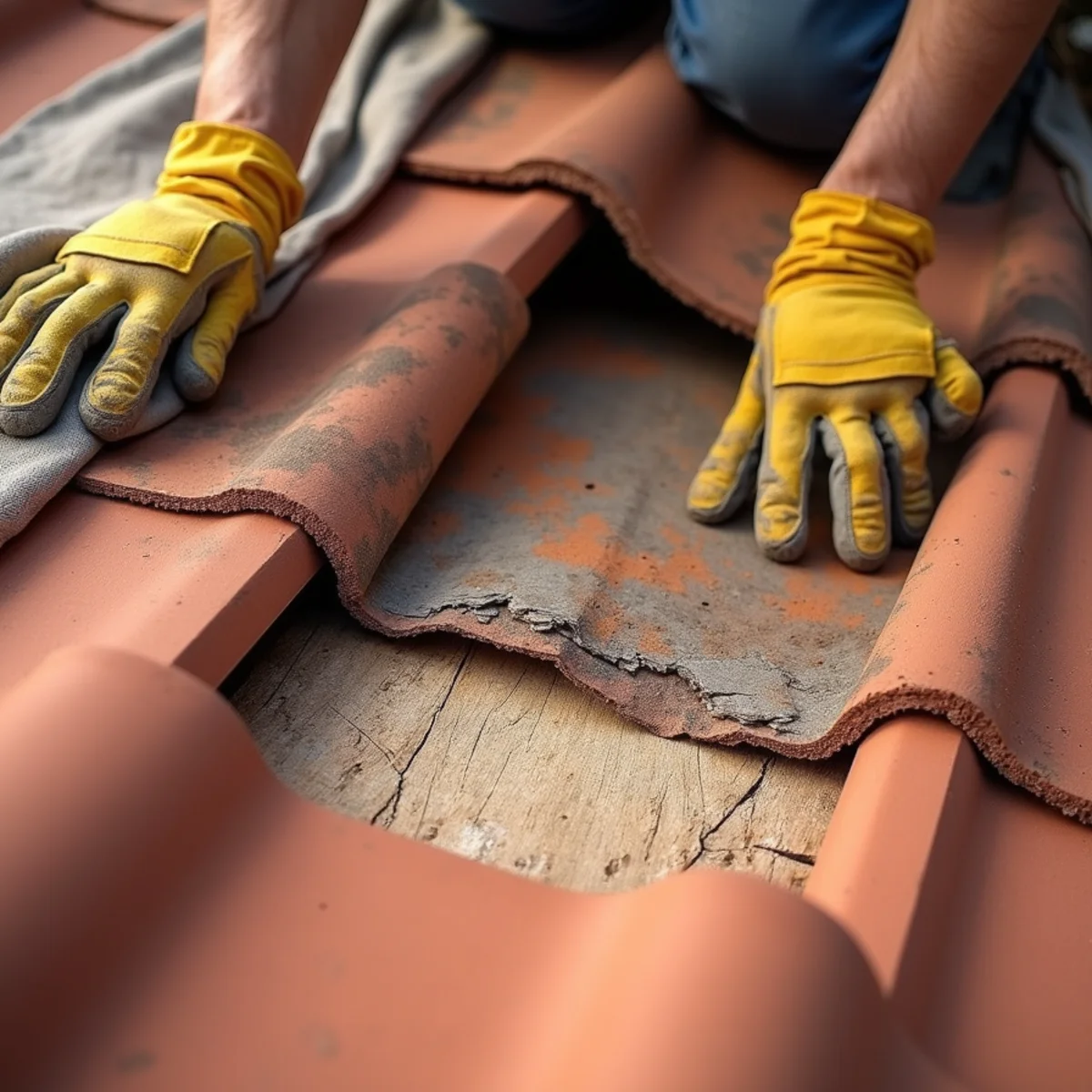
This is the part a photo from the ground always misses. A roof is built in layers. On top is what you see — shingle, tile, or metal. Beneath that sits the underlayment, the water-resistant membrane that is the real waterproof barrier. Under that is the decking, also called sheathing: the wood panels that give the roof its structure and give everything above them something to fasten to. These layers do not age at the same rate, and the top one can look fine while the layers that matter most are quietly failing.
Why tile roofs fool people
Tile — clay or concrete — is among the longest-lasting roofing surfaces, and that is exactly what trips homeowners up. The tile itself can stay intact far longer than the underlayment sealed beneath it. So a tile roof can look beautiful from the street while the membrane doing the actual waterproofing has dried out, cracked, and begun letting water through. When that happens, the fix often isn't new tile at all. It's a lift-and-relay: the sound tile is carefully removed, fresh underlayment goes down, and the same tile is reset. Judging a tile roof by its tile is like judging an engine by its paint.
When the decking is what's failing
Decking is the layer you can't fully judge until the surface comes off. Water that slips past aged underlayment soaks into the wood, and over time that leads to rot, soft spots, and sagging — you might notice a spongy feel underfoot or a visible dip in a roof plane. Small areas of damaged decking can be cut out and replaced during a repair. But when rot is widespread, the structure itself is compromised, and there is no patching around that: the roof has to come off so the deck can be repaired and rebuilt properly.
The questions that tip the balance
When the signs are mixed — and they often are — these are the questions we work through with you:
- How old is the roof, and how does that compare to the service life expected for its material? The same problem reads very differently on a young roof than on one near the end of the line.
- What's the repair history? Once, or several times? In the same spot, or new places each time? Recurring leaks in new locations are the clearest sign the system, not a single joint, is wearing out.
- What condition is the underlayment in? On tile especially, the surface can outlive the layer that actually keeps water out.
- How long do you plan to stay? If you're settling in for the long haul, a replacement's cost spreads across many years. If you may sell soon, a sound repair may serve you well and stand in the home's favor.
- What will it cost over time, not just today? A cheap repair on a failing roof can quietly turn into a series of them.
Overlay or tear-off — and why it matters
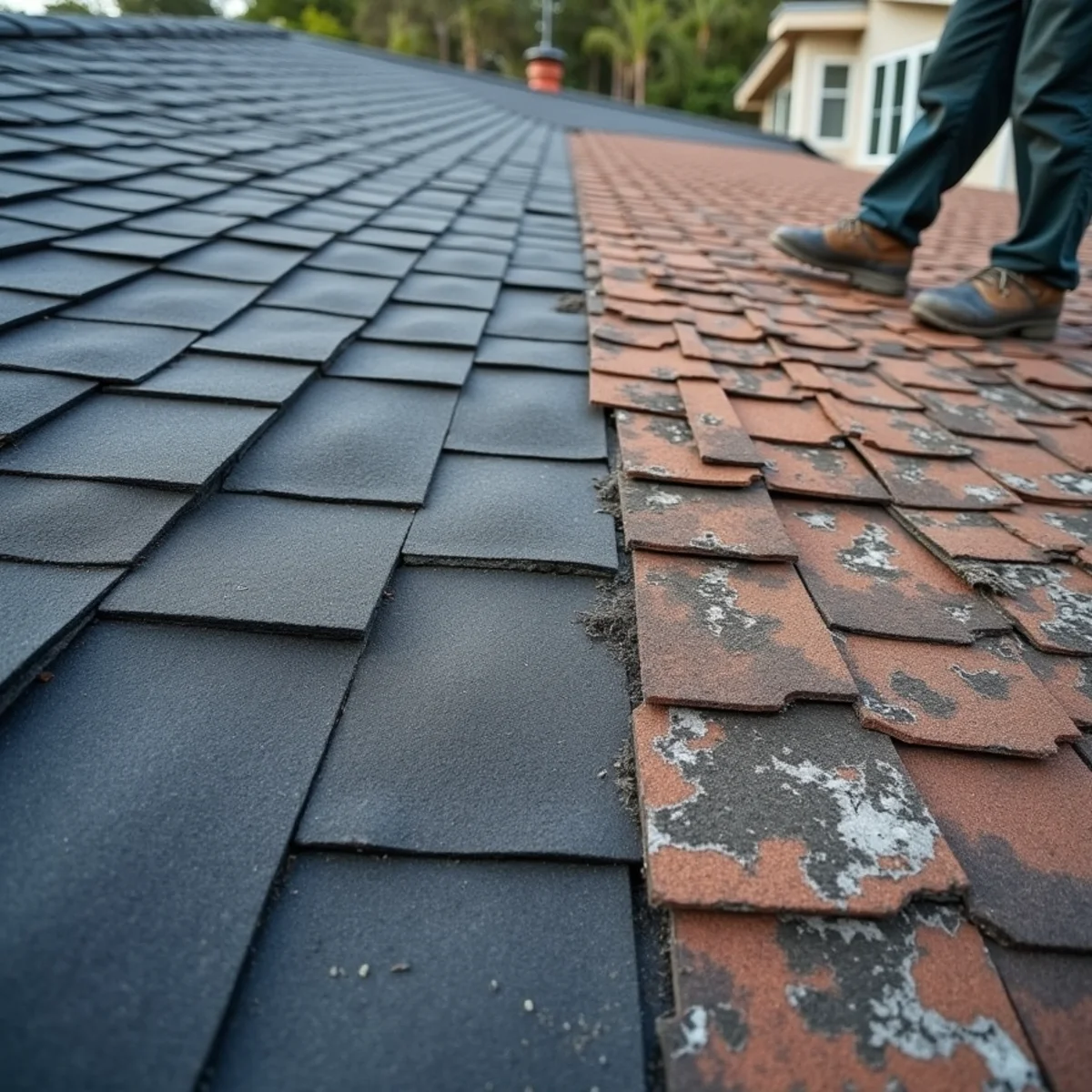
If replacement is on the table, there are two ways to do it. An overlay — sometimes called a re-cover — installs new roofing over the existing layer without removing it. A tear-off strips everything down to the decking and rebuilds from there. An overlay costs less and goes faster because there's no removal or disposal, but it hides everything underneath: it won't renew worn underlayment, and it can't reveal or repair damaged decking, because those layers are never uncovered. It also adds weight, and building codes limit how many roofing layers a home may carry. Whether an overlay is even allowed on your roof should be confirmed with the City of Oceanside Building Division, since those requirements are updated on a cycle. A tear-off costs more and takes longer, but it's the only path that lets a roofer inspect and renew every layer — and near the coast, where the layers underneath take a beating, that visibility is usually worth it.
Why a real inspection makes the call
Here's the throughline: almost every honest repair-or-replace decision comes down to what an inspection finds, not what shows from the ground or in a photo. A surface glance can count missing shingles. It can't tell you whether the underlayment still seals, whether the flashing is corroding at the joints, or whether the decking has gone soft. A thorough inspection checks the field of the roof and the things that actually fail first — flashing, penetrations, valleys, drainage, the condition of the underlayment where it can be assessed, previous repairs, and interior clues like ceiling stains or attic moisture. That's what turns a guess into a decision, and it's why we look before we quote.
The Oceanside coastal angle
Near the coast, the clock runs faster — and it runs fastest on the layers you can't see. Salt-laden air corrodes fasteners and flashing sooner than it would inland, so metal components often fail before the roofing surface does. The marine layer keeps roofs damp into the morning, and that lingering moisture is hard on underlayment and decking, especially on shaded, north-facing planes. Intense UV dries out membranes and sealants, and periodic Santa Ana winds test every edge and fastener. The practical takeaway: two roofs the same age can be in very different shape depending on how much coast they've faced. On an Oceanside home — particularly one near the beach or harbor — a roof can sit closer to the replacement conversation than its years alone suggest, which is one more reason the hidden layers deserve a look.
Weighing cost today against cost over time
A repair almost always wins on the price you pay this week — but that's rarely the real question. The one worth asking is what the roof costs you over the years you'll own it. A common rule of thumb roofers use: when a repair's cost starts approaching a large share of what a full replacement would run — roughly half is the line many draw — replacement is usually the better value, because you're buying a whole new service life instead of buying time. We won't put a dollar figure on your roof from a distance. The factors that move the number are the roof's size and pitch, the material, how much decking or underlayment needs work, the count of penetrations and flashing points, and access. An on-site evaluation is the only way to turn those into a real figure — and to give you an honest side-by-side of repairing versus replacing.
How to think about your decision
Put simply: repair when the problem is contained and the roof still has good life left, and lean toward replacement when the failures are spreading, the layers underneath are worn, or you're throwing good money after a roof that's near the end. Most roofs give you signs well before they force your hand, which means you usually have time to weigh the choice rather than react to it. If you're not sure which side of the line yours is on, the next step isn't a sales pitch — it's an inspection that looks past the surface at the flashing, underlayment, and decking, so the decision is grounded in the whole roof and you can make it with no surprises.