Loading…
Roofing Services · Residential
Roof Replacement in Oceanside, CA
Full-roof replacement with tear-off, deck inspection and coastal-ready installation.
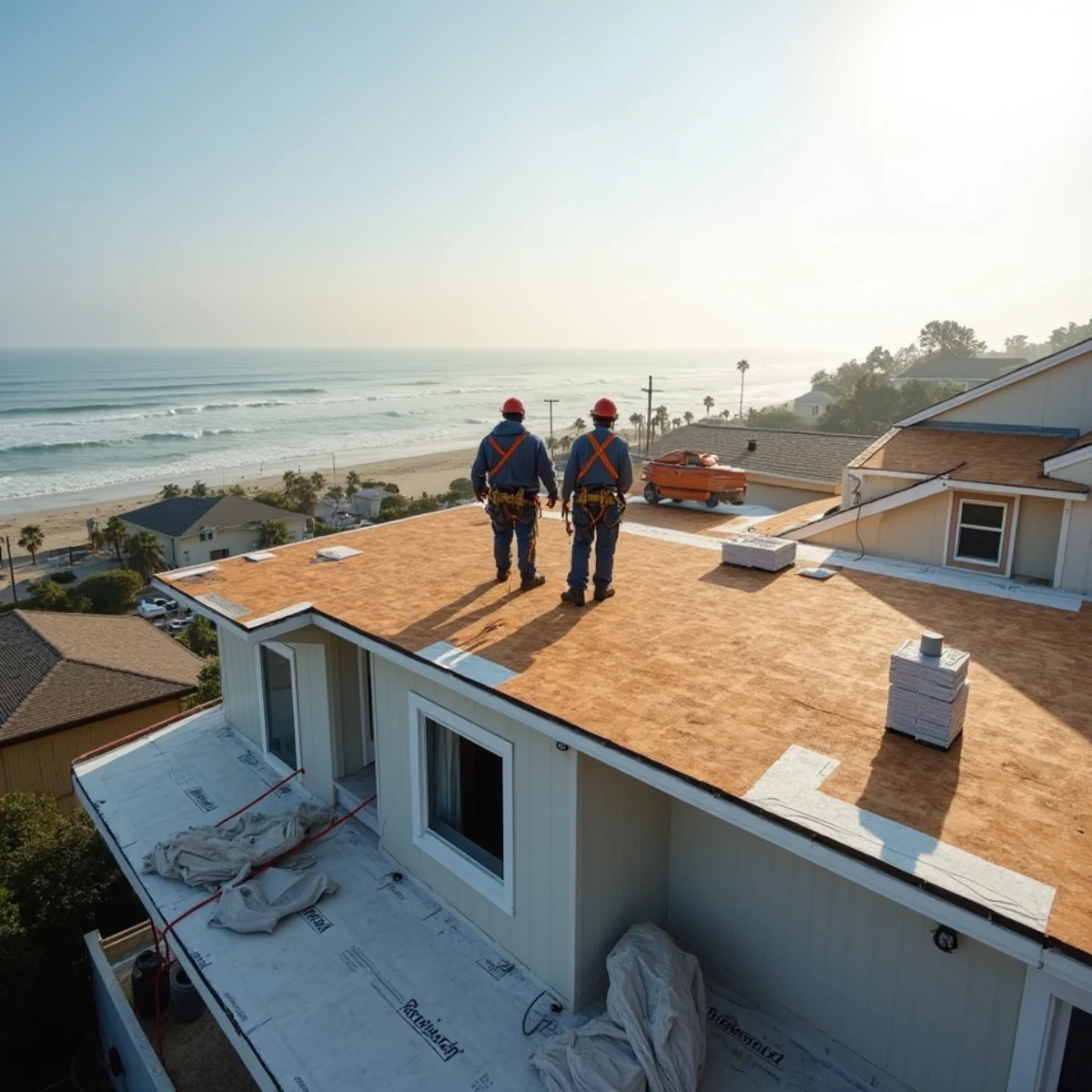
When a roof is near the end of its service life, has widespread deterioration, or keeps leaking despite repairs, replacement is usually the better long-term investment. A replacement is also the moment to correct underlying issues — tired underlayment, corroded flashing, and ventilation problems — that a surface repair can't reach.
Understanding roof replacement in Oceanside
A roof replacement is a full reset for the part of your home that works hardest and gets noticed least. Everything above the decking comes off, the wood beneath gets an honest look, and the roof is rebuilt layer by layer with components chosen for life a few miles from the Pacific. Near Oceanside, that coastal detail is the whole point: salt air, the marine layer's daily damp, steady sun and the occasional Santa Ana wind all work on a roof in ways generic advice never accounts for. A replacement is also the one moment when the parts you never see — underlayment, flashing, ventilation, the decking itself — can all be put right at once, which is exactly why a replacement done well solves problems no surface repair could reach. It is a bigger decision than a repair, so it is worth understanding what actually goes into one before you commit.
Signs your Oceanside roof is ready for replacement
Most homeowners arrive at replacement gradually rather than all at once. A roof rarely fails the week you first notice something, which usually leaves room to plan instead of react. The signals below tend to point toward replacement rather than another patch, especially when several show up together:
- The roof has reached or passed its expected service life, and repairs are becoming a yearly event.
- Leaks return in new spots each rainy season — a sign the water-shedding system is breaking down, not failing at one point.
- Widespread granule loss, the sandy protective surface washing off asphalt shingles and collecting in gutters and at downspouts.
- Shingles curling, cracking or going brittle across the field, or tiles breaking underfoot instead of holding firm.
- Sagging or wavy lines along the ridge or between rafters, which can point to moisture in the decking or the structure below.
- Daylight, damp insulation or a musty smell in the attic, meaning water is already getting past the surface.
- Underlayment failure found during an inspection, even when the tile or shingle above still looks presentable.
Repair or replace: how we help you decide
The question we hear most is some version of do I fix this or start over, and the honest answer depends on the roof as a whole, not a single rule of thumb. A contained problem on a roof with good life left is usually a repair, and we will say so plainly rather than steer you toward the larger invoice. A roof that leaks in new places each season, has gone brittle across the field, or is nearing the end of its life is usually worth evaluating for replacement, because repeated repairs on a tired roof quietly add up to more than a new one would cost. A few questions tend to settle it: how old is the roof, how many times has it needed work, is the underlayment beneath the tile failing, and how long do you plan to stay in the home. Often the right answer is a targeted fix now paired with a plan to replace in a couple of years — a perfectly sound outcome, and one we will walk you through honestly.
Why the coast drives the decision
Everything the ocean sends inland lands on the roof first, and each force works differently. Salt-bearing air settles on nails and flashing and speeds up corrosion, so the metal hardware that seals and holds a roof together can loosen or perforate years sooner near the water than it would inland — and when a fastener stops gripping or flashing stops sealing, water gets in with no drama overhead. The marine layer, the bank of coastal cloud and damp that rolls in most mornings, keeps roof surfaces wet long after inland roofs dry, feeding moss and mildew on shaded, north-facing planes and slowly tiring the underlayment beneath. Strong sun breaks down the binders in asphalt and dries out sealants over time. And a Santa Ana wind event — the hot, dry offshore winds that gust through the region — can lift or loosen materials without leaving an obvious leak.
Where your home sits on the coast-to-inland gradient shapes the answer, too. The closer to the water — think considerations common in the older South O neighborhoods near the beach — the more corrosion resistance and wind rating matter. Further inland, in the newer planned communities, heat and attic ventilation come to the front. Taken together, this is why a coastal replacement is built with corrosion-resistant components and why the material choices differ from the generic advice written for the rest of the country.
What a replacement puts right that a repair can't
It helps to picture a roof as a stack of layers, not a single surface. What you see — shingle, tile or metal — sheds most of the water, but the real waterproofing is the underlayment, the water-resistant membrane laid over the decking. The decking is the wood sheeting the whole roof is nailed to. Flashing, the metal that seals the joints around chimneys, walls, valleys and vents, closes the gaps the flat materials cannot. Ventilation moves heat and moisture out of the attic so all of it lasts. A repair reaches one spot; a replacement renews the entire stack at once. That is why replacement is the moment to correct tired underlayment, corroded flashing and undersized ventilation together, rather than chasing each one as a separate leak over the years to come.
Tear-off and what the decking reveals
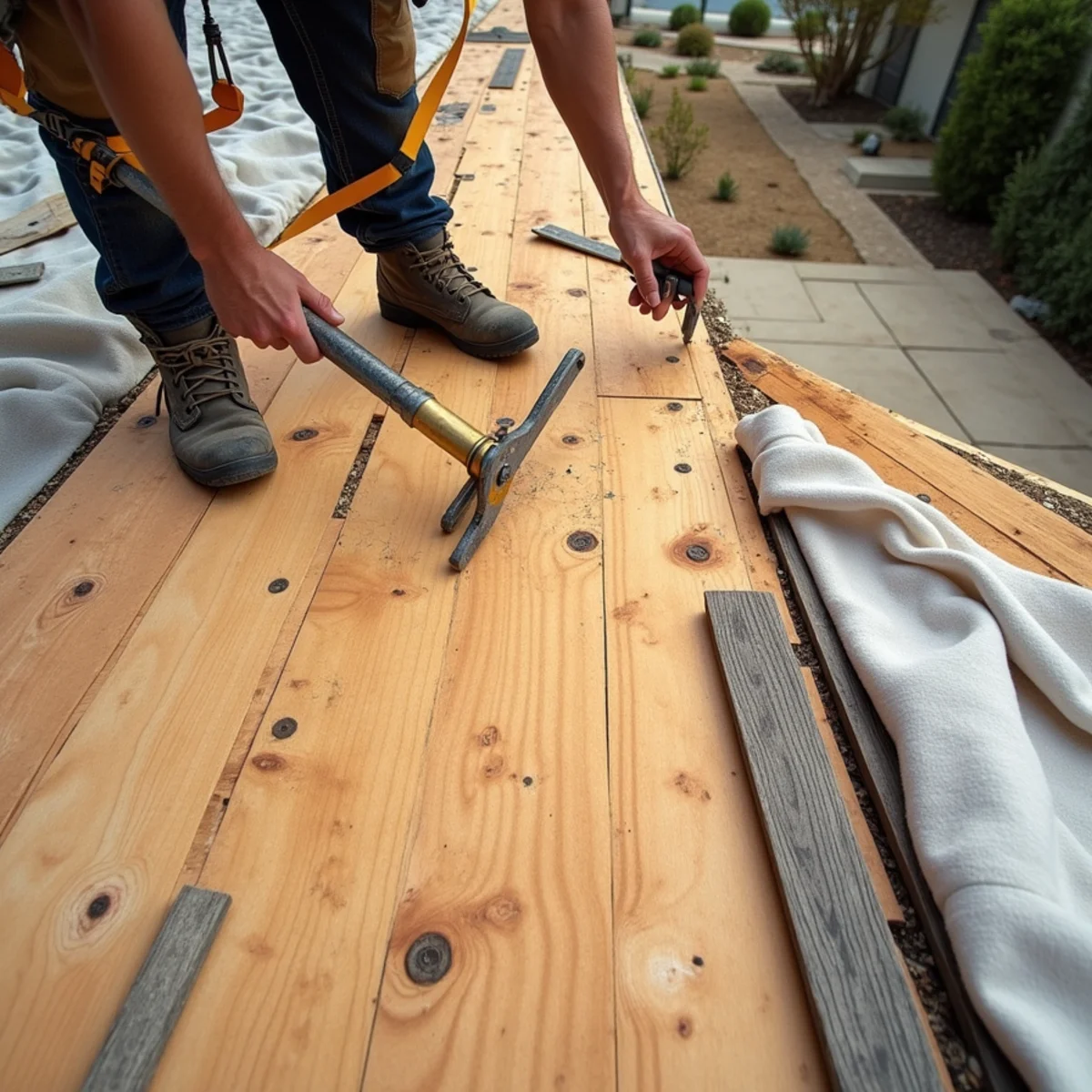
Tear-off is the stage where the old roofing is stripped down to the bare decking, and it is where most surprises live. On older homes near the coast, years of marine moisture can soften the plywood or plank decking in ways nobody can see until the covering is off. We raise this before the project starts — not as an upsell, but as a plain fact of coastal roofs. If we find rot or moisture damage in the decking, we stop, show you exactly what we found, and put a clear, written change order in front of you before replacing any of it. You approve that added work before we carry on. The way to avoid feeling blindsided by a mid-project line item is to have talked about the possibility openly at the start, and we would always rather set that expectation than spring it on you.
Choosing a material built for salt and sun
A replacement is a rare chance to reconsider the roof itself, not just renew what was there. There is no single best roof for Oceanside — each option trades cost, appearance and longevity differently, and the right one depends as much on how close you sit to the water as on the look you want. Here is how the common choices behave on the coast.
Asphalt shingle
Asphalt shingle is the most affordable and flexible option and suits a wide range of homes. Near the water it is worth choosing a high-wind-rated, algae-resistant product rather than the basic grade, since coastal wind and the marine layer's damp are exactly what shorten a cheaper shingle's life. It carries the shortest expected service life of the common materials, which is part of why it costs the least up front and why quality of installation matters so much on the coast.
Clay and concrete tile
Clay and concrete tile carry the Spanish, Mediterranean and Santa Barbara look many Oceanside neighborhoods are known for, and the tile itself resists salt and sun well and can last a very long time. The catch worth knowing is that the underlayment beneath the tile is the part that wears out first, often long before the tile shows any sign — so a tile roof is really a long-lived surface over a layer that needs renewing on its own schedule. Tile is also heavier, which can raise structural questions on older homes worth checking before you commit.
Standing-seam metal
Standing-seam metal — panels joined by raised, interlocking seams — is a strong coastal performer when the right alloy and finish are specified for salt exposure, and it sheds water and wind well. It fits contemporary designs and pairs naturally with solar. The trade-offs are a higher up-front cost than shingle and the importance of getting the metal specification right, since the wrong alloy near salt air quietly undoes the advantage you paid for.
The replacement process, step by step
A replacement runs through a predictable sequence, and knowing it ahead of time takes the mystery out of the week. First comes evaluation and planning, where we look at the whole roof, talk through materials for your home's style and coastal zone, and outline the scope. Next is the permit and preparation, which we coordinate rather than leaving to you, along with protecting the areas around the house. Then tear-off and decking inspection, where the old roof comes off and anything found underneath is shown to you before we proceed. Installation follows, building the new system up from underlayment and flashing to the finished surface, with fasteners suited to salt air. Finally a walkthrough, a thorough cleanup, and a magnetic sweep to pull stray nails from the driveway and lawn, with the finished work documented for your records.
Permits, code and California's energy rules
For most tear-off replacements, a permit is generally required, and we handle that paperwork as part of the job — though it is always worth confirming current requirements with the City of Oceanside, since local rules change. California's Title 24 energy standards also apply, and for many residential roofs they call for cool-roof performance, measured by a value called the Solar Reflectance Index, which rates how well a surface reflects sunlight and releases heat. Cool-roof-rated products matter more in the warmer inland neighborhoods than right on the water, and there are exceptions tied to roof slope and attic insulation. Because the standards are revised on a cycle, we confirm the current edition and how it applies to your specific roof rather than assuming a particular version. None of this needs to be your homework — the point of raising it is so the requirements are no surprise when they appear in the plan.
Ventilation, gutters and going solar-ready
A reroof is the natural moment to fix a few things that are far harder to reach once the roof is closed back up. Ventilation is the big one: balanced intake and exhaust let heat and moisture escape the attic, which helps the new roof last and can ease summer cooling, and the attic is simply easier to address while the roof is open. Gutters and the roof edge — fascia and soffit — are worth checking at the same time, since drainage that pushes water back under the edge will shorten any new roof. And if solar panels are anywhere in your future, say so early: detailing the roof to be solar-ready now spares you paying to remove and reinstall roofing to add panels later, which fits the direction California building has been heading for years.
What drives the cost and scope
No two replacements carry the same scope, and a handful of factors do most of the work in setting it. Rather than a single sticker figure, it helps to think in terms of what moves the number:
- Roof size, pitch and the number of stories, which affect materials, labor and safe access.
- The material you choose — tile and metal cost more up front than asphalt shingle, and weigh more.
- Whether one layer or several old layers have to be torn off and hauled away.
- Decking condition found during tear-off, since replacing rotted sheeting adds material and labor.
- Roof complexity — valleys, dormers, skylights and penetrations all add detail work.
- Disposal, the permit, and any ventilation or flashing upgrades folded into the job.
Common mistakes that shorten a coastal roof's life
A new roof can be undone by a few avoidable shortcuts, most of them invisible once the job is finished:
- Roofing over the old covering instead of tearing off, which hides decking damage and can trap moisture — a real concern in a marine climate.
- Installing standard fasteners and flashing that salt air corrodes, rather than corrosion-resistant hardware.
- Skipping the ventilation review, so trapped attic heat and moisture age the new roof from below.
- Spending on the visible surface while accepting a bargain underlayment, when the underlayment is the layer actually keeping water out.
- Leaving tired flashing around chimneys, walls and valleys in place because it is not the obvious problem.
What working with us looks like
Our job is to look carefully, explain what we find in plain language, and help you take the next sensible step — not to talk you into the largest project on the board. Oceanside homes range widely, from historic tile roofs to newer builds with design standards and a manufacturer warranty worth protecting through proper installation, and the right recommendation follows the home. We document the roof with photos, walk you through the material options for your style, budget and exposure, and give you a realistic timeline for your specific project rather than a generic promise. If tear-off turns up damaged decking, we stop and show you before doing anything more. When the work is finished, we clear the site, run the nail sweep, and leave you with records for your files. From the first call to (209) 758-8550 through the final walkthrough, the standard is the same: clear guidance, no pressure, and no surprises.

Signs you may need roof replacement
- The roof is at or beyond its expected service life
- Leaks keep returning in different places
- Widespread granule loss, cracked tiles or brittle materials
- Sagging areas or visible decking damage
- Extensive underlayment failure found during inspection
What's included
- Removal (tear-off) of the existing roofing down to the deck
- Inspection of decking for rot or moisture damage, with a transparent change order if replacement is needed
- New underlayment and corrosion-resistant flashing
- Ventilation review and improvement where appropriate
- Material selection guidance based on your home and exposure
- Disposal, cleanup and a magnetic nail sweep
Our process
- 01
Evaluate & plan
We assess the roof, discuss material options for your home's style and coastal zone, and outline scope.
- 02
Permit & prep
We handle the required permit and help you prepare the property before work begins.
- 03
Tear-off & inspect
We remove the old roof, inspect the decking, and show you anything we find before proceeding.
- 04
Install
We install the new system with underlayment, flashing and fasteners suited to coastal conditions.
- 05
Walkthrough
We complete a final walkthrough, clean the site, and document the finished work for your records.
Materials commonly involved
- Asphalt shingle, clay tile, concrete tile or metal systems
- Upgraded underlayment and leak barriers for marine moisture
- Corrosion-resistant fasteners and flashing
- Cool-roof-rated options relevant to California Title 24
Oceanside coastal considerations
- Homes built decades ago near the coast may have hidden decking deterioration from years of marine moisture, sometimes discovered only after tear-off — we discuss this possibility upfront.
- Material choice should account for your distance from the ocean, sun exposure and wind.
- Replacement is the right time to make the roof solar-ready if panels may be added later.
What affects the scope of your project
- Roof size, pitch and number of stories
- Chosen material and whether tear-off of multiple layers is needed
- Decking condition discovered during tear-off
- Access, disposal and permit requirements
Every roof is different. The best next step is a property-specific evaluation — we'll explain what we find in plain language and lay out practical options.
Frequently asked questions
It depends on the roof as a whole, not one rule. A contained problem on a roof with plenty of life left is usually a repair, while a roof leaking in new spots each season, gone brittle across the field, or nearing the end of its life is usually worth evaluating for replacement. We look at age, repair history and the underlayment's condition, then lay out both paths honestly so you can decide with the full picture.
It depends on the roof's size, the material, the weather and anything found in the decking during tear-off. Rather than a generic promise, we give you a realistic timeline for your specific roof at the evaluation and keep you informed at each stage.
For most tear-off replacements, a permit is generally required, and we coordinate that paperwork as part of the job. Because local rules change, we confirm current requirements with the City of Oceanside for your particular project.
It is sometimes possible, but on the coast a full tear-off is usually the better path. Roofing over the old layer hides decking damage and can trap moisture — a real concern in a marine climate — and it prevents inspecting and renewing the underlayment and flashing beneath, which is where a replacement earns its value.
We stop, show you exactly what we found, and put a clear written change order in front of you before replacing any sheeting. You approve that added work before we continue, so there is no surprise line item mid-project.
There is no single best material — it depends on your home's style and how close you sit to the water. Tile suits Spanish and Mediterranean homes and lasts a long time over underlayment that needs its own renewal; standing-seam metal performs well when the right alloy is specified; high-wind-rated asphalt shingle is the most affordable. We weigh appearance, longevity and budget with you.
Often, yes. California's Title 24 energy standards call for cool-roof performance on many residential roofs, measured by the Solar Reflectance Index, with exceptions tied to roof slope and attic insulation. Because the code is revised on a cycle, we confirm the current edition and how it applies to your roof rather than assuming a version.
Yes — a replacement is the ideal time. Detailing the roof to be solar-ready now avoids paying to remove and reinstall roofing to add panels later. Tell us your plans early so we can plan the layout and details for it.
Relevant roof types
Service areas
Next step
Discuss Roof Replacement in Oceanside
Tell us what you're seeing and we'll help you decide the sensible next step.