Loading…
Roofing Services · Commercial
Commercial Roofing in Oceanside, CA
Flat and low-slope systems, coatings and maintenance for Oceanside businesses.
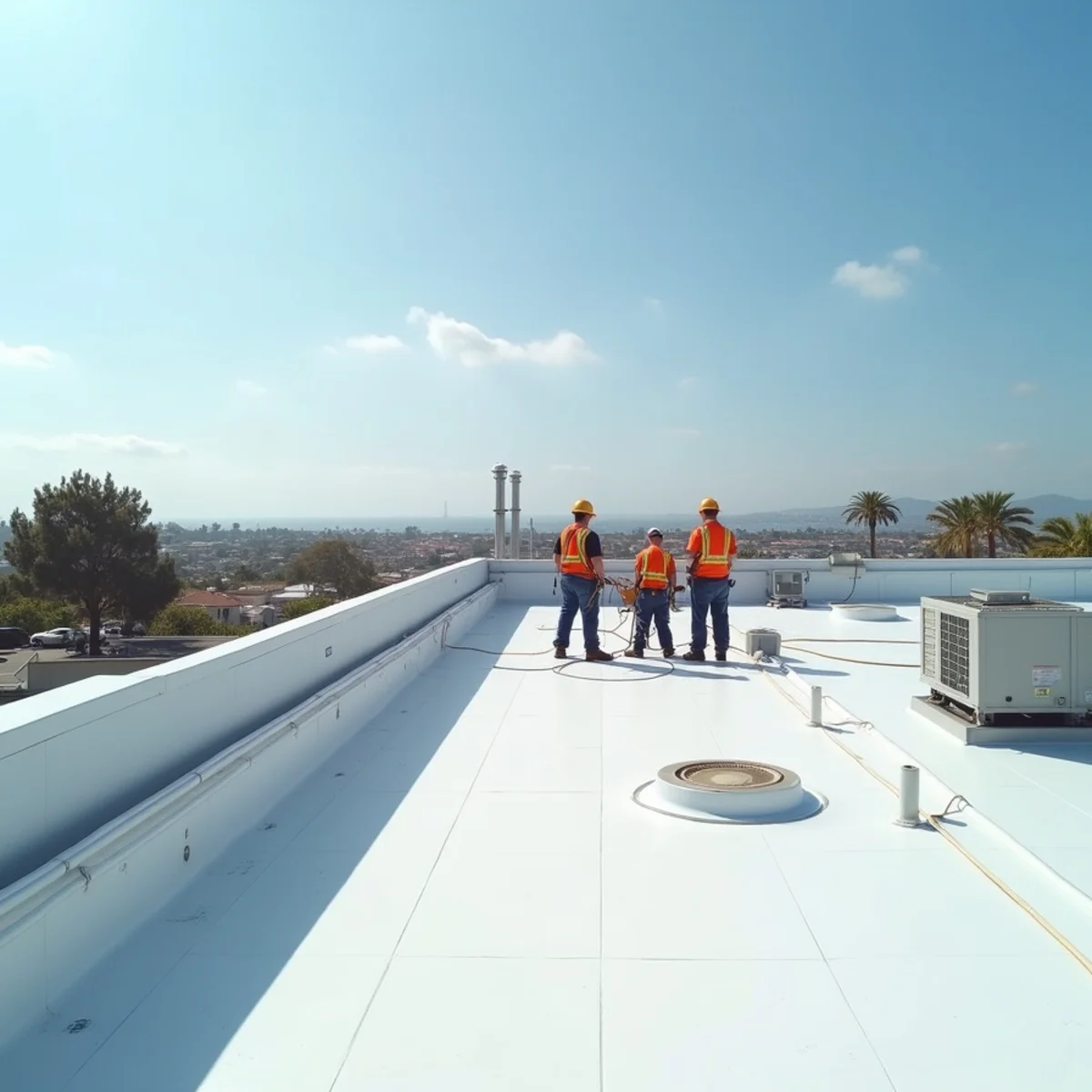
Oceanside businesses — from pier-side restaurants to office parks — need roofing that protects operations without disrupting them. We specialize in flat and low-slope commercial systems and plan work around your business hours wherever possible.
Understanding commercial roofing in Oceanside
Commercial roofing in Oceanside is mostly the business of flat and low-slope roofs — the wide, nearly level surfaces that top office suites, retail centers, restaurants, warehouses, medical buildings and apartment complexes. These roofs work in a completely different way from the pitched, shingled roofs on houses, and they wear out in different ways too. Add the coast — salt air, a damp marine layer most mornings, hard sun through the afternoon, and the occasional dry Santa Ana wind — and a commercial roof here is asked to hold one watertight surface under real pressure, year after year, usually over a building full of people who need to stay open. This page walks you through how these roofs work, how they fail, the systems worth knowing about, and how to decide what your roof actually needs.
What "low-slope" really means
On a house, a steep roof sheds water by gravity: the shingles overlap like scales, and rain runs off before it can sit. A commercial roof does not have that luxury. "Low-slope" means the roof has only a slight pitch — just enough to nudge water toward drains — so it cannot rely on steepness to stay dry. Everything rides on two things instead. The first is a continuous waterproof membrane: a single sealed skin of material stretched across the whole roof, so there is one unbroken surface between the weather and your building. The second is a drainage path that actually carries water off. When either one is compromised, water has nowhere to go and plenty of time to find a way in. Almost every decision below comes back to protecting those two things.
How Oceanside's coast tests a commercial roof
A flat roof inland and a flat roof three blocks from the water are not living the same life. The coast applies four steady pressures, and a roof built for salt and sun has to answer all of them:
- Salt air corrodes metal. Drains, edge metal, counterflashing and fasteners near the coast rust faster than the manufacturer's sunny-day averages suggest, and a corroded drain or edge is a leak waiting to happen — which is why coastal work uses corrosion-resistant components.
- The marine layer keeps the roof damp. On many mornings the surface never fully dries, so a roof that ponds barely gets a chance to recover between events, and any repair has to wait for a genuinely dry surface to bond to.
- UV works on the membrane year-round. Sun slowly hardens and shrinks some membranes and dries out the asphalt and sealants that finish the details, pulling material tight against corners and fasteners until something splits.
- Santa Ana wind lifts the edges. Wind uplift is the suction that builds along a roof's edges, corners and parapet walls as air rushes over them; it can peel back loose membrane and work fasteners and edge metal free, sometimes without an obvious leak until the next rain.
The low-slope systems worth knowing
There is no single best commercial roof — only the right system for a given building, budget and exposure. Here are the main low-slope families in plain language, and how each tends to behave on the coast. Material categories matter more than any brand name; what counts is matching the system to your roof rather than to a sales sheet.
Single-ply membranes
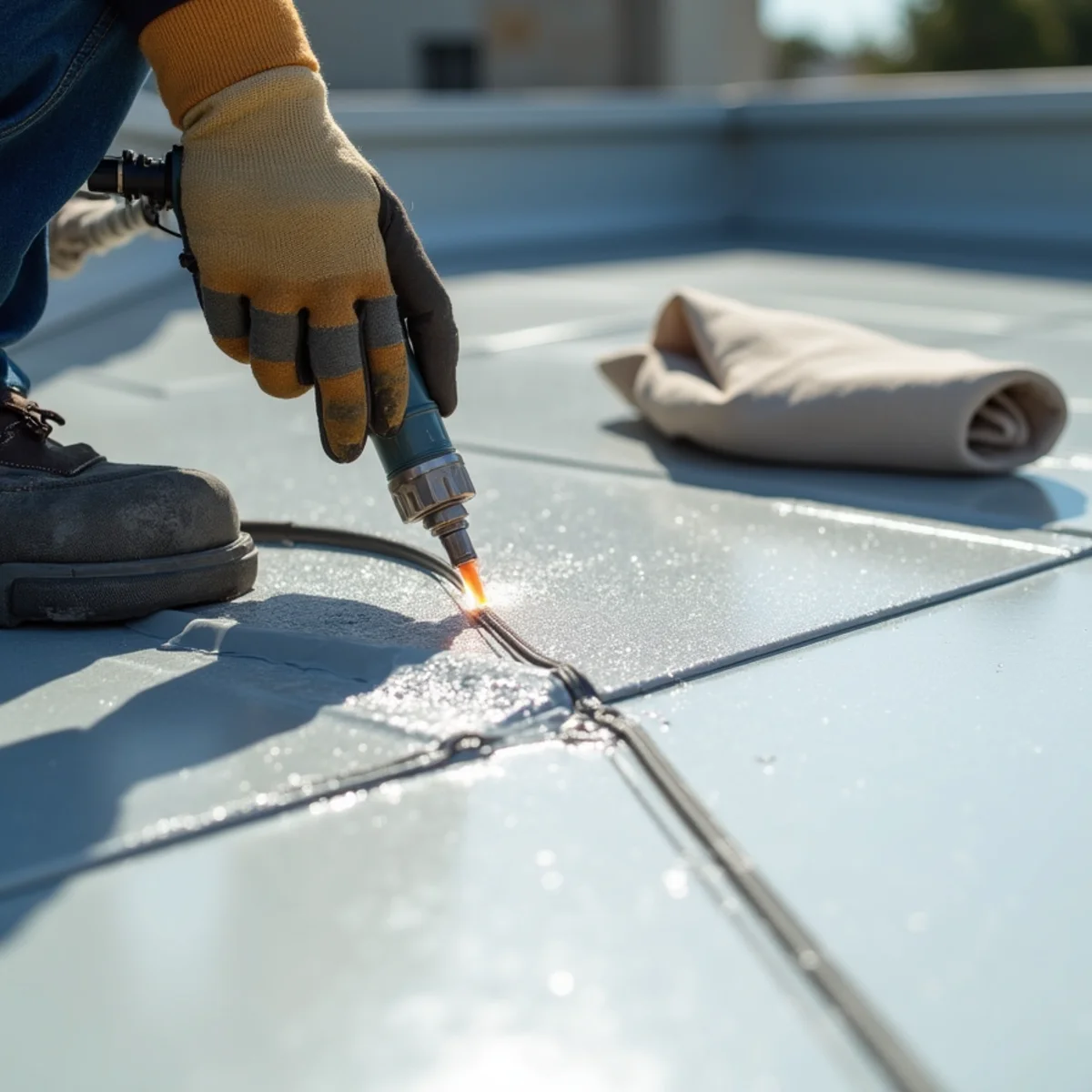
Single-ply membranes are exactly what they sound like: one layer of flexible sheet material, seamed together across the roof. Thermoplastic membranes — the light-colored, weldable sheets often referred to by initials like TPO or PVC — are joined at the seams with hot air into a continuous welded bond, and their reflective surface bounces a large share of the sunlight a dark roof would soak up, which is a genuine advantage under Oceanside's afternoon sun. EPDM is a synthetic rubber sheet, dark and very flexible, that handles temperature swings well. Single-ply systems install relatively quickly and add little weight, which helps over an occupied building. Their weak point is predictable: the seams and the hand-sealed details are where attention has to go as the roof ages.
Modified bitumen and built-up systems
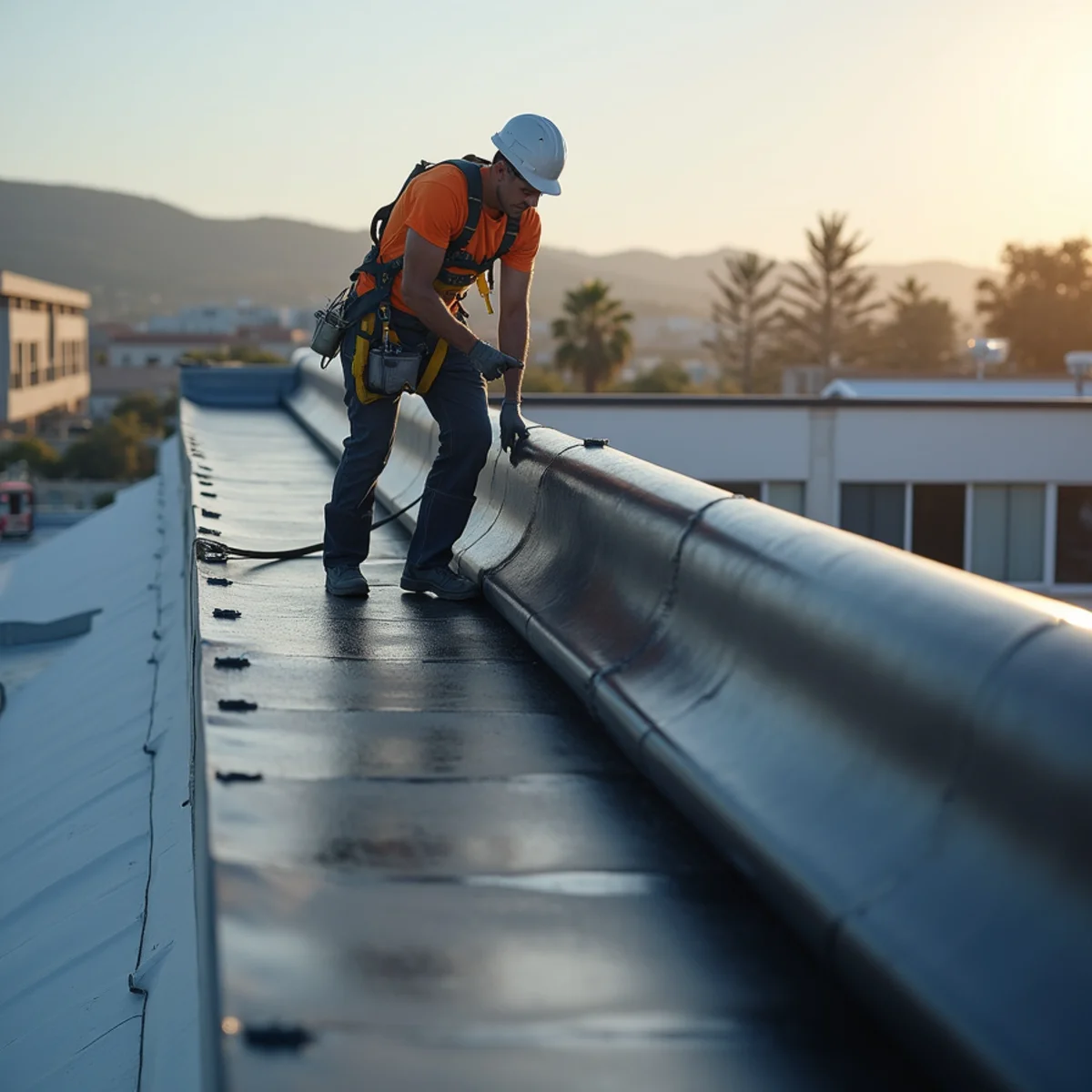
Asphalt-based systems take the opposite approach — layers rather than a single sheet. Built-up roofing, the classic "tar and gravel" roof, alternates plies of felt and asphalt into a thick, durable mat. Modified bitumen updates that idea with factory-made reinforced rolls that add strength and flexibility. Both build in redundancy: more than one layer stands between the weather and your building, which holds up well on roofs that carry equipment and regular foot traffic. Modified bitumen can be installed several ways, and the self-adhered version is a sensible coastal choice because it bonds without an open flame and tolerates damp conditions — useful over a building you cannot simply empty for the day.
Metal and reflective coatings
Low-slope metal systems, typically standing-seam panels with raised and sealed joints, are long-lived and shed water well — though near the coast the panels and their fasteners have to be selected to resist salt corrosion, or the roof's biggest strength becomes its weakness. Reflective roof coatings are a category of their own: a liquid applied over an existing, sound roof that cures into a seamless surface, renewing the waterproofing and reflecting heat without a tear-off. A coating is a restoration tool, not a cure for a failed roof, and it only fits when the roof beneath is still solid and dry. We go deeper on that in our roof coatings service.
Drainage: where a flat roof lives or dies
Because a low-slope roof holds water so easily, drainage is not a detail — it is the design. Ponding, the industry term for water that sits in a low spot more than a day or two instead of draining, is the single most common thing we find on tired commercial roofs. Standing water is heavy, it breeds growth, and it works on the membrane and its seams until they give. A roof that drains is a roof that lasts, and the pieces that make that happen are worth knowing:
- Internal drains and scuppers. Drains pull water down through the roof to interior piping; scuppers are openings through a parapet wall that let water spill off the edge. Both clog with debris and coastal grit, and a blocked drain turns the whole roof into a shallow pool.
- Overflow protection. A secondary drain or higher scupper is the backup that keeps water from building up dangerously if the primary path clogs during a storm.
- Tapered insulation and crickets. These are built-up slopes added beneath the membrane to steer water toward the drains and off the low spots — the fix when a roof was built too flat to drain on its own.
- Clear paths before the rainy season. On the coast the roof rarely dries fully between storms, so keeping drains and scuppers clear ahead of winter is one of the highest-value things an owner can do.
The details that leak first
Flat roofs rarely fail out in the open field of membrane. They fail at the details, and knowing that tells you where to look. Flashing is the material that seals the membrane up and over anything it meets — parapet walls, curbs, and every pipe, vent, drain, conduit and rooftop unit that pokes through the surface. Each of those penetrations is a hole that was sealed by hand, and every hand-sealed joint can loosen as it ages. On the coast the pressure is doubled: salt corrodes the metal edge and counterflashing while UV dries out the sealants that finish them. When we chase a commercial leak, the seams, the flashing and the penetrations are the first places we look, because that is where the large majority of them begin.
The condition survey: knowing what you own
A commercial roof can look perfectly acceptable from a quick walk and still hide wet insulation and failing seams, so a real survey goes below the surface. We check the seams and flashing, probe the details around penetrations, and look at how the roof drains. Where it helps, a few small core samples let us see the actual layers and, critically, whether the insulation beneath the membrane has taken on water — because what is happening down in the insulation and at the deck is what really decides a roof's remaining life. Moisture-detection methods can map damp areas that a visual check would miss, and where safe access is a concern, an available method such as aerial viewing lets us see the field without adding foot traffic to a fragile surface. You get photos and a plain-language read of what shape the roof is in — the difference between guessing and planning.
Repair, restore, or replace
Not every tired commercial roof needs replacing, and the honest answer usually comes down to three questions: is the deck sound, is the insulation dry, and how much of the roof is actually failing. A roof with solid decking and dry insulation that is leaking at a few seams or penetrations is a straightforward repair. A roof that is broadly weathered on the surface but still sound underneath is often a good candidate for a restoration coating that renews it and buys years without a tear-off. A roof where water has gotten into the insulation and will not dry, where the deck has rotted or rusted, or where a large share of the surface has given out, has generally reached the end — you cannot coat or patch your way out of wet insulation, and past a certain point a full replacement simply costs less than chasing leaks. We will tell you plainly which of the three your roof is, and why, with no push toward the biggest job.
Preventive maintenance as a budget strategy
For an owner or property manager, a commercial roof is a budget line as much as a building part, and the most expensive roofs are the ones that get ignored until a leak forces an emergency — because reactive repairs come at the worst time, often after interior damage has already happened. A steady maintenance rhythm turns that around. A couple of planned visits a year to clear drains, check seams and flashing, reseal penetrations and note any new ponding will catch small failures while they are still small. Keeping a simple record of repairs and coverage helps at budgeting time and when a building changes hands, and it lets a major reroof land as a planned capital project rather than a surprise. Near the harbor and pier, where salt spray and constant sun push a roof harder, that planned approach tends to serve owners far better than waiting for a leak to set the schedule.
Working over a building that stays open
A house can sit empty for a day. A restaurant, medical office, shop or apartment building usually cannot, and that is the real constraint on commercial work. Wherever the roof allows, we work in sections so part of it is always watertight, schedule the noisier or more disruptive stages around your hours, and favor methods that keep fumes and open flame away from occupied space — self-adhered systems, for instance, install without a torch, which matters over a floor full of people. We coordinate roof access, protect what sits below the work area, and keep tenants and staff informed so the job is predictable rather than a daily surprise. Staying open and getting the roof done are not in conflict when the work is planned around your operations from the start.
What drives scope, timeline and cost
Every commercial roof is priced and scheduled a little differently, and it helps to know what moves the numbers before you plan around them:
- Roof area and how the surface is broken up by walls, levels and equipment.
- Access — single-story versus multi-story, where crews and materials can stage, and whether a crane is needed to move material to the roof.
- The number and complexity of penetrations and rooftop units, since each one is a detail that has to be sealed and flashed.
- Insulation and deck condition found during the survey, which can turn a surface job into a deeper one.
- Whether a tear-off is required, or the roof can be restored or recovered in place.
- Code upgrades a reroof can trigger — added insulation, drainage improvements, or a reflective cool-roof surface under California's energy rules.
Common mistakes worth avoiding
Most commercial roof trouble traces back to a handful of avoidable missteps:
- Ignoring the roof until a leak appears, so the first repair also has to deal with interior damage.
- Patching under the interior stain instead of finding where water actually enters — a flat roof lets water travel sideways, so the drip is often nowhere near the breach.
- Coating over wet insulation, which seals the moisture in and hides the damage rather than fixing it.
- Letting drains and scuppers clog, then wondering why the roof ponds every winter.
- Choosing a system on install price alone, without matching it to the building's exposure and traffic.
- Skipping documentation, so no one knows the roof's history when it is time to budget or sell.
Warranties, permits and California's cool-roof rules
Two kinds of coverage generally come with a new commercial roof: the manufacturer's warranty on the materials and the installer's warranty on the workmanship. Terms vary widely by system and how it is installed, so the useful thing an owner can do is keep clear records of what applies to their roof — we document coverage so it is on file rather than a mystery years later. Commercial reroofs generally require a permit, which we coordinate. And it is worth knowing that California's energy code, Title 24, can require a reflective "cool roof" on certain low-slope commercial reroofs — a surface with a high solar reflectance that bounces heat away. On the coast that requirement usually works in your favor anyway, since a light, reflective roof eases the afternoon heat load on a sun-exposed building.
When to pair commercial roofing with other work
Commercial roofing rarely stands entirely on its own. A membrane repair that keeps chasing new leaks is often a sign to weigh a restoration coating or a fuller plan. A roof that ponds usually needs its drainage addressed at the same time, not after. And the cheapest way to protect any commercial roof is a maintenance rhythm that catches the small stuff early. Depending on what your roof needs, this work often connects with flat-roof repair, roof coatings and restoration, and a preventive maintenance plan — and we will point you toward whichever genuinely fits rather than bundling in work your roof does not need.
A steady approach for Oceanside businesses
From pier-side restaurants and downtown storefronts to the office parks and industrial buildings inland, Oceanside's commercial roofs all answer to the same coast — salt, marine damp, sun and wind — and they all reward being looked after rather than left alone. Our aim is simple: give you a straight read on the roof you actually have, lay out practical options, and do the work in a way that keeps your building running. If you have an active leak over occupied space, call (209) 758-8550 to check current urgent-service availability; if you are planning ahead, the same call is a good place to start a survey and a plan you can budget around.
Signs you may need commercial roofing
- A flat or low-slope roof showing wear or ponding
- Recurring leaks over an occupied space
- A property you want on a preventive-maintenance plan
- A multi-family or mixed-use building needing documentation for owners
What's included
- TPO, modified bitumen and metal low-slope systems
- Roof coatings and restoration
- Preventive maintenance programs
- Leak response and drainage correction
- Condition reports for property managers and owners
Our process
- 01
Survey
We assess the roof, drainage and penetrations and document current condition.
- 02
Plan
We recommend repair, coating, maintenance or replacement based on findings and your operating needs.
- 03
Execute
We schedule around your business, using low-disruption methods where possible.
- 04
Report
We provide documentation useful for budgeting and ownership records.
Materials commonly involved
- TPO single-ply membrane
- Self-adhered modified bitumen
- Standing-seam metal
- Reflective roof coatings
Oceanside coastal considerations
- Self-adhered systems avoid open flame and perform well in the marine layer's persistent dampness — useful for occupied buildings.
- Coastal commercial roofs face salt spray and constant sun; preventive maintenance generally beats reactive repair on cost and downtime.
What affects the scope of your project
- Roof area and access
- System type and condition
- Operating-hour constraints
- Drainage and penetration complexity
Every roof is different. The best next step is a property-specific evaluation — we'll explain what we find in plain language and lay out practical options.
Frequently asked questions
Commercial roofing generally covers the flat and low-slope roofs on businesses and larger buildings — offices, retail, restaurants, warehouses, medical buildings, and multi-family or mixed-use properties. These roofs rely on a continuous waterproof membrane and good drainage rather than the steep pitch a house roof uses to shed water, so they are built, maintained and repaired differently.
There isn't one best system — the right choice depends on your building, its exposure, foot traffic and budget. Single-ply membranes install quickly and can offer a reflective surface that helps with coastal sun; layered systems like modified bitumen add redundancy and handle traffic well; metal is long-lived when specified for salt resistance. The more useful question is which system fits your roof, and a condition survey is what answers it.
It varies by system, how well it was installed, how it's maintained, and how much salt, sun and moisture it takes on. Coastal exposure tends to shorten the life of any roof compared with a sheltered inland one, and standing water and clogged drains shorten it further. Rather than quote a single number, we assess your specific roof and give you a realistic read on its remaining service life.
Sometimes, and it can be a cost-effective choice — but only when the roof qualifies. A restoration coating renews a roof that is still structurally sound and dry underneath. If water has gotten into the insulation and won't dry, the deck has failed, or a large share of the roof is leaking, a coating just traps the problem, and replacement is the honest answer. We check what's happening below the surface before recommending either.
Yes. Ponding — water that sits more than a day or two instead of draining — is heavy, encourages growth, and works on the membrane and seams until they leak. On the coast, where the roof rarely dries fully between events, it's especially hard on the surface. Ponding usually points to a drainage issue, so we look at both the leak and the cause, from clogged drains to a roof that was built too flat to shed water.
In most cases, yes. Where the roof allows, we work in sections so part of it is always watertight, schedule the more disruptive stages around your hours, and favor low-odor, flame-free methods so fumes and open flame stay away from occupied space. We coordinate access, protect what's below, and keep your team informed so the work is predictable.
Commercial reroofs generally require a permit, which we coordinate for you. California's Title 24 energy code can also require a reflective cool-roof surface on certain low-slope commercial reroofs. On a sun-exposed coastal building a reflective roof usually helps anyway by easing the afternoon heat load. Confirm current requirements with the City as part of planning.
A couple of planned checks a year is a sensible baseline near the coast, with an added look after major wind or storm events. The most valuable timing is clearing drains and checking seams and flashing before the rainy season, so small issues are caught while they're still small. Keeping a simple record of what's found and repaired also helps at budgeting time and when a building changes hands.
Related services
Relevant roof types
Next step
Discuss Commercial Roofing in Oceanside
Tell us what you're seeing and we'll help you decide the sensible next step.