Most roofing guidance is written for a dry, inland world. Along the Oceanside coast, a roof lives in a saltier, wetter, sunnier environment than a roof a few miles east — and the difference shows up in how long the fasteners, flashing, sealants and the roof surface itself hold up. Four forces do the work: salt-bearing air, the marine layer's daily damp, strong ultraviolet light, and the occasional Santa Ana wind event. None of them is cause for alarm, but each one rewards the right choices and quietly punishes the wrong ones. This guide walks through how a coastal climate treats a roof, which materials and components stand up to it, how those choices shift as you move from the sand toward the inland ridges, and how to read the early signs that salt has already started its work. We'll define the roofing terms as we go, so nothing here assumes you already speak the trade.
How salt air corrodes a roof
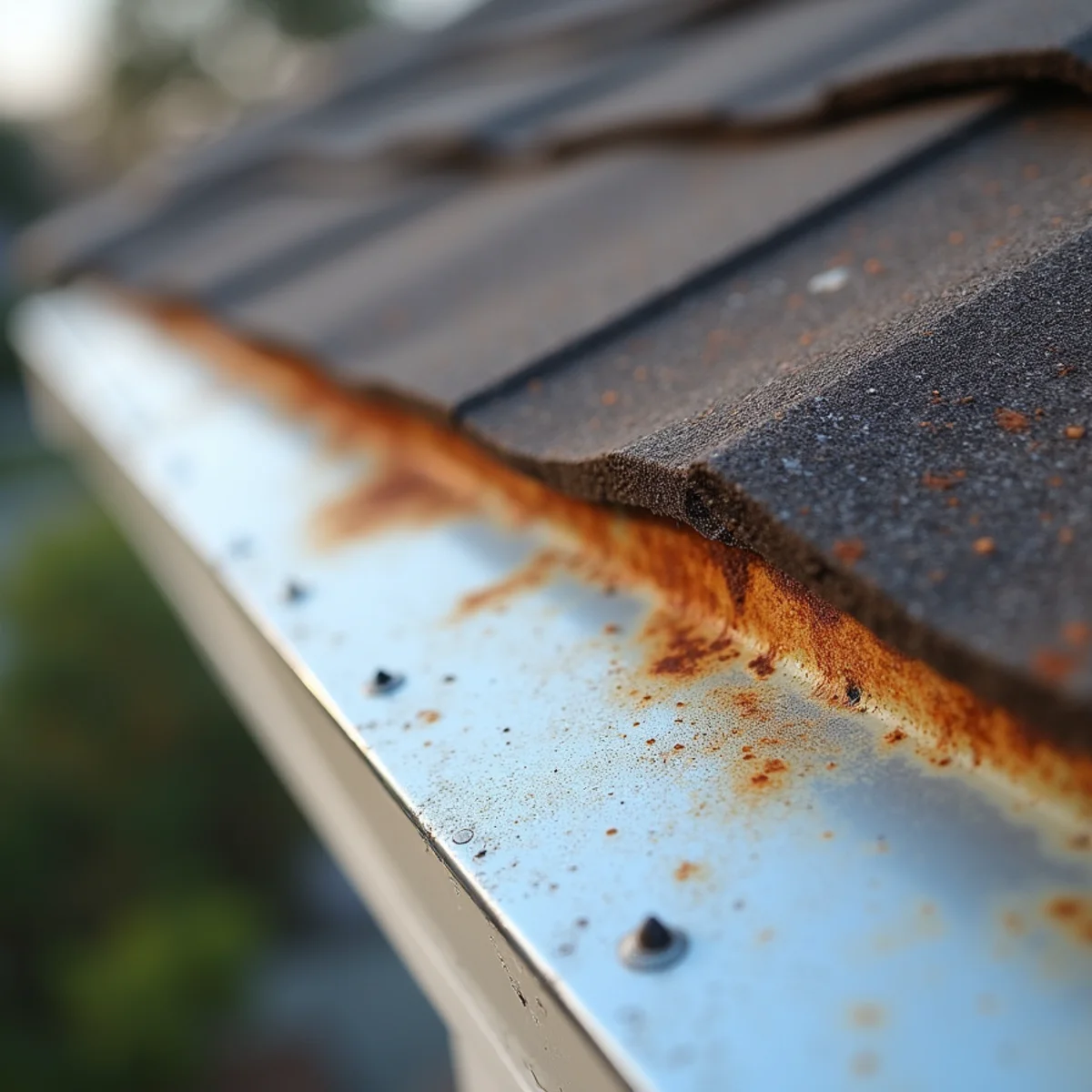
Salt air is the force that separates coastal roofing from everything inland. Breaking surf and ocean spray launch tiny droplets of seawater into the air; as the water evaporates, microscopic salt (sodium chloride) particles ride the breeze and settle on every surface of your roof. Dry salt crystals on their own do little. The trouble starts when the marine layer, morning dew or rain wets them again: dissolved salt turns ordinary moisture into an electrolyte — a solution that conducts electricity and sharply speeds up the natural rusting of metal. That is why a fastener or a piece of flashing (the metal that seals joints and transitions, like where a roof meets a wall or chimney) can corrode near the coast in a fraction of the time it would inland. Corrosion tends to begin where salt and moisture linger longest — roof edges, valleys, and around every penetration and fastener head.
Galvanic corrosion: the quiet enemy
Galvanic corrosion is one of the most common ways a coastal roof is set up to fail early. When two different metals sit in contact — say, an aluminum part fastened with a steel screw, or copper flashing touching a galvanized valley — and salt water bridges them, they form a tiny battery. One metal gives up its material to protect the other, and that "sacrificial" metal corrodes far faster than it would alone. Salt-laden moisture is an efficient conductor, so the coast turns what would be a slow, harmless reaction inland into a real problem. The practical rule is simple: keep dissimilar metals apart, and match the fasteners and flashing to the roof material. Mixing metals to save a few dollars on hardware rarely pays off near the ocean.
Which metals actually resist salt
Not all metal is equal in salt air. Where a component will be exposed to the marine environment, the metal it's made of matters as much as the roof over it:
- Stainless steel — the standard upgrade for coastal fasteners. The marine grade (Type 316, with added molybdenum) resists salt-driven pitting better than the common grade (Type 304), and both far outlast plain steel.
- Standard galvanized fasteners — a thin zinc coating that sacrifices itself to protect the steel beneath. Inland that buys years; in salt air the zinc is consumed quickly, and once it's gone the steel rusts, stains and can back out of the deck. This is why builder-grade galvanized hardware so often fails first near the ocean. Hot-dip galvanized is thicker and lasts longer than the thin electro-galvanized kind, but stainless is the more dependable coastal choice.
- Aluminum — doesn't rust the way steel does; it forms a stable surface layer that shrugs off salt, which makes it a strong performer for coastal metal roofing and trim. It still needs to be isolated from dissimilar metals to avoid galvanic corrosion.
- Copper and zinc — durable, long-lived flashing metals, but they demand careful detailing so they never drain onto or touch an incompatible metal.
- Factory-applied fluoropolymer (PVDF) coatings — on metal panels, a high-performance baked-on finish resists salt spray, fading and chalking far better than basic paint, and is worth specifying close to the water.
Marine-layer moisture and the slow damp
If salt is the coast's sharpest tool, the marine layer is its most patient. That's the low blanket of cloud and fog that rolls in off the Pacific most mornings and often doesn't burn off until midday, especially in late spring and early summer — the gray stretch locals know as May gray and June gloom. For a roof, the marine layer means surfaces stay wet longer than they ever would inland: dew forms overnight, sits through the cool morning, and only slowly dries. Prolonged dampness feeds nearly every moisture problem a coastal roof has, and it lands hardest on the planes that get the least sun — north-facing slopes and anything shaded by trees or a taller wing of the house, which can stay damp most of the day.
Moss, algae and biological growth
Constant moisture is an open invitation to living things. The dark streaks on so many coastal roofs are a hardy blue-green algae that feeds on the mineral filler in asphalt shingles, breaking down the surface from the top down. Moss is the bigger structural threat: it holds water against the roof like a sponge, creeps under the edges of shingles and tiles, and lifts them just enough to let water travel where it shouldn't. Lichen digs in harder still. All three take hold first on those shaded, north-facing planes. Algae-resistant shingles — which carry granules that slowly release copper or zinc to discourage growth — help, as does keeping branches trimmed back so more sun and air reach the roof.
Rot in the decking and underlayment
The damage that matters most happens where you can't see it. Under the shingles or tile sits the underlayment — the water-resistant layer that is the roof's true last line of defense — and under that, the decking (also called sheathing), the wood panels that form the roof's structural surface. When moisture works past the surface and lingers, it degrades older felt underlayment and, over time, rots the wood decking beneath, which can show up as soft spots, sagging or a spongy feel underfoot. Two things fight this: a modern synthetic underlayment, which resists moisture and heat far better than traditional felt, and good attic ventilation, which lets damp air escape instead of condensing inside the roof assembly. In a humid coastal setting, moving moisture out of the roof matters more than almost anything you can't see from the curb.
Intense UV and the sun's slow breakdown
Southern California trades cloudy mornings for strong afternoon sun, and that ultraviolet (UV) light works on a roof year-round. UV breaks the chemical bonds in roofing materials through photo-oxidation: on an asphalt shingle it attacks the asphalt binder that holds everything together, driving off the oils that keep it flexible until the shingle grows brittle, curls and sheds the protective granules that were its sunscreen. On tile, UV fades factory color and coatings. On every roof, it slowly hardens and cracks the sealants and mastics used at flashings and penetrations — often the first components to fail. Cool-roof materials push back on this. A cool roof reflects more sunlight and releases heat rather than soaking it in, which lowers roof-surface temperatures, eases attic heat and slows UV-driven aging. Reflectance is commonly summarized as SRI — the Solar Reflectance Index, a scale where higher means cooler. California's building energy code (Title 24) requires cool-roof performance for many roofs, with exceptions for certain slopes and insulation levels; because the code is updated on a cycle, the current requirements and how they apply to your project should be confirmed with the City of Oceanside Building Division rather than assumed.
Santa Ana wind uplift
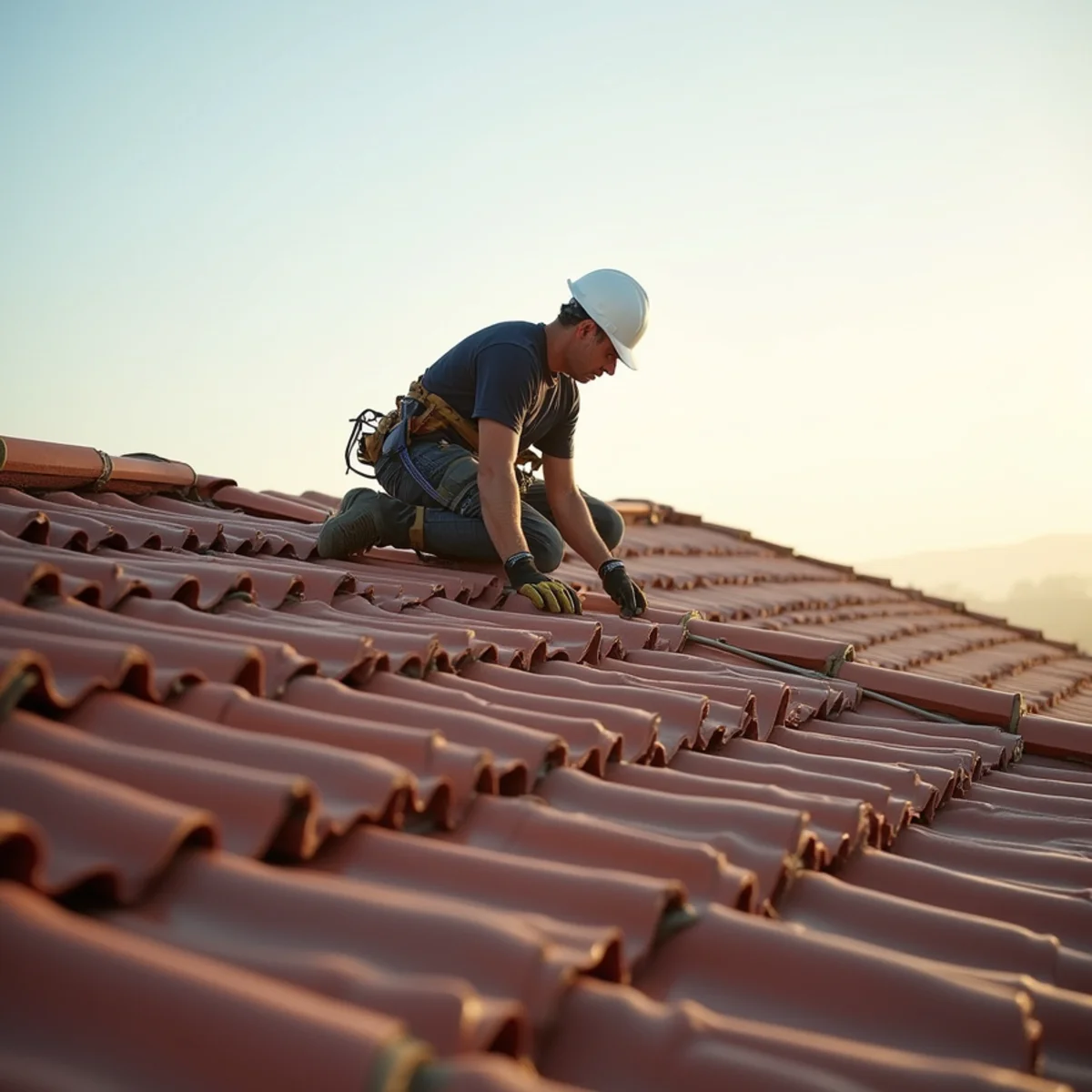
A few times a year the usual onshore flow reverses, and hot, dry Santa Ana winds blow from the inland deserts toward the sea. For a roof, the hazard isn't the wind pushing down — it's the lift. As air accelerates over a roof it creates zones of negative pressure, or suction, strongest at the eaves, rakes, ridges and corners, that try to peel the roofing upward. When that uplift exceeds what the fasteners and self-sealing strips can hold, shingles lift, crease or tear off, tiles can crack or slide, and the wind drives branches and debris across the surface. Here's the part homeowners miss: a shingle can be lifted and its seal broken without visibly leaving the roof, so the roof looks fine from the ground while it has quietly lost its wind and water resistance. That's why a close-up look after any strong Santa Ana — ideally from a professional who can get up there safely — is worth it even when nothing appears to be missing. Wind-rated systems and correct fastening at the edges are the defense.
The coast-to-inland exposure gradient across Oceanside
Oceanside isn't one climate — it's a gradient. The salt load, wind exposure and marine-layer dampness are heaviest right at the water and taper as you move inland toward the ridgelines and the 76 corridor, while heat and UV generally climb the farther you get from the ocean's moderating breeze. Salt can still ride the wind well inland, so the change is gradual, not a hard line. Matching materials and components to where your home actually sits is the single most useful idea in this guide:
- Beachfront and harbor: the harshest zone — maximum salt plus the most wind. This is where stainless fasteners, salt-rated or aluminum flashing, coated metal or quality tile systems, and high-wind detailing earn their keep.
- Coastal residential (the bulk of Oceanside's neighborhoods): heavy marine-layer moisture with moderate salt. Upgraded synthetic underlayment, corrosion-resistant fasteners and flashing, algae-resistant surfaces and solid ventilation matter most here.
- Inland Oceanside: less salt, but more heat and UV. Cool-roof-rated materials, careful attic ventilation and UV-stable products carry more weight than corrosion protection.
Which materials and components hold up near the coast
No single material wins everywhere on the coast, but some carry clear advantages — and the details underneath count as much as the surface you see. In broad terms:
- Architectural asphalt shingle — the most affordable option, and perfectly workable near the coast if you choose a high-wind-rated, algae-resistant product and pair it with corrosion-resistant fasteners. It's the most exposed to UV and biological growth, so surface quality matters.
- Clay and concrete tile — dense, naturally salt- and fire-resistant, and among the longest-lasting roof surfaces. The catch is that the tile outlives the underlayment beneath it, so the waterproof layer — not the tile — is what eventually needs renewal.
- Standing-seam metal — its fasteners hide beneath the seams, so there's less exposed hardware for salt to attack; with the right alloy (aluminum, or coated steel with a fluoropolymer finish) it's a strong, low-maintenance coastal performer. Bare or lightly coated steel does not belong near saltwater.
- Low-slope membrane — for flat sections, self-adhered and single-ply systems suit the marine layer's dampness and shed water well when detailed and drained correctly.
The components often decide the outcome
It's tempting to shop for a roof by the surface material alone, but on the coast the supporting cast frequently decides how long the roof lasts. Whatever you choose on top, these are the details worth confirming: corrosion-resistant (ideally stainless) fasteners; flashing in a salt-appropriate metal, isolated from dissimilar metals; a quality synthetic underlayment; UV-stable sealants; adequate attic ventilation; and clean, well-secured edge metal and gutters so salt and water drain away instead of pooling. Spending a little more here — where it's invisible — is usually the highest-value upgrade a coastal roof can get.
How to tell if salt has already damaged your roof
You can spot a lot from the ground with a sharp eye — no climbing required, since a coastal roof is often damp and always risky to walk. Watch for:
- Rust streaks or orange staining running down from fasteners, valleys or flashing — a sign metal is corroding.
- A white, crusty or hazy film on the surface, which can be dried salt deposits.
- Fastener heads that are rusted, swollen or backing out, and shingles that have loosened as a result.
- Bald patches and heavy granule loss — check the gutters for piles of shed granules, a classic sign of UV and weathering wear.
- Curled, cupped or brittle shingle edges, or cracked and slipped tiles.
- Moss, dark algae streaks or lichen, especially on north-facing and shaded planes.
- Interior clues: new stains on ceilings or in the attic, or a musty, humid attic that points to trapped moisture.
A maintenance cadence tuned to the coast
Near the ocean a roof asks for a little more attention than the inland norm, and the payoff is a roof that reaches its full service life instead of aging out early. A practical coastal rhythm looks like this:
- Every few months, do a ground-level look for lifted or damaged shingles and tiles, debris in valleys, and any new growth on shaded slopes.
- Twice a year — and after any major Santa Ana or storm — clear gutters and downspouts so water and salt drain freely, and check flashing for rust or separation.
- Where it can be done safely, rinsing salt off accessible metal and surfaces with fresh water reduces the salt load that drives corrosion, the same reason coastal homeowners rinse other outdoor metal.
- Once a year, arrange a professional inspection. Late summer is a practical time on the coast — after the dampest marine-layer months and before the winter rains, with room to address anything found.
- Treat moss and algae before they spread, and keep the sealants at flashings and penetrations touched up, since those are the first things UV degrades.
What coastal exposure means for cost and planning
Coastal choices do influence what a roof costs, but the honest answer is that no responsible number comes from a phone call — it comes from an on-site look. The factors that move a coastal project up or down include the material and, for metal, the specific alloy or coating; the step up from standard to corrosion-resistant fasteners and flashing; upgraded underlayment; how much decking turns out to need replacing once the old roof is torn off (tear-off means stripping the existing roofing down to the deck, and hidden rot is the classic surprise a coastal roof holds); wind and cool-roof detailing to meet code; and the usual drivers of size, pitch, access and penetrations. The corrosion-resistant upgrades add some cost up front, but near the water they're usually what keeps a roof from failing early — a trade worth weighing. A property-specific evaluation is what turns all of this into a real number instead of a guess, and we'll walk you through the options with no surprises.