Loading…
Roof Types
Asphalt Shingle Roofing in Oceanside, CA
The most common, budget-friendly option — with coastal upgrades that matter near the ocean.
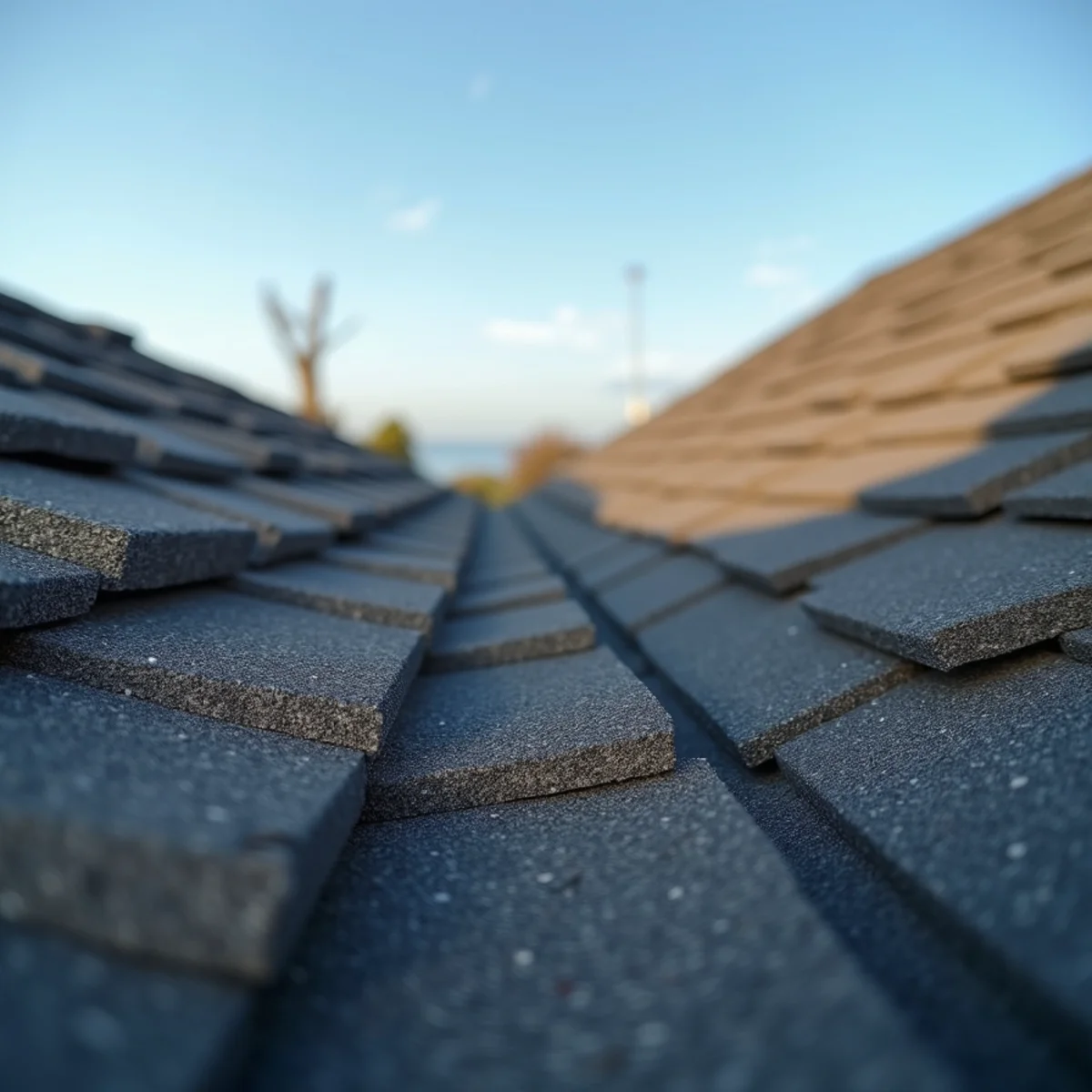
Asphalt shingles are the most common roofing material in Oceanside and Southern California. They're versatile and affordable upfront, but near the coast not all shingles are equal — wind rating, algae resistance, corrosion-resistant fasteners and a good underlayment make the difference between a shingle roof that holds up and one that doesn't.
Asphalt Shingles on Oceanside Homes
Drive through almost any Oceanside neighborhood and the roof you see most often is asphalt shingle — and for good reason. It is the most affordable way to put a sound, good-looking roof over a house, it comes in more colors and profiles than any other material, and a capable crew can install or repair it quickly. But a shingle roof a block from the surf lives a harder life than the same roof a few miles inland, and the parts that give out first are not always the ones you would expect. This page walks through what an asphalt shingle actually is, how it holds up to salt air, marine damp, sun and coastal wind, what it asks of you in upkeep and years, and how to judge whether it is the right fit for your home — so you can decide with no surprises.
What an asphalt shingle is made of
An asphalt shingle is a simpler object than it looks. At its core is a mat of fiberglass, saturated and coated in asphalt, then surfaced with fine mineral granules pressed into the top. Each part has one job. The fiberglass mat is the skeleton that gives the shingle its shape and tear strength. The asphalt is the waterproofing — the part that actually keeps rain out. And the granules are the sunscreen: they take the ultraviolet punishment of the sun so the asphalt underneath does not dry out and crack. Knowing those three parts is genuinely useful on the coast, because when a shingle roof ages it is usually one part — most often the granules thinning and the asphalt drying — that gives out first, not the shingle as a whole.
Shingles work by overlap. Each course laps over the one below, so water always runs down onto a lower shingle rather than into a seam, and a strip of factory adhesive on each shingle warms in the sun and bonds the courses into a wind-resistant sheet. That self-sealing strip is part of why installation matters: shingles that do not seat and seal properly are the ones a strong gust finds first.
Architectural, three-tab and designer profiles
Most roofs going on today use architectural shingles — also called dimensional or laminated shingles — which bond two layers of mat together to create depth, shadow lines and a heavier, more textured look. They have largely replaced the older three-tab shingle, a single flat layer with cut-out tabs that reads as a flatter, more uniform surface and generally carries a shorter service life and a lower wind rating. Above architectural sits a designer or luxury tier: thicker shingles shaped to mimic wood shake or slate for homes that want that look without the weight or upkeep of the real thing. For most Oceanside homes the practical choice is a quality architectural shingle, and the profile you pick is mostly about appearance and how much wind and weather resistance you want built in.
How asphalt shingles hold up on the Oceanside coast
The coast works on a shingle roof from several directions at once, and the encouraging news is that the shingle material itself handles most of it better than people assume. Asphalt, fiberglass and mineral granules do not react with salt the way bare metal does, so the shingles are not the first thing salt air attacks. The vulnerabilities are more specific — the metal hardware that holds the roof together, the moisture that lingers in the marine layer, and the steady grind of ultraviolet sun. Sort those three out and a shingle roof can serve an Oceanside home well.
Salt air and the hardware that holds the roof down
Salt-laden air is hard on metal, and a shingle roof carries more metal than you might think: the nails that fasten every shingle, the flashing that seals the joints where the roof meets walls, chimneys and skylights, the drip edge along the eaves, and the boots that seal around plumbing vents. (Flashing is the sheet metal that bridges those vulnerable transitions; a vent boot is the collar that seals where a pipe passes through the roof.) Standard galvanized versions of these parts corrode faster near the ocean than they ever would inland — and a nail can rust thin and lose its grip while the shingle above it still looks perfect. This is why, close to the water, corrosion-resistant hardware matters as much as the shingle itself: stainless steel or hot-dipped galvanized fasteners, and aluminum or other corrosion-resistant flashing and drip edge. It is one of the least glamorous choices in a roof and one of the most important on this coast.
Marine-layer moisture and roof algae
Oceanside's marine layer keeps roofs damp for hours after inland roofs have dried, and that lingering moisture is what feeds roof algae — the dark streaks you see running down shaded, north-facing slopes. It is mostly cosmetic, but it is a fair sign of how slowly a plane dries. Algae-resistant shingles, which carry granules designed to discourage that growth, are worth asking about on slopes that sit in shade or face away from the afternoon sun. Keeping the roof clear of leaf litter and trimming back overhanging branches helps too, since anything that holds moisture against the shingles gives algae — and the rot beneath it — a foothold.
Sun, heat and coastal wind
Above everything is the sun. Ultraviolet light slowly dries the asphalt binder and loosens granules, and you can read that aging in the grit that collects in the gutters over the years — thinning granules mean the asphalt is losing its cover. In the warmer inland Oceanside neighborhoods, attic heat pushes on the shingles from below as well, which is why good attic ventilation and, where it fits, a cool-roof-rated shingle earn their place away from the immediate coast. Wind is the last factor. Santa Ana gusts can lift, crease or peel a poorly sealed shingle, and uplift damage — wind getting under the edge and breaking the seal — does not always leak right away; a roof can be compromised while it still looks fine from the street. Shingles carry a wind rating, a tested classification of how much uplift they resist, and a higher-rated shingle nailed correctly is the sensible default anywhere the wind reaches. Fastening is half the story: even a well-rated shingle underperforms if it is nailed too high or with too few nails, so the nailing pattern is not a detail to leave to chance.
The layers you never see
A shingle roof is a system, and the shingles are only its outer skin. Beneath them lies the underlayment — a water-resistant layer rolled over the wood deck that catches any water driven past the shingles by wind and carries it down to the gutters. At the most vulnerable spots — the eaves, the valleys where two roof planes meet, and around penetrations — a reinforced self-adhering leak barrier (sometimes called a secondary water barrier) adds a second line of defense that seals tight around the nails driven through it. Under the first course, a starter strip gives the shingles a sealed, wind-resistant edge, and along the eave the drip edge directs runoff into the gutter instead of behind it. None of this shows once the roof is finished, but in a wind-driven coastal rain it is often what stands between a hard storm and a stain on your ceiling. When you compare shingle proposals, what goes under the shingles deserves as much attention as the shingles themselves.
Energy, cool roofs and California Title 24
Roof color and reflectivity affect how much heat a home takes on. A cool-roof-rated shingle is made with granules engineered to reflect more sunlight and absorb less heat, measured by a value called the Solar Reflectance Index, or SRI — the higher the SRI, the cooler the roof surface runs. In the inland neighborhoods that see more heat than the immediate coast, that reflectivity can ease summer cooling costs, and it works best alongside sound attic ventilation and insulation rather than in place of them. Reflectivity also matters for the rules: California's Title 24 energy standards call for cool-roof performance on many new and replacement residential roofs, with exceptions tied to slope, insulation and climate zone. Whether your specific project has to meet a cool-roof requirement depends on the details, so the honest guidance is to confirm the current edition of Title 24 and how it applies with the local authority before you settle on a shingle.
Maintenance and common repairs
One of the quiet advantages of asphalt shingles is that they are forgiving. Keeping the gutters clear, clearing debris off the roof, treating algae before it spreads, and replacing the occasional lifted or missing shingle after a windy night will carry a roof a long way. It helps to have someone look over the roof periodically — and especially after a strong wind event — because a lifted or creased shingle caught early is a small fix, while the same spot ignored becomes a leak. When something does fail on a shingle roof, it is usually local rather than wholesale: a cracked or wind-torn shingle, a lifted edge that lost its seal, a tired run of flashing around a chimney or wall, or a cracked vent boot around a pipe. Because the material is so widely available, matching and mending a shingle roof rarely becomes the ordeal it can be with an older tile roof, and a targeted repair puts things right without disturbing the rest of the roof.
Installation details that decide how long it lasts
Two shingle roofs using the same shingle can perform very differently, and the difference lives in the details underneath and in the nailing. Before new shingles go down, the wood deck should be checked for soft or rotted spots, because shingles fastened over a compromised deck will not hold as they should — one reason a full tear-off, removing the old roof down to the deck, is usually sounder on the coast than laying new shingles over old. Nail placement and count matter enormously: nails driven in the manufacturer's specified line and quantity are what actually earn the shingle its wind rating, while high nails or too few are the most common reason shingles blow off in a gust. Valleys, hip and ridge caps, and the flashing at every wall and penetration are the spots where water concentrates, so they deserve the most care. And because reroofing generally involves a permit in California, it is worth confirming with the City what your project requires before the work begins.
Service life and the honest trade-offs
The honest limitation of asphalt shingles is service life. A shingle roof does not last as long as quality tile or metal, and the closer you sit to the ocean, the shorter that life tends to run, because salt and constant damp push it harder — many coastal homeowners are surprised to see a roof aging sooner than the range they had in mind. That is not a reason to rule shingles out. For a great many Oceanside homes they are the right balance of cost, appearance and practicality. But it frames the trade cleanly: shingles ask the lowest relative investment of any common roofing material upfront, and in return you accept a roof you will revisit sooner than a tile or metal one. Choosing quality components — a high-wind, algae-resistant shingle, corrosion-resistant hardware, a good underlayment and leak barrier — is how you get the most years out of that trade. Reading the roof as it ages (granules collecting in the gutters, curling or cupping edges, bald patches, repeated small leaks) is how you tell the difference between a roof that needs a repair and one that is quietly telling you its time is near.
How shingles compare to tile and metal
It helps to see shingles against the alternatives, because every roofing material trades off differently and none is best for every home. Compared with clay or concrete tile, shingles cost far less upfront, weigh a fraction as much (so they rarely raise the structural questions tile does), and are simpler to repair — but they do not match tile's very long life or its salt-and-sun resistance, and they do not lend a home the Spanish or Mediterranean character tile gives. Compared with standing-seam metal — long interlocking panels that run from ridge to eave — shingles again cost less and are easier to work on, but a corrosion-resistant metal roof, specified with the right alloy for its distance from the surf, will generally outlast a shingle roof with less upkeep. The right answer depends on your budget, your home's style, how close you sit to the water, and how long you plan to stay. Shingles win on upfront cost and flexibility; tile and metal win on longevity. We will walk you through where your home lands.
Is a shingle roof right for your Oceanside home?
Shingles suit a broad swath of Oceanside housing — ranch homes, traditional two-story homes, and most any roof with enough pitch to shed water well. They are a particularly comfortable fit for budget-conscious replacements and for the inland neighborhoods where salt is lighter and heat is the bigger concern. Where they ask for more thought is right at the water, on very low-slope sections that shed water slowly, or on homes whose architecture really calls for tile. If you are weighing a shingle roof, a handful of questions will tell you most of what you need to know:
- Is this shingle high-wind-rated, and how — and with how many nails — will it be fastened for coastal exposure?
- Are the nails, flashing, drip edge and vent boots corrosion-resistant rather than standard galvanized?
- Is an algae-resistant granule worth it on my shaded or north-facing slopes?
- What underlayment goes down first, and does it include a reinforced leak barrier at the eaves, valleys and penetrations?
- Will the old roof be torn off to the deck so the wood can be inspected, or laid over the existing shingles?
- If my project falls under California's Title 24, is a cool-roof-rated shingle required — and can you confirm the current edition and how it applies with the local authority?
Advantages
- Most affordable upfront
- Wide selection and easy repairs
- Cool-roof-rated options available for Title 24
- Good high-wind-rated choices for coastal use
Limitations to weigh
- Shorter service life than tile or metal
- UV and salt exposure shorten life closer to the ocean
- Requires quality fasteners and underlayment to perform coastally
Coastal considerations
- Choose high-wind-rated, algae-resistant shingles for coastal exposure.
- Insist on corrosion-resistant fasteners and flashing near the coast — standard galvanized components corrode faster in salt air.
- A quality secondary water barrier / leak barrier under the shingles matters in the marine layer.
Maintenance
- Periodic inspection for lifted or missing shingles after wind
- Keep gutters clear
- Address granule loss and algae early
Common repairs
- Replacing wind-lifted or missing shingles
- Flashing repair
- Sealing around penetrations
Energy considerations
Cool-roof-rated shingles reflect more sunlight and can help with cooling costs — relevant to California Title 24 for many new residential roofs.
Questions to ask before choosing this material
- Is this shingle high-wind-rated for coastal conditions?
- Are the fasteners and flashing corrosion-resistant?
- Is a leak barrier / secondary water barrier included?
- Is the shingle cool-roof-rated for Title 24 if my project requires it?
Frequently asked questions
They can be, with the right specification. The shingle material itself — asphalt, fiberglass and mineral granules — resists salt fairly well; the parts that suffer near the ocean are the metal ones. Choose a high-wind, algae-resistant shingle, insist on corrosion-resistant fasteners and flashing, and put a quality underlayment and leak barrier beneath, and a shingle roof can serve well. Closer to the surf, plan on a shorter life than inland.
It varies with the shingle, the installation and how much salt, sun and marine damp the roof takes. Roofs closest to the water generally sit at the shorter end of the range, and many coastal homeowners see aging sooner than they expected. We give you a realistic expectation for your specific home and exposure rather than a one-size-fits-all number.
A three-tab shingle is a single flat layer with cut-out tabs and a uniform look. An architectural (or dimensional) shingle bonds two layers for depth, texture, and generally a higher wind rating and longer service life. Most roofs today use architectural shingles, with a thicker designer tier available for homes that want a shake or slate appearance.
Near the ocean, standard galvanized hardware corrodes faster than it would inland, so corrosion-resistant components matter: stainless steel or hot-dipped galvanized nails, and aluminum or other corrosion-resistant flashing, drip edge and vent boots. It is one of the most important — and most overlooked — choices in a coastal roof, because a nail can fail while the shingle above it still looks fine.
As a category, shingles ask the lowest relative investment upfront of the common roofing materials, which is a large part of their popularity. The trade-off is service life: tile and metal generally last longer and are replaced less often. Which one is the better value for you depends on how long you plan to stay and how close you are to the water.
Some granule loss is normal as a roof ages, since the granules are the shingle's sunscreen and ultraviolet light slowly loosens them. Heavy loss — grit collecting in the gutters and bald patches on the shingles — means the asphalt underneath is losing its cover and the roof is aging. It is one of the clearest signs to have the roof looked at.
Often it can be repaired. Shingle failures are usually local — a cracked or lifted shingle, a worn run of flashing, a cracked vent boot — and a targeted repair fixes them without redoing the roof. When granule loss, curling and repeated leaks show up across the whole roof, replacement becomes the sounder call. We will tell you honestly which situation you are in.
Possibly. California's Title 24 energy standards require cool-roof performance on many new and replacement residential roofs, with exceptions tied to slope, insulation and climate zone. Whether your project qualifies depends on the specifics, so confirm the current edition and how it applies with the local authority. Cool-roof-rated shingles are readily available if you need one.
Related services
Next step
Considering Asphalt Shingles?
Let's talk through whether it's the right fit for your Oceanside property.