Loading…
Roof Types
Clay Tile Roofing in Oceanside, CA
Classic Spanish and Mediterranean beauty with excellent salt and UV resistance.
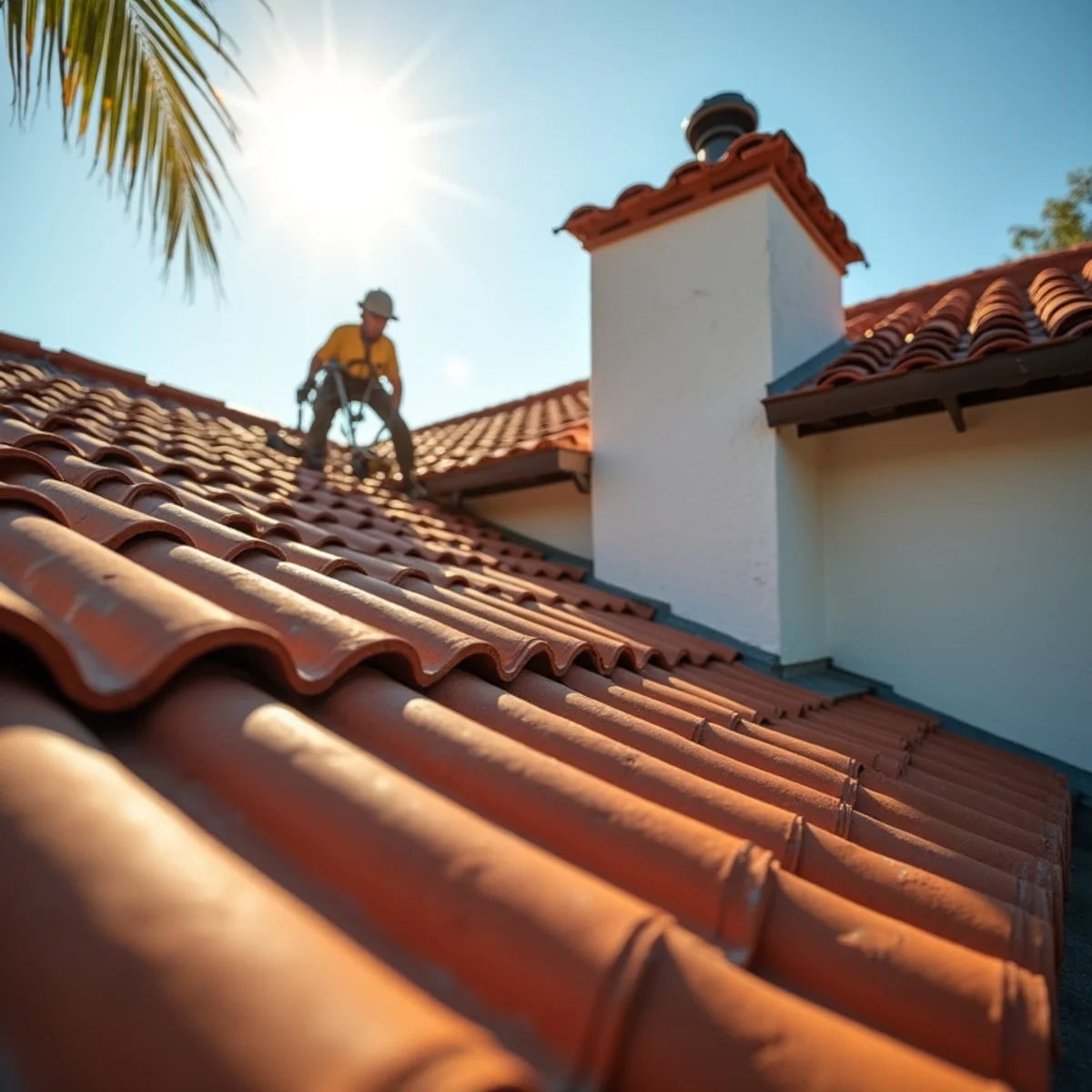
Clay tile is the signature roof of Oceanside's Spanish and Mediterranean homes. The tile itself resists salt and UV remarkably well and can last for decades. The catch: the underlayment beneath the tile is the real waterproof layer, and it typically needs attention long before the tile does.
Clay Tile Roofing on Oceanside Homes
Drive through South Oceanside, Fire Mountain, or the older Spanish and Mediterranean pockets of town and the rooflines tell you where you are: warm terracotta barrels, curved and overlapping, catching the coastal light. Clay tile is the signature roof of this stretch of coast, and it has earned that place. The fired clay itself shrugs off the two forces that wear most roofs down out here, salt-laden air and relentless sun, and it can serve for generations. Owning one well, though, means understanding a quiet truth about how it keeps you dry, because the part of a tile roof that actually waterproofs your home is not the part you can see.
This page walks through what clay tile is, how it performs in Oceanside's marine climate, what it asks of your home's structure, how it is maintained and repaired, how it stacks up against concrete tile, asphalt and metal, and how to decide whether it fits your house. No fear, no hard sell. Just the honest trade-offs so you can choose with your eyes open, and no surprises later.
What clay tile roofing is, and why it lasts
A clay tile starts as natural clay, shaped and fired in a kiln until it is dense, hard and stable. The color comes from the clay and the firing, so it runs through the body of the tile rather than sitting on top as a coating. That is why a clay roof does not peel, chip its finish or wash out its color the way a painted surface can. It weathers to a soft patina instead of simply wearing down, and it does not rot, burn or feed insects. Those material facts are the whole reason clay has been on roofs for centuries and is still going strong on this coast.
The look you know from Oceanside's older neighborhoods is the barrel or mission profile, the S-curve that overlaps course to course and lifts rainwater into channels that run it down and off the roof. Some are one-piece S-tiles that combine the curve and the pan in a single piece; others are the older two-piece mission style, a rounded cover over a flatter pan. Flatter, interlocking profiles exist too for a cleaner, more contemporary line. Whatever the shape, the tile works by shedding the bulk of the water and leaving an air gap between itself and the roof below, a detail that matters both for drainage and, as you will see, for keeping the house cooler.
The layer that actually keeps you dry
Here is the single most important thing to understand about any tile roof, clay included: the tile is a shell, not a seal. Beneath the tile lies the underlayment, a water-resistant membrane rolled out over the roof decking, which is the wood surface the whole roof is built on. That membrane is the true waterproof layer. The tile takes the sun, the salt and most of the rain on your behalf; the underlayment catches whatever blows or wicks past the tile and guides it, along with the flashing, down to the gutters. Flashing is the metal that seals the vulnerable joints, the places where roof planes meet, where the roof meets a wall, and around anything that pokes through.
Why a tile roof can leak with every tile intact
Because the underlayment is hidden and the tile above it is so durable, the membrane almost always reaches the end of its life long before the tile shows any sign of age. Heat cycling through the day, marine damp settling in every night, and simple time dry the underlayment out until it cracks and stops sealing. The unsettling part for homeowners is that none of this is visible from the yard. The tiles look flawless while the waterproofing beneath them quietly gives out, and the first sign is often a stain spreading across a ceiling. A leak like that is not a sign the tile failed. It is the underlayment telling you its time is up.
Renewing the underlayment: lift, replace, relay
Because clay outlasts the layer it protects, planning for underlayment renewal is the central fact of owning a tile roof near the water. When the membrane ages out, the sound tile is carefully lifted and stacked, the old underlayment is stripped and replaced, and the same tile is relaid over the fresh membrane. You are usually renewing the layer you cannot see, not buying a brand-new roof. The tile you paid for the first time keeps serving. Coastal conditions tend to shorten the membrane's working life compared with a drier inland roof, which is one more reason a periodic look underneath, not just at the surface, is worth doing before a small problem becomes a ceiling repair.
How clay tile handles salt, sun, fire and wind
Salt air, which corrodes metal and dries out asphalt, has little effect on fired clay, and strong sun, which fades and degrades softer materials, barely registers. That is what makes clay such a capable coastal shell. The catch is that the tile is not the only material on the roof. The fasteners, the flashing and the valleys, the metal channels that carry water where two roof planes meet, are all metal, and metal still corrodes in salt air. Close to the ocean, corrosion-resistant flashing and hardware matter as much on a tile roof as on any other, because the metal, not the clay, is the weak link.
Clay brings two more strengths that count in San Diego County. It is non-combustible, which can help a roof assembly reach the top fire-resistance classification, a real consideration in the wildfire-prone inland and canyon areas of the region. And its weight, which is a structural question in its own right, also helps it stay put in wind; the overlapping courses lock together and hold up well to the gusts that roll through. The pieces most exposed to strong Santa Ana wind are the edge, ridge and hip tiles, which is why proper fastening and secure ridge work matter where the wind reaches hardest.
Weight, structure and switching to tile
Clay tile is heavy, and that weight is a design consideration rather than a flaw. A home already wearing tile was built to carry it, so replacing clay with clay rarely raises a structural question. Switching to tile from a lighter material like shingles is a different matter: the framing has to be evaluated first, and sometimes reinforced, to be sure it can safely carry the added load. In California, changing a roof's weight classification is generally the kind of work that involves a permit and a structural review, which is worth confirming with the City of Oceanside before you plan around it. An honest roofer's first move here is to check the structure, not to sell you the tile.
Keeping a clay tile roof healthy
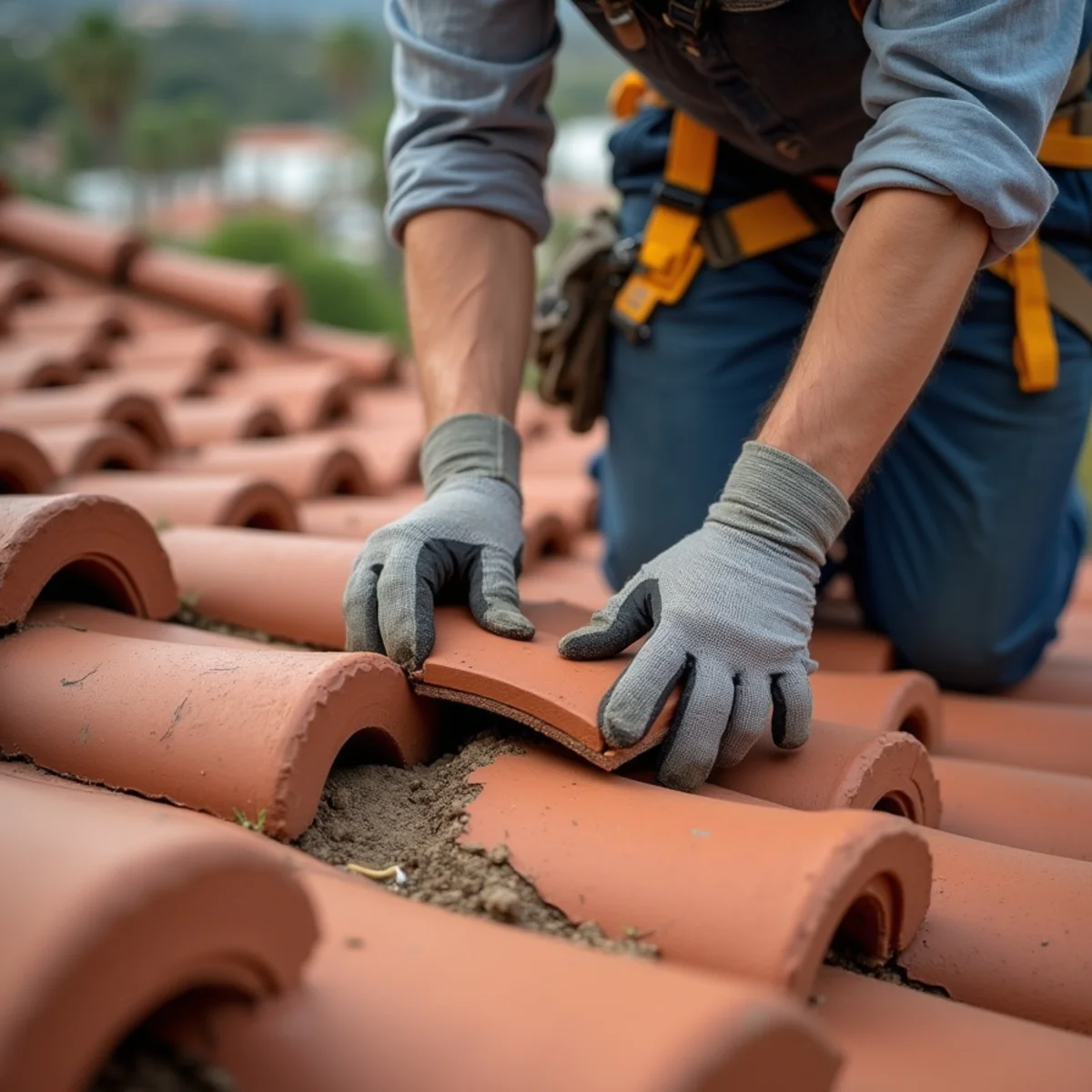
Day to day, clay asks for little, but the maintenance it does need protects the layer beneath it. Cracked or slipped tiles should be replaced promptly, because every gap in the shell lets more water reach the underlayment than it was meant to handle. Valleys and flashing need to stay clear and sound, since a corroded valley will leak under perfectly good tile. A look after heavy wind or a big storm catches the small stuff early. The one habit worth building is respect for how brittle the tile is underfoot: walked on carelessly, clay cracks, and a hairline crack today becomes a leak later, so walking a tile roof is best left to someone who knows where the load points are.
Moss, debris and the shaded, north-facing slopes
Oceanside's marine layer keeps roofs damp for hours after inland roofs have dried, and that lingering moisture shows up first on the slopes that get the least sun. North-facing and tree-shaded planes tend to grow moss and lichen and to hold leaf debris, which traps water against the tile and the underlayment beneath. Clearing it gently keeps that moisture from settling in. Pressure washing, tempting as it looks, is a common way to crack tile and drive water up under the courses, so a softer approach and trimming back overhanging branches does more good with less risk.
Common clay tile repairs
Most clay tile repairs fall into a handful of familiar jobs. Individual tile replacement handles the cracked or slipped piece, provided the underlayment below is still sound. Underlayment repair or renewal beneath a section addresses the actual leak when the membrane, not the tile, has failed. Flashing and valley repair is often where a leak truly originates, since that metalwork ages faster than the clay around it. And re-bedding the ridge and hip tiles, the capped lines along the peaks, restores the mortar or bedding that weathers over the years. The trickier part of any tile repair is matching an older profile and color, because clay profiles have changed over the decades and an exact match is not always on the shelf; salvaged tile or a close current profile sometimes enters the conversation, and we will walk you through the options.
Energy, thermal mass and California Title 24
That air gap under barrel tile is quietly useful in the heat. The gap, together with the tile's thermal mass, its ability to absorb and slowly release heat, buffers the roof so it warms and cools gradually instead of dumping the afternoon sun straight into the attic. In the warmer inland Oceanside neighborhoods, that moderating effect earns its keep.
Cool roofing takes this a step further. A cool roof is not a separate material; it is a performance rating called the Solar Reflectance Index, or SRI, a scale of how well a surface reflects sunlight and sheds heat, and it is available across materials, including cool-roof-rated clay tile. California's Title 24 energy standards require cool-roof performance for many new and replacement residential roofs, with exceptions for certain slopes, insulation levels and roof types. Whether your specific project must meet a cool-roof requirement depends on the details, so it is worth confirming the current edition and how it applies with the local authority. Reflectivity also works best alongside good attic ventilation and insulation, not as a substitute for them.
How clay tile compares to concrete, asphalt and metal
No roofing material is universally best; each trades off differently, and the right answer depends on your home, your budget and how long you plan to stay. Against asphalt shingles, clay costs more upfront but serves far longer and holds its character, while shingles win on price and simplicity. Against standing-seam metal, clay offers the traditional Spanish and Mediterranean look where metal offers a light, low-maintenance, contemporary one; both are strong coastal performers when specified correctly. The closest comparison, and the one most Oceanside homeowners are actually weighing, is clay against concrete tile.
Clay vs concrete tile
Both are heavy, both resist salt and sun well, both are non-combustible, and both live or die by the underlayment beneath them. The differences are in the details. Concrete tile is molded rather than kiln-fired, comes in more profiles including ones that imitate wood shake or slate, and usually carries a lower upfront cost; its color is often a surface treatment, so the finish can soften over years of sun. Clay carries its color all the way through, holds that color the longest, offers the most authentic barrel look, and is frequently a bit lighter than the equivalent concrete tile. If authenticity and lasting color lead your list, clay tends to fit; if flexibility of look and a friendlier price lead it, concrete is worth a serious look.
What clay tile costs relative to other roofs
As a category, clay tile sits at the higher end of the roofing investment scale, above asphalt shingles and generally above concrete tile, because the material, the weight it requires the structure to support, and the care its installation demands all add up. The honest way to think about the cost, though, is over the life of the roof rather than the day it goes on. Because the tile itself can serve for decades and be relaid rather than replaced, the recurring expense over the years is usually the periodic underlayment renewal, not the tile. Spread across that long horizon, a clay roof reads less like a purchase and more like a long-term feature of the house. We will give you a straight picture of that trade-off for your specific home.
Is a clay tile roof right for your Oceanside home?
Clay tile fits the homes it has always fit: Spanish, Mediterranean and mission-style architecture, historic South Oceanside homes, and any house whose owners want lasting character and are prepared to invest in it. It rewards people who plan to stay, who value the look, and who understand they are buying a long-lived shell over a membrane that needs periodic care. It asks more thought where a roof is very low-slope, where the budget is tight, or where a lighter structure would need significant reinforcement to carry the weight. If you are weighing clay for your home, a handful of questions will tell you most of what you need to know before you commit:
- What underlayment will go beneath the tile, and how long should it protect the roof before it needs renewal?
- Is my roof structure adequate for the weight of clay, and does the work require a permit and structural review?
- How will you match my existing tile's profile and color, and what happens if an exact match is not available?
- Are the flashing, valleys and fasteners corrosion-resistant for coastal salt air?
- How will you protect the tile from walking damage during the work?
- When the underlayment eventually ages, can my existing tile be lifted and relaid rather than replaced?
- If my project falls under California's Title 24 energy standards, can you confirm the current requirement and how it applies with the local authority?
Advantages
- Excellent salt and UV resistance
- Very long tile service life
- Distinctive architectural character
- Non-combustible
Limitations to weigh
- Higher upfront cost
- Weight requires adequate structure
- Underlayment needs periodic replacement
- Requires careful, knowledgeable repair
Coastal considerations
- Tile handles coastal salt and sun well, but marine moisture works on the underlayment beneath — double-layer, high-temperature underlayment helps.
- Cracked or slipped tiles should be replaced promptly to protect the underlayment and prevent leaks.
Maintenance
- Replace cracked or slipped tiles promptly
- Keep valleys and flashing clear
- Plan for eventual underlayment renewal
Common repairs
- Individual tile replacement
- Underlayment repair beneath tile
- Flashing and valley repair
- Re-bedding ridge and hip tiles
Energy considerations
Tile's thermal mass and air gap can help moderate attic heat; cool-roof-rated tile options exist for Title 24.
Questions to ask before choosing this material
- What underlayment will go beneath the tile, and what's its rated life?
- How will you match my existing tile profile and color?
- Is my roof structure adequate for tile weight?
- How will you avoid walking damage during the work?
Frequently asked questions
The clay tile itself is remarkably long-lived and can serve for generations, resisting the salt air and sun that wear most roofs down. The limiting factor is not the tile but the underlayment beneath it, the water-resistant membrane that ages faster and typically needs renewal well before the tile shows any wear. Marine conditions tend to shorten that membrane's life compared with a drier inland roof, so a realistic expectation for your specific home depends more on the underlayment and the flashing than on the clay.
Because the tile is a shell, not the seal. The tile sheds most of the water, but the actual waterproofing is the underlayment membrane hidden beneath it. When that membrane ages and cracks, water gets past it even though every tile above looks flawless. A leak like this usually means the underlayment has reached the end of its life, not that the tile failed.
It varies with the membrane used, the sun and marine exposure, and the roof's design, but it consistently ages out long before the tile does, so plan on renewing it at least once or more over the life of the tile. Coastal damp and heat cycling tend to accelerate it. Rather than guess, a periodic inspection that looks beneath the surface is the honest way to know where yours stands.
It is best not to. Clay is durable in the right spots and brittle in the wrong ones, and stepping on it carelessly is one of the most common ways a tile roof gets damaged. A hairline crack you leave behind can turn into a leak later. Walking a tile roof is best left to someone who knows how to distribute their weight over the tile's strong points.
Usually yes, as long as the underlayment beneath is still sound. The consideration is matching, since clay profiles and colors have changed over the decades and an exact match for an older tile is not always available. In that case, salvaged tile or a close current profile may come into the conversation, and we will walk you through the options.
It depends on the structure. A home already roofed in tile was built to carry the weight, so replacing clay with clay is generally straightforward. Switching to tile from a lighter material like shingles is where the framing needs to be evaluated first, and possibly reinforced, and that kind of change typically involves a permit and structural review with the City. We check the structure before recommending the tile.
Neither is universally better. Both resist salt and sun well, both are heavy, and both rely on the underlayment beneath them. Concrete offers more profiles and a lower upfront cost, with color that is often surface-applied and can soften over time. Clay carries its color through the tile, holds it the longest, and gives the most authentic barrel look. The right choice comes down to your priorities on look, longevity and budget.
Clay does not fade or peel the way a painted surface can, because its color is fired through the body of the tile; it weathers to a soft patina instead. Moss and lichen can grow on shaded, north-facing or damp slopes where the marine layer lingers, along with trapped leaf debris. Gentle cleaning and trimming overhanging branches keep it in check. Avoid pressure washing, which can crack tile and drive water under the courses.
The clay shell is one of the better coastal performers, since salt and UV barely affect fired clay, and it is non-combustible on top of that. The parts to watch near the ocean are the metal, meaning the flashing, valleys and fasteners, which still corrode in salt air, and the underlayment, which is the layer you actually maintain over time. Specify corrosion-resistant metal and a quality underlayment, and clay holds up well on this coast.
Related services
Next step
Considering Clay Tile Roofing?
Let's talk through whether it's the right fit for your Oceanside property.