Loading…
Oceanside Neighborhoods
Roofing in the Oceanside Harbor Area
The Oceanside Harbor area sits at the water's edge, where salt exposure is at its most intense. Homes, condos and harborside commercial buildings here demand the most corrosion-resistant materials and meticulous detailing.
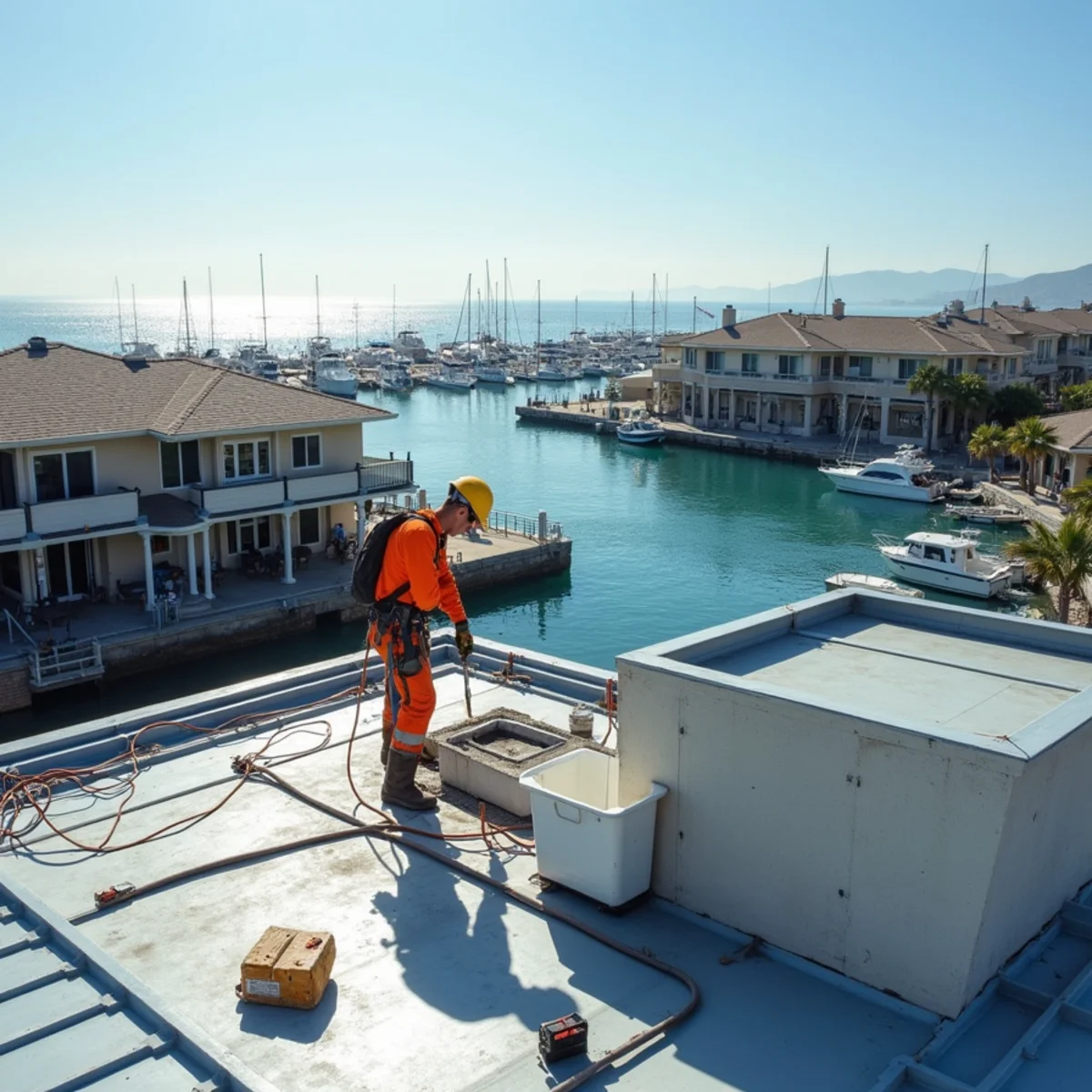
Common property styles
The harbor area features coastal condos, view homes and harborside restaurants and businesses, with a mix of pitched and flat roofs — all in a maximum-exposure environment.
Roofing materials you'll see here
- Corrosion-resistant metal
- Flat and low-slope membranes
- Tile with high-temperature underlayment
Exposure considerations
At the harbor, salt spray and moisture are constant. Stainless or otherwise corrosion-resistant fasteners and flashing, and careful sealing, are essential to avoid early failures.
Maintenance guidance
Harborside roofs face the harshest exposure in Oceanside, so regular inspection and prompt attention to corrosion or sealant wear pay off. Commercial properties benefit from maintenance plans.
Roofing Considerations Specific to Oceanside Harbor
Few places in Oceanside test a roof the way the harbor does. Here the water sits right at the property line, and the air coming off it carries a fine, salt-laden mist that settles on every surface above the waterline. The area is a tight blend of coastal condos, view homes built to look out over the basin, and the restaurants and businesses that ring the harbor itself. Roof shapes vary just as much — steep pitched roofs on some buildings, flat and low-slope decks on others, and plenty that carry both. What ties it all together is exposure. A roof that would shrug off the years a few miles inland has to work harder here, and the details most people never think about — the fasteners, the flashing, the sealant — are what decide whether it lasts.
What maximum salt exposure does to a roof
Salt exposure is hard to read, because you cannot see it the way you see a cracked tile. Out at the harbor, wind and breaking water throw off an aerosol of salt-bearing mist that drifts onto roofs and dries into a thin, corrosive film. Salt is hygroscopic — it pulls moisture out of the air — so a salted surface stays damp longer and keeps metal wet when it would otherwise dry. Wet, salted metal corrodes; corroding metal loosens, pits and eventually lets water past. That is why parts rated for ordinary conditions underperform right on the water: they were never meant to sit in a standing film of salt. The surface you can see tends to outlive the metal you cannot, and near the harbor that gap is at its widest.
A built environment shaped by the water
The harbor's mix of buildings gives the area its character and sets its roofing agenda. Coastal condos and multi-unit buildings sit shoulder to shoulder, many under flat or low-slope roofs spanning several homes at once. View homes are built around the sightline to the water, which often means rooftop decks, terraces and parapets — the low walls at a roof's edge — pointed straight at the exposure. Harborside restaurants and businesses carry the rooftop equipment their trade requires. Ages and styles run the full range, but the common thread is that most roofs here are pitched, flat, or some mix of the two, all facing the same relentless marine air.
Pitched roofs on harbor homes and condos
On the pitched roofs around the harbor — tile on some homes, shingle on others — the surface material generally handles salt and sun well on its own. The vulnerable parts sit underneath and at the joints. Underlayment, the water-resistant membrane beneath the tile or shingle that does the real waterproofing, ages faster in damp coastal air, and the fasteners and flashing that hold everything together take the brunt of the salt. A pitched roof this close to the water is only as good as the corrosion-resistant hardware and clean detailing worked into it, even when the surface looks perfect from the street.
Flat and low-slope roofs at the water
Flat and low-slope roofs — common on the condos, view homes and businesses here — play by different rules. With little pitch to shed water by gravity, they rely on a continuous waterproof membrane and planned drainage to move water off the building. The usual trouble spots are ponding, where water sits in a low area instead of draining; seams and edges that have loosened; and the many penetrations — vents, equipment curbs, drains — that each have to stay sealed. Parapet walls and rooftop-deck transitions add still more edges, and every edge is a place salt spray can find its way in. Careful sealing and free-flowing drainage matter more here than almost anything else.
Fasteners, flashing and the sealing that holds it together
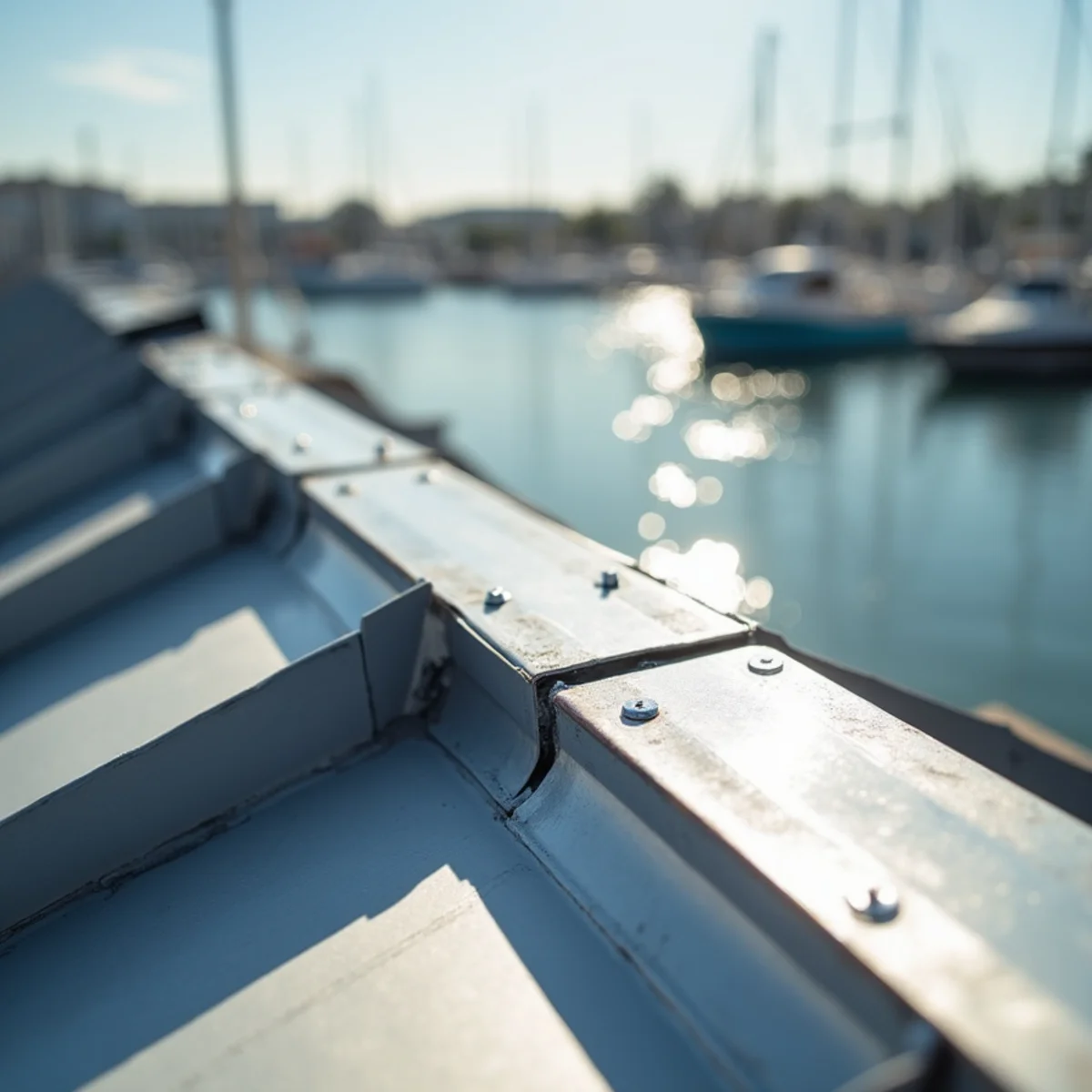
If there is one place to concentrate attention on a harbor roof, it is the metal and the sealant. Corrosion-resistant fasteners and flashing — the right grades of stainless steel or aluminum rather than ordinary galvanized parts — are close to non-negotiable in constant salt spray, because standard hardware can corrode early and let go while the roof above it still looks sound. Sealing is the partner to that hardware: every joint, edge and penetration depends on sealant that stays flexible and bonded, and sealant wears faster in this exposure, so it needs checking and refreshing before it fails. One more quiet detail: two different metals in contact in salty, damp conditions can speed each other's corrosion — a reaction called galvanic corrosion — so keeping incompatible metals apart is another choice that quietly extends a harbor roof's life.
Ventilation and moisture on the coast
Inland Oceanside worries about heat; the harbor worries about damp. Cooled by the water, the immediate coast runs milder, so the driving concern here is moisture rather than baking sun. Balanced attic ventilation — a steady path for air to enter low and leave high — helps the underside of the roof dry out and discourages the condensation that damp marine air can leave in an enclosed attic. Cool-roof materials, which reflect sunlight to keep a roof cooler, do more for hotter inland neighborhoods than they do right on the water, though California's Title 24 energy rules can still apply at re-roof time depending on your roof type — worth confirming for your building rather than assuming.
Condos, shared roofs and design consistency
Much of the harbor's housing is attached or multi-unit, which adds a layer that has nothing to do with weather. When a condo or building shares one roof across several homes, that roof is often maintained by a homeowners association rather than an individual owner, and a repair or replacement may run through the association instead of a single household. Before planning anything, it helps to know who is responsible for what — the governing documents usually spell it out. Buildings and communities with a shared look may also expect materials and colors that keep the roofline consistent, so it is worth checking whether any design standards apply before you choose a surface.
What harbor homeowners commonly run into
Because the exposure is so consistent, a familiar set of issues tends to surface on roofs across the harbor area.
- Fasteners and flashing that were not specified for salt spray and have begun to corrode, loosen or stop sealing.
- Sealant that has dried, cracked or pulled away at penetrations, edges and parapet joints, where it works hardest.
- Ponding water and slow drains on flat and low-slope sections, especially when the marine layer keeps things damp.
- A chalky salt film and staining on metal and roof surfaces — a sign of how much the air is depositing.
- Aging underlayment beneath tile or shingle that still looks sound from the ground.
- Lifted or worn flashing where rooftop decks, equipment and parapet walls meet the roof.
Why regular inspection pays off here
More than anywhere else in the city, the harbor rewards staying a step ahead of the weather rather than reacting to it. Salt works on a roof continuously, so the issues above rarely announce themselves — they build quietly until a fastener lets go or a seam opens and water finds the inside. A regular inspection catches corrosion, worn sealant and lifting seams while they are still small and inexpensive to address. A yearly look is a sensible rhythm for a roof under this much exposure, and late summer — after the dampest marine-layer stretch and before the winter rains — is a practical time for it. On flat commercial and multi-unit roofs, a steady maintenance rhythm almost always costs less over time than waiting for a leak to force the decision.
When it's time to replace
When a harbor roof reaches the point of replacement, the smartest money goes to the parts you cannot see. Corrosion-resistant fasteners and flashing, quality underlayment beneath the surface, careful sealing at every edge and penetration, and thoughtful detailing where dissimilar metals meet will do more for the roof's life in salt spray than the choice of surface alone. A beautiful material laid over the wrong hardware will not reward you out here. Whatever your building, we will walk you through what genuinely stands up to harbor conditions and what only looks the part, so nothing catches you off guard once work begins. Re-roofs and tear-offs generally need a permit, so it is worth confirming the current requirements with the City of Oceanside for your property.
Not sure where your roof stands?
Try the Roof Condition Assessment for a quick, general read — it doesn't replace an on-site inspection.
Frequently asked questions
It sits right at the water, where salt spray — a fine, salt-laden mist off the water — settles constantly on every surface. That film keeps metal damp and speeds corrosion, so fasteners, flashing and sealant tend to wear faster here than anywhere else in the city. Often the roofing surface outlasts the hardware beneath it.
Corrosion-resistant grades — typically stainless steel or aluminum rather than ordinary galvanized parts — stand up far better to constant salt spray. Careful sealing at every joint and penetration matters just as much, and keeping dissimilar metals from touching helps avoid the accelerated corrosion salt air can cause between them.
Yes. The harbor's mix of condos, view homes and businesses means pitched roofs, flat and low-slope roofs, and combinations of the two are all common. Each type fails differently, so the right approach starts with knowing which kind covers your space.
On many attached and multi-unit buildings the roof is shared and maintained by a homeowners association rather than an individual owner, so a repair or replacement may run through the association. Your community's governing documents usually spell out who is responsible for what, which is worth checking before planning work.
Under this much salt exposure, a yearly look is a sensible rhythm, since corrosion and worn sealant tend to build quietly rather than announce themselves. Late summer — after the dampest marine-layer months and before the winter rains — is a practical time for it.
The immediate coast runs cooler than inland Oceanside, so heat is less of a driver here and ventilation and moisture control matter more. That said, California's Title 24 energy rules can still apply when you re-roof, depending on your roof type and the current code, so it is worth confirming for your building.
Yes. Flat and low-slope decks rely on a continuous waterproof membrane, planned drainage and careful sealing at every edge, parapet and penetration. Corrosion-resistant detailing and free-flowing drains are what keep salt spray from finding a way in over time.
Re-roofs and tear-offs generally require a permit. Requirements can change, so confirm what applies to your specific property with the City of Oceanside before work begins.
Relevant services
Nearby Oceanside areas
Oceanside Harbor
Roofing Help in Oceanside Harbor
Tell us what you're seeing and we'll help you take the next sensible step.