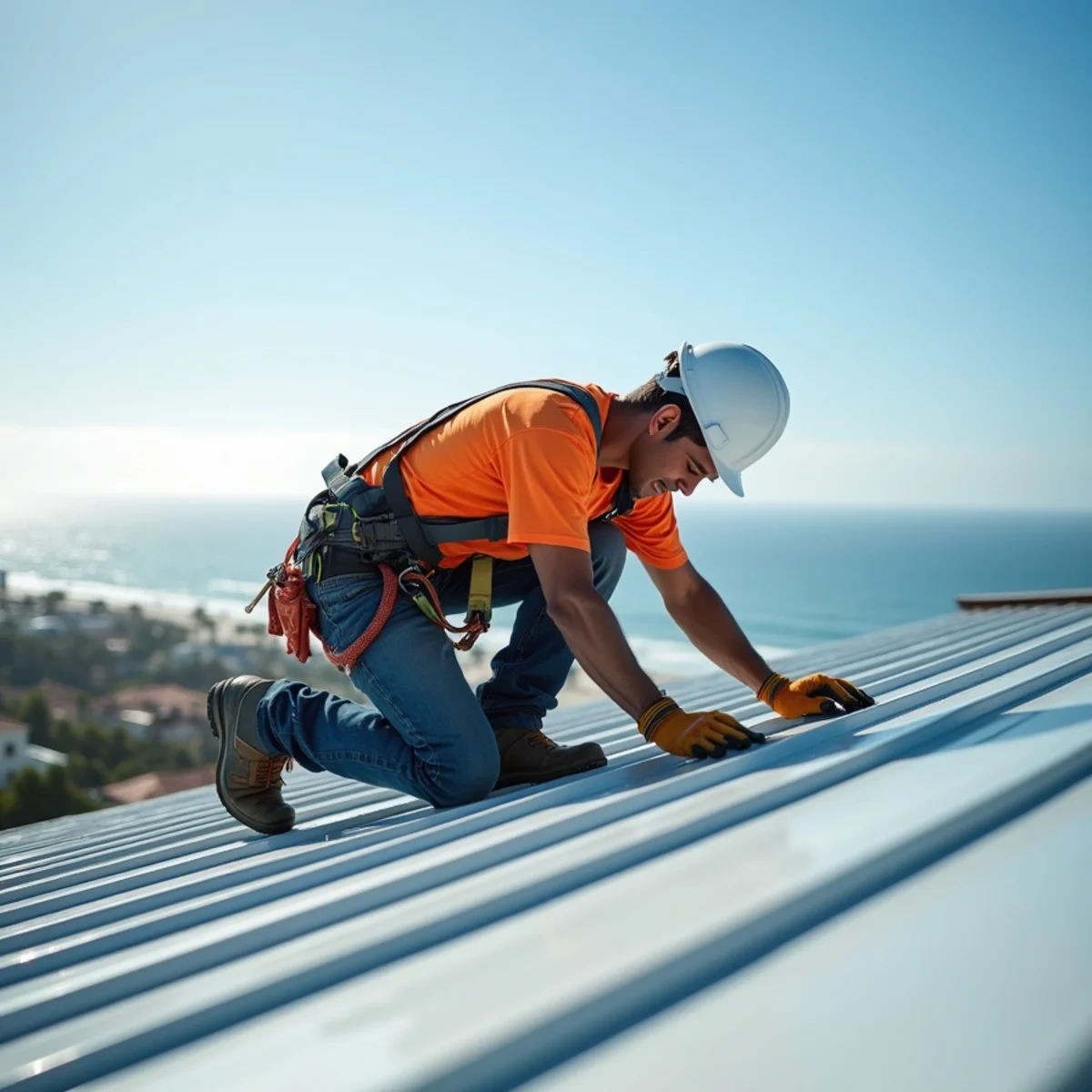
Metal roofing has a well-earned reputation for toughness, so it is a natural thought for a home near the Oceanside coast: put on a metal roof and stop worrying about the weather. Metal can indeed be one of the best performers this close to the water, but only if the right metal is chosen, because salt spray treats different alloys very differently. Before you install a metal roof near the ocean, here is what actually determines whether it thrives or disappoints.
Why metal suits the coast
A well-built metal roof, usually in a standing-seam profile, has a lot going for it near the water. Standing seam means the panels run vertically and lock together at raised seams, which keeps the fasteners hidden and out of the weather, a genuine advantage where exposed metal fasteners would otherwise be the first thing to corrode. The panels shed water cleanly, handle wind well when properly detailed, and ask for very little maintenance once installed.
For homeowners drawn to long service life and a clean, contemporary look, coastal metal roofing is a strong candidate. It resists fire, does not host moss the way a shaded shingle roof can, and pairs naturally with solar down the road. The reputation for durability is deserved, with one big condition attached, which is the subject of the next section.
There is a practical side to that low maintenance, too. A metal roof does not shed granules the way asphalt shingles do, and it will not soak up the marine dampness that slowly ages other materials on shaded, north-facing planes. For a homeowner who would rather not think about the roof for a long stretch, that hands-off quality is a real part of metal's coastal appeal.
Alloy choice: steel vs aluminum vs copper
The most important decision in a coastal metal roof is which metal you use, because salt air is unforgiving of the wrong choice. This is where a lot of the worry about metal near the ocean actually comes from, not metal in general, but a poorly matched alloy corroding early.
In broad terms, and following industry guidance for marine environments, the strongest coastal performers are corrosion-resistant coated steel and aluminum. Aluminum in particular naturally resists salt corrosion, which is why it is so often recommended within sight of the surf. Coated steels can perform well too, provided the coating system is suited to a marine setting and any cut edges are handled correctly. Copper is a different story near direct salt spray: it is durable, but it tends to develop a patina, a weathered surface layer, that not every homeowner wants, so it is chosen deliberately rather than by default. We keep the specifics of alloy performance general here because the right pick depends on your exact exposure and the product system, and those details deserve confirmation with the manufacturer's coastal documentation.
- Aluminum: naturally salt-resistant and a common recommendation right at the coast
- Corrosion-resistant coated steel: a strong option when the coating suits a marine setting
- Copper: durable but patinas in salt spray, a deliberate choice rather than an automatic one
- Bare or lightly protected metal: best avoided this close to the water
Managing condensation with underlayment
Metal has one quirk worth understanding before you install: it changes temperature quickly, which means moisture in the air can condense on the underside of the panels, especially in Oceanside's damp marine mornings. Left unmanaged, that hidden condensation can dampen the structure beneath over time, a problem that has nothing to do with rain getting in from above.
The answer is in the layers underneath. A quality underlayment, the water-resistant sheet over the wood decking, together with proper ventilation and, in some assemblies, a ventilated batten system that lets air move beneath the panels, keeps condensation in check. This is a big reason a coastal metal roof is only as good as its detailing below the surface. A handsome panel over a poorly ventilated, under-specified deck is a roof that can disappoint from the inside out.
Detailing and flashing
Even with the right alloy, a metal roof lives or dies by its detailing, the flashing and seams where the panels meet walls, chimneys, valleys and edges. Flashing is the shaped metal that seals those transitions, and near the coast it needs to be as corrosion-resistant as the panels themselves, and ideally compatible with them. Mixing incompatible metals is a classic mistake, because two different metals in contact through salty moisture can drive galvanic corrosion, one metal corroding faster because of its electrical relationship with the other.
Good coastal detailing also means sealed, weather-tight seams, fasteners rated for the environment wherever any are exposed, and clean transitions that do not trap water or debris. This is careful, methodical work, and it is where an installer's experience with coastal metal really shows. When you talk to a roofer about a metal roof near the ocean, the questions about flashing metal, seam type and fastener choice are exactly the right ones to ask.
Cost and longevity expectations
Metal generally sits toward the higher end of the roofing cost range, both for the material and for the skilled installation it deserves. We will not attach a specific price or a guaranteed number of years, because both depend on the alloy and system chosen, your roof's size and complexity, and current material costs, and honest longevity figures belong in ranges rather than promises.
What you can reasonably expect is this: a metal roof built with the right alloy, sound detailing and proper underlayment is one of the longest-lasting, lowest-maintenance roofs available for a coastal home. That combination is why metal often makes sense as a long-term investment even at a higher first cost; you are buying durability and years of low upkeep in an environment that is hard on lesser roofs. The way to protect that investment is to get the fundamentals right at installation: the correct metal for your exposure, compatible corrosion-resistant flashing, and the hidden layers that manage moisture.
If a metal roof is on your list for an Oceanside home, the most useful next step is a conversation grounded in your specific location on the coast. An on-site look can weigh your exposure, your home's structure and your budget, and point you toward the alloy and detailing that will actually hold up near the water, no pressure, just clear guidance so the roof you install is the roof you were hoping for.
Frequently asked questions
Sources & further reading
- Metal Construction Association coastal guidance
This article is general guidance. Confirm current code, permit, Title 24, insurance and warranty specifics with the relevant authority for your project.