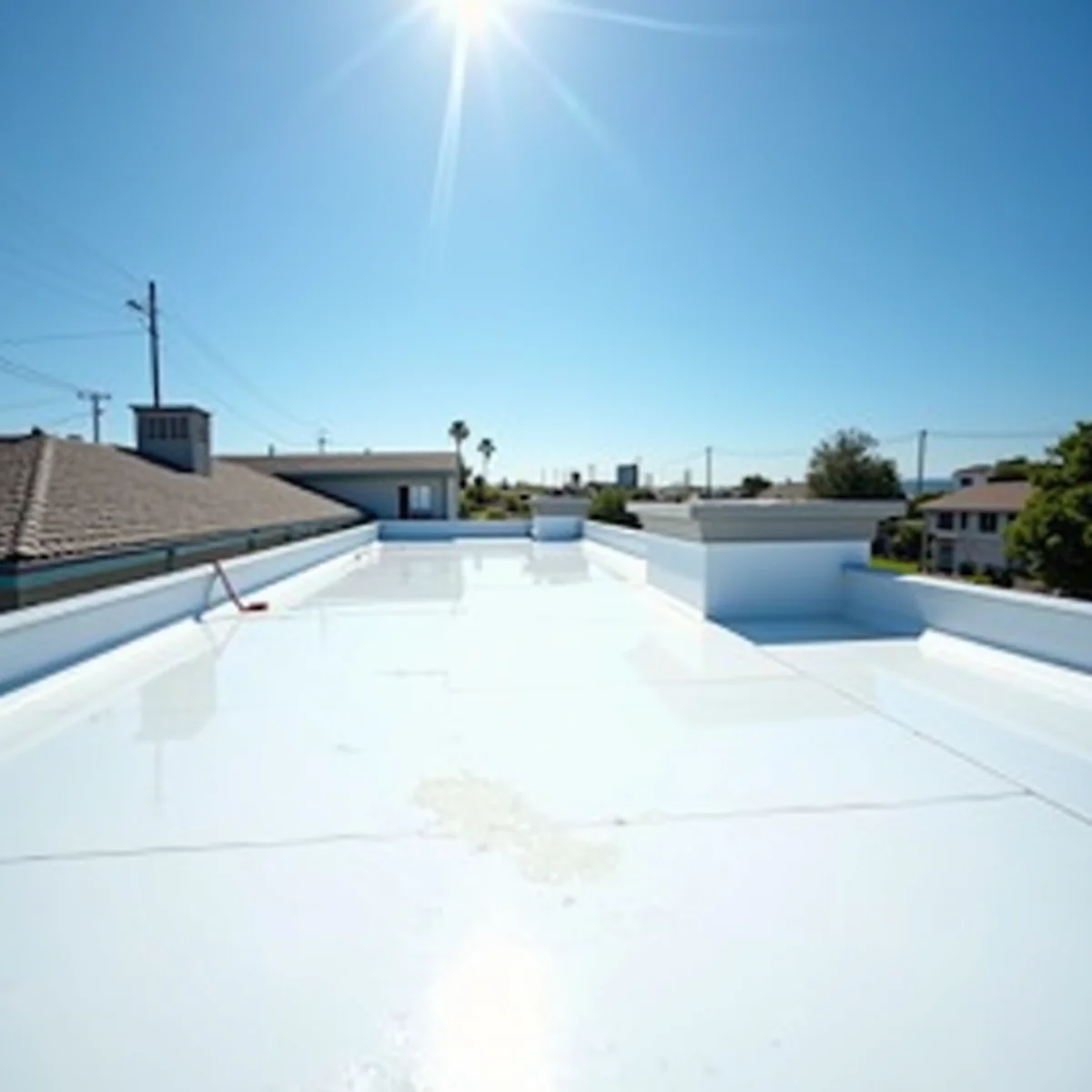
Cool roofing comes up often once a California homeowner starts planning a new roof, usually as a question from a contractor or a line on a code form — and it is rarely explained clearly. The idea itself is simple: a cool roof reflects more of the sun's energy and stays cooler than a conventional one. What tends to cause confusion is how the state's Title 24 standards decide when a cool roof is required. Here is the plain-language version for a homeowner planning a roof in Oceanside or elsewhere in California.
What a cool roof is
A cool roof is a roof designed to absorb less heat from the sun and release more of the heat it does absorb. On a hot afternoon, a dark, conventional roof can climb well above the surrounding air temperature, and a good deal of that heat migrates down into the attic and the rooms below. A cool roof stays closer to the air temperature, which can ease the load on air conditioning and make upstairs rooms more comfortable through a Southern California summer.
Two surface properties do the work. Solar reflectance is how much sunlight the roof bounces away rather than absorbs. Thermal emittance is how readily the roof sheds the heat it does take on. A cool roof scores well on both. Importantly, cool roofing is not a single product or a single color — it is a performance target that many materials can meet, from specially coated shingles and tiles to reflective metal and light single-ply membranes on low-slope roofs.
The Solar Reflectance Index (SRI)
California expresses this performance with a single number called the Solar Reflectance Index, or SRI. SRI rolls solar reflectance and thermal emittance together into one value so that different roofing products can be compared on a level footing. The scale is anchored so that a standard dark surface sits near the bottom and a standard white surface near the top — the higher the SRI, the cooler the roof surface performs under the sun.
For a homeowner, the practical takeaway is that you do not need to memorize the underlying physics. When a product is described as cool-roof rated, it means it has been tested and assigned values that let a building official confirm it meets the required threshold for your project. Your roofer and the product documentation can point to the SRI figures that matter, and the building department confirms they clear the current standard. That is really all SRI roofing comes down to for most projects: a shared yardstick everyone can check against.
Title 24 in plain language
Title 24 is the shorthand for California's Building Energy Efficiency Standards, the statewide rules that push new construction and many renovations toward lower energy use. The Title 24 cool roof provisions are one piece of that larger framework. In broad terms, the standard calls for cool-roof performance on many new residential roofs, which is why the subject surfaces whenever you replace or install a roof rather than simply patch one.
The key word is 'many,' not 'all.' Whether the requirement lands on your particular roof depends on the roof type, its slope, the climate zone, and other details of the project. The standards are also revised on a regular cycle, so the specific edition in force and its effective date change over time. For that reason it is best not to treat any single version as the permanent rule. Confirm the current edition and how it applies to your roof with the California Energy Commission, which writes the standards, or with the Oceanside building department that enforces them locally.
Exceptions and how they apply
Because Title 24 is written to balance energy goals against practical building realities, it includes exceptions — and this is where a lot of homeowner confusion clears up. A roof that does not meet the reflectance target on its own may still comply through an alternative path. Common examples of how the standard flexes include:
- Roof slope — steeper roofs and low-slope roofs can be treated differently under the standard.
- Attic insulation — adding sufficient insulation or an air-space measure can offset a roof that is not fully cool-roof rated.
- Roof assembly — how the whole roof and attic system is built can open compliance paths beyond the surface alone.
- Project type — a minor repair is treated differently than a full replacement or new construction.
Cool-roof options by material
Because these exceptions interact, the honest answer to 'do I need a cool roof' is that it depends on your project, and the applicable path should be confirmed against the current standard rather than assumed. This is not a place to guess; it is a place to check. The encouraging news is that meeting the requirement no longer means settling for a stark white roof. Cool-rated options now span most of the common roofing families:
- Asphalt shingles — cool-rated shingles use reflective granules and come in colors well beyond bright white.
- Concrete and clay tile — many tile products carry cool-roof ratings, and tile's natural air gap can help on the thermal side.
- Metal — reflective coatings give metal roofing strong cool-roof performance alongside its coastal durability.
- Low-slope membranes — light-colored single-ply membranes are inherently reflective, a common choice on flat sections.
Cool roofing in an Oceanside context
For an Oceanside home, cool roofing tends to matter most in the warmer inland neighborhoods, where summer heat is the bigger stress, while corrosion resistance stays the priority closer to the water. The right choice balances the cool-roof requirement with your home's style, your exposure and your budget. If you are weighing a permit and a new roof at the same time, it is worth reading how permits work in Oceanside alongside this, so the energy standard and the permit process are handled together rather than as afterthoughts.
Frequently asked questions
Sources & further reading
- California Energy Commission — Title 24
This article is general guidance. Confirm current code, permit, Title 24, insurance and warranty specifics with the relevant authority for your project.