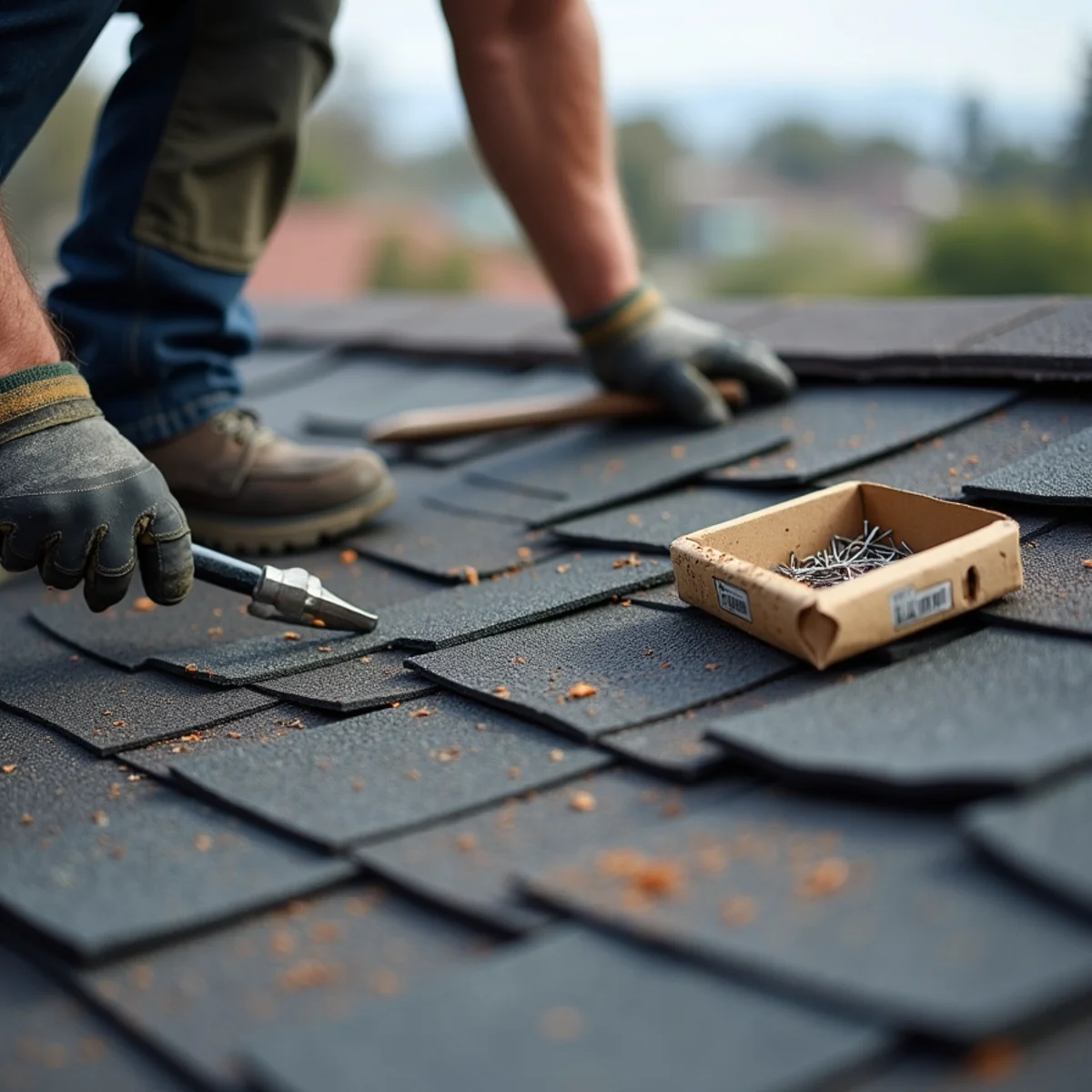
When something goes wrong with a roof, the first thing most homeowners want is a number, and the honest answer is that roof repair cost depends almost entirely on what the repair involves. Two leaks that look identical from the ground can call for very different work once you get up close. Rather than a figure that would not fit your situation, this guide walks through the real roof repair cost factors, so you understand what moves the price up or down and can budget with your eyes open.
Extent and location of damage
The most obvious driver is how much of the roof actually needs work. Replacing a few shingles lifted by a Santa Ana gust is a modest job; addressing damage that runs across a whole slope is a much larger one. The size of the affected area, and how much surrounding material has to be disturbed to make a proper repair, sets the baseline for everything else.
Where the damage sits matters just as much as how big it is. A repair out in the open field of the roof is straightforward; one tucked into a valley where two slopes meet, or wrapped around a chimney, skylight or vent, involves flashing, the shaped metal that seals those joints, and more careful work. These transition points are both the most common places for leaks to start and the most involved to repair well, so a problem at a penetration generally takes more time and skill than the same-sized problem on an open slope.
It is also worth separating a genuine repair from a broader problem. Sometimes what looks like a single damaged area is only the visible edge of wear that runs further than it appears from the ground. To give a sense of the range, here is how a few common scenarios compare in scope:
- A few lifted or missing shingles after a wind event, usually a contained job
- A single cracked or slipped tile that has to be matched and replaced without disturbing its neighbors
- A length of failed flashing at a wall, chimney or skylight, which is more involved detail work
- Damage spread across a whole slope, which is a much larger undertaking than any single fix
Material and matching
The roofing material has a direct effect on a repair. Asphalt shingles are generally the quickest and most economical to work with; tile and metal are more specialized, and repairing them takes more time and know-how. A cracked tile has to be swapped without breaking its neighbors, and a metal panel repair calls for particular skills and compatible components.
Matching is the wrinkle people rarely anticipate. For the repair to blend in, the new material should match the existing roof in type, color and profile, and that is not always simple. Shingle colors are updated over the years, and a specific tile profile may be discontinued, which can mean sourcing a close match or salvaging material from a less visible part of the roof. The more distinctive or older the material, the more effort matching can take, and that effort is part of the cost.
Older Oceanside homes add another layer to this. A roof from an earlier era may use a material or a color that is no longer made, so a repair that would be routine on a newer roof can call for extra sourcing to do well. It is one more reason the same repair can carry a different cost from one home to the next, and one more thing a roofer can only judge by seeing the roof.
Access and height
How easy the roof is to get onto and move around on affects the work more than most homeowners expect. A steep pitch, the angle of the slope, requires extra safety equipment and slows the crew down, because steep surfaces cannot be walked the way a gentle slope can. A tall or multi-story home raises the same issue, since height adds setup, safety measures and time.
Access from the ground plays in as well. A roof surrounded by tight side yards, mature landscaping, fences or a neighbor's structure is harder to stage ladders and move materials around than one with open space on every side. None of this changes what the repair itself involves, but it changes how long it takes to do safely, and time is a real part of any estimate. The same goes for anything that has to be worked around up top, a solar array, a satellite dish or a rooftop HVAC unit, each of which can add careful hand-work to an otherwise simple fix.
Hidden conditions beneath the surface
Here is the factor that makes phone quotes unreliable. The visible damage is often only part of the story, because water that enters at one point travels along the underlayment, the water-resistant layer over the decking, and the framing before it shows up inside. By the time you see a stain on a ceiling, moisture may have been working on the decking, the wood base of the roof, for a while.
So a repair that looks small from the ground can grow once the affected area is opened up and the true condition comes into view, softened decking, aged underlayment or a leak whose real source is uphill of where it appeared. A careful roofer accounts for this rather than pretending it will not happen, tracing the leak to its actual cause and flagging the possibility of hidden damage before committing to a fixed price. It is not evasiveness; it is the difference between an accurate estimate and a lowball number that grows on the invoice.
Why an on-site look matters
Put all of this together and it is clear why a responsible roofer will not commit to a firm repair price over the phone. Extent, location, material, access and hidden conditions combine differently on every roof, and the only way to weigh them accurately is to see the roof in person. An on-site evaluation lets us trace the actual cause, check what lies beneath the surface, and give you a repair range you can rely on rather than a guess you cannot.
If you want to get a sense of the variables before anyone visits, our Cost Planner can help you think through the factors that shape a repair and organize your budgeting questions. It is a way to get oriented, not a substitute for a real look at your roof. When you are ready, a straightforward inspection turns all of these considerations into a clear, honest number for your specific home, with no pressure and no surprises attached.
Frequently asked questions
Sources & further reading
- Internal scope guidance
This article is general guidance. Confirm current code, permit, Title 24, insurance and warranty specifics with the relevant authority for your project.