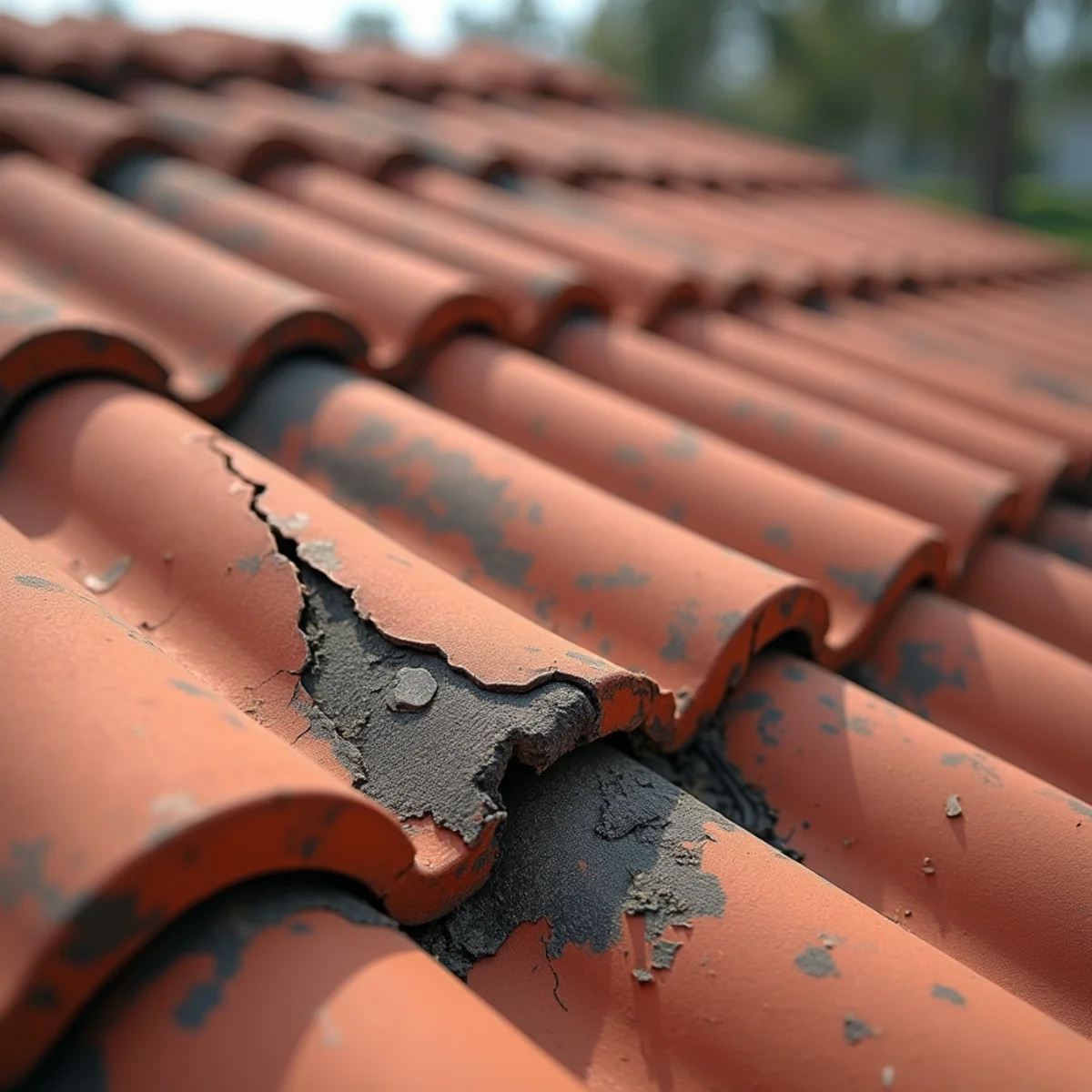
A cracked or out-of-place tile on a Spanish or Mediterranean-style Oceanside roof is easy to spot and easy to shrug off — it is just one tile, after all. But tiles do not break at random, and a slipped or broken one leaves the layer beneath it exposed in a way that matters. Understanding the common causes of broken roof tiles helps you tell a minor cosmetic issue from an early warning, and know when it is worth acting.
Foot traffic and walking damage
The most common reason tiles crack is surprisingly ordinary: someone walked on them. Roof tiles are strong when supported the right way, but they are not designed to take a person's full weight in the wrong spot. Step in the middle of a tile, or on an unsupported edge, and it can crack under the load — sometimes right away, sometimes as a hairline fracture that fails later.
That is why unnecessary foot traffic is one of the leading causes of tile damage. Solar installers, satellite technicians, painters, gutter cleaners and curious homeowners can all leave a trail of cracked tiles behind without realizing it. There is a correct way to walk a tile roof — stepping on the lower third of each tile, where it is supported by the one below, and spreading weight carefully — but it takes knowledge and care, which is exactly why you should not climb onto your own tile roof to inspect it. If you can see damage from the ground or a window, that is enough to know a professional look is warranted.
Wind and impact
Wind is the other major cause, and it works in two ways. First, wind uplift — the suction created as air moves across the roof — can catch the edge of a tile, lift it, and drop it out of alignment or break it against its neighbors. Hot, dry Santa Ana conditions are particularly good at this, and they are also strong enough to fling debris across a roof. Second, direct impact does the visible damage: a falling branch, windblown debris, or a tile knocked loose upslope tumbling into the ones below.
Overhanging trees are a common thread in both. Branches that rub or drop onto a roof crack tiles over time, and a single limb coming down in a storm can break several at once. After any strong wind event, it is worth a ground-level look for tiles that have shifted, slipped out of line or gone missing — the same wind that moved them may not have caused a leak yet, but the exposed spot is now vulnerable to the next rain.
Fastener and batten issues
Sometimes a tile has not broken at all — it has slipped. Tiles are held in place by some combination of fasteners, clips and battens, and when those give way, gravity does the rest. Battens are the horizontal wood strips fixed across the roof that many tiles hook onto or rest against; fasteners are the nails, screws and clips that pin tiles down. Both can fail over time.
Near the coast, corrosion is the usual reason. Salt air works on metal fasteners and clips, and once they weaken or rust away, the tiles they held can slide down the slope. Wood battens can rot if moisture reaches them, loosening their grip as well. The result is slipped roof tiles — tiles that have slid out of position, leaving a gap or a crooked line even though the tile itself is intact. A slipped tile is as much of a concern as a cracked one, because the same gap in coverage is left behind, and the underlying cause often affects more than one tile.
Age and weathering
Tile is one of the longest-lasting roofing surfaces, but it is not immune to time. Decades of strong sun, salt air and the marine layer's dampness gradually wear at the surface of concrete tiles and can make older tiles more brittle and easier to crack. Concrete tiles slowly erode and can lose their surface coating; clay tiles are very durable but can still chip or crack, particularly at edges and corners.
The more important aging story on a tile roof, though, happens out of sight. The tile sheds water and shields everything below, but the real waterproof layer is the underlayment — the water-resistant membrane laid over the decking, the wood sheathing, beneath the tile. Underlayment ages faster than the tile above it, and coastal moisture speeds that along. So while weathered tiles are worth attention, a tile roof that is losing tiles here and there may also be signaling that the underlayment beneath is reaching the end of its service life, which is a bigger conversation than any single cracked tile repair.
Why prompt replacement matters
It is tempting to leave a broken or slipped tile alone, especially if there is no leak. The reason to act promptly is what sits underneath. Tile protects the underlayment from sun and impact, and the underlayment is what actually keeps water out. A missing or cracked tile exposes that membrane to direct sunlight and weather, which ages it quickly in the very spot where it is now doing the waterproofing alone. Given time, that is how a single damaged tile turns into a leak.
There is a knock-on effect, too. A gap can let wind get under the surrounding tiles and loosen them, so one problem tile becomes several. Replacing a damaged tile early — and matching it properly — keeps the coverage intact and stops a small issue from spreading. Because getting onto a tile roof safely and moving across it without cracking more tiles takes the right approach, this is genuinely a job to leave to a professional rather than a weekend project. If you have noticed broken or slipped tiles, a documented inspection will tell you whether it is a simple replacement or a sign the underlayment needs attention. For damage after a storm that has left the roof exposed before more rain arrives, you can call (209) 758-8550 to check current urgent-service availability.
- A cracked or missing tile exposes the underlayment — the real waterproof layer — to sun and rain
- Gaps let wind loosen neighboring tiles, spreading the damage
- Prompt, matched replacement keeps coverage intact and costs less than a spreading repair
- Repeated or widespread tile loss can signal the underlayment is aging and needs a closer look
Frequently asked questions
Sources & further reading
- Tile Roofing Industry Alliance guidance
This article is general guidance. Confirm current code, permit, Title 24, insurance and warranty specifics with the relevant authority for your project.