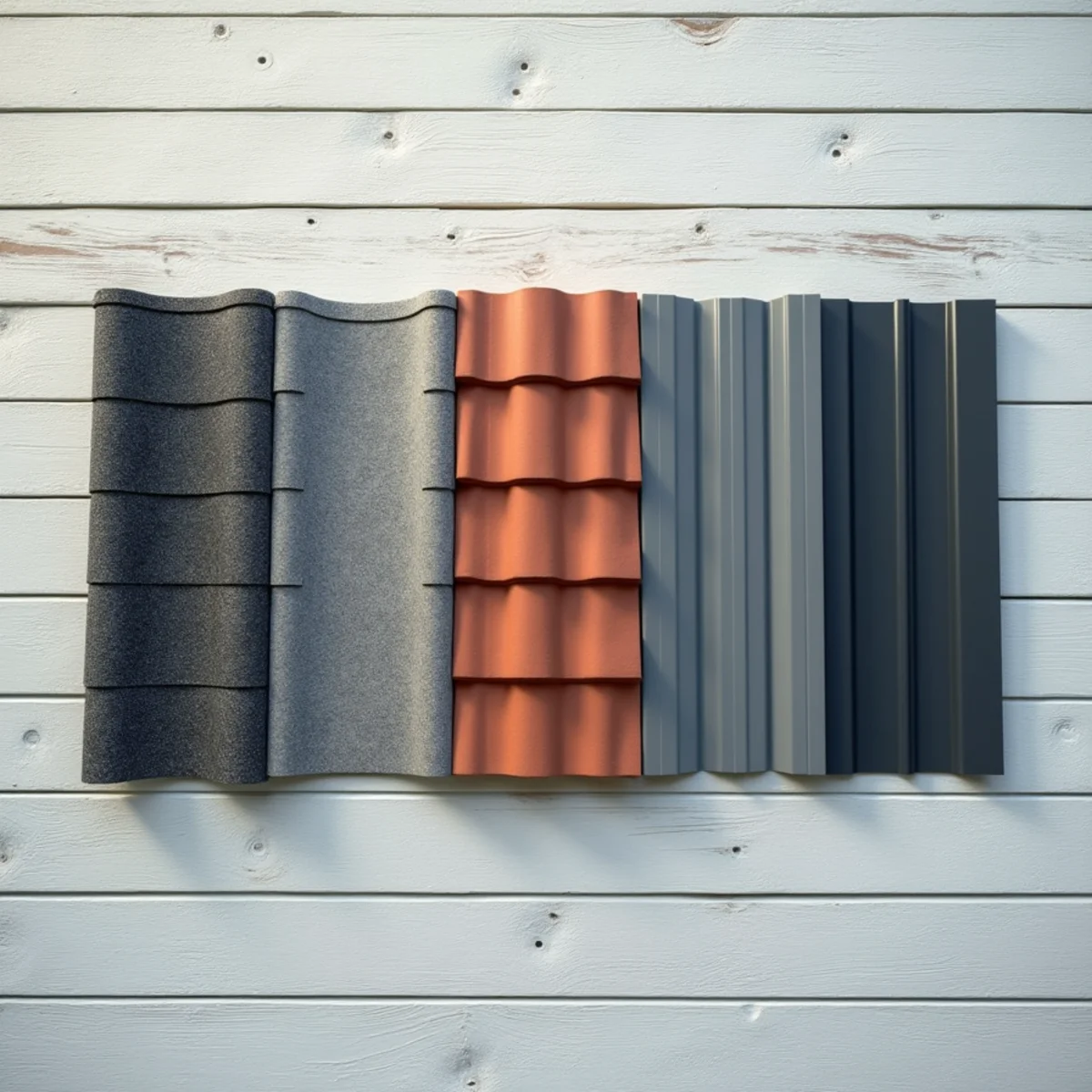
There is no single best roof for a home near the water — only the best fit for your house, your exposure and your budget. Along the Oceanside coast, whatever you put overhead has to answer to salt-bearing air, a damp marine layer, strong year-round UV and the occasional dry push of Santa Ana wind. A material that performs well two miles inland can struggle a block from the sand, and the reverse holds too. This guide walks through the main roofing categories — architectural asphalt shingle, clay and concrete tile, standing-seam and other metal, and flat membranes — covering how each handles the coast, what home styles it suits, and where its real trade-offs sit. The goal is to help you match a roof to your home and its exposure, not to crown one winner.
What a coastal roof is really up against
Before comparing materials, it helps to name the forces they have to survive here. Salt-laden air settles on every surface and speeds corrosion, and it goes after metal parts first — fasteners, flashing and edge metal. The marine layer keeps roofs damp well into many mornings, which encourages growth and rot on shaded, north-facing planes. Intense UV works on the surface year-round, drying binders and softening finishes. And periodic Santa Ana wind can lift or crack whatever isn't fastened for uplift. Exposure is not uniform, either: a home at the harbor lives in far more salt than one in inland Oceanside, where heat and UV lead instead. Where your house falls on that coast-to-inland gradient should shape the material as much as looks or budget do.
The trade-offs worth weighing
Every material is a set of compromises. Rather than declare a favorite, we weigh each option against the same criteria — and a few plain-language terms come up throughout. Underlayment is the waterproof layer laid over the roof deck, beneath the visible surface; on a tile roof it, not the tile, is what actually keeps water out. Flashing is the metal that seals joints and transitions, such as around chimneys, walls and valleys. Decking (or sheathing) is the wood the roof is built on. A tear-off means removing the old roofing down to that deck. SRI, the Solar Reflectance Index, is a measure of how well a surface reflects sun and sheds heat. With those in hand, here is what we compare:
- Salt and corrosion resistance — how the surface and, just as importantly, its fasteners and flashing handle salt air.
- UV endurance — how the material ages under intense, year-round sun.
- Moisture behavior — how it copes with long damp mornings, especially on shaded planes.
- Wind performance — resistance to uplift when Santa Ana gusts arrive.
- Weight and structure — whether your framing can carry it without reinforcement.
- Cost position — where it sits, relatively, up front and over its service life (we give the factors, not figures).
- Maintenance profile — how much routine attention it asks for near the coast.
- Cool-roof availability — whether it comes in reflective options that help with Title 24 and cooling.
- Style fit — how it looks on your home.
Architectural asphalt shingle
Architectural (also called dimensional or laminated) asphalt shingle is the most common roof in the country and usually the most affordable to install and to repair. Near the coast its weak point is not the shingle body but the metal that holds everything down — standard fasteners can corrode early in salt air, so corrosion-resistant fasteners and flashing are the upgrade that matters. UV gradually dries the asphalt binder and can loosen the self-sealing adhesive strip, which is why a high-wind-rated, algae-resistant product is worth choosing here. Shingle is light, so it rarely raises a structural question, and reflective cool-roof shingle options are available. It suits ranch, traditional, cottage and many tract-home styles. The honest caveat: of the categories here, shingle tends to have the shortest service life in a coastal setting — but it is also the easiest and least costly to replace when that day comes.
Tile roofing for coastal homes
Tile is a coastal mainstay across San Diego County, and for good reason. A dense, non-metallic tile body is largely indifferent to salt, shrugs off UV, and resists fire — three of the coast's toughest tests at once. It is also heavy, which makes weight a real consideration (more on that below). There is one caveat that applies to every tile roof, clay or concrete, and it surprises people: the tile can outlast the underlayment beneath it. That hidden waterproof layer is what actually sheds water, and it wears out sooner than the tile does. Renewal usually means lifting the existing tiles, replacing the underlayment, and re-laying the same tiles — so a tile roof is best thought of as a very long-lived surface over a layer that needs periodic renewal. Cool-roof performance is available through lighter colors and finishes.
Clay tile
Clay is among the longest-lasting roofing surfaces there is. Because the color is fired into the clay rather than coated on top, it holds its look under strong UV with little fading, and it stays essentially unbothered by salt and moisture. It is also the heaviest common option and sits at the premium end of cost. Clay is the classic choice for Spanish, Mediterranean and mission-style homes, where its barrel profile is part of the architecture. Its main quirk is brittleness underfoot: individual tiles can crack from impact or foot traffic and occasionally need replacing, and the underlayment renewal noted above still applies.
Concrete tile
Concrete tile is the versatile cousin — molded to mimic clay barrel, flat slate or wood shake, in a wide palette that includes cool-roof-rated finishes. It is a strong coastal performer: dense, salt-indifferent and durable, usually at a somewhat friendlier cost than clay, though still a heavy material that factors into structure. Its surface coating weathers over the years and colors can soften, and concrete can hold a little more moisture than clay, though it handles the marine layer well. As with all tile, plan for the underlayment beneath it to be the component that eventually needs renewal.
Metal roofing
Metal is one of the strongest coastal performers — but only when the alloy is right, and that qualifier is the whole story near salt. Ordinary galvanized steel can corrode faster close to the water, so the coastal choice is a corrosion-resistant metal: aluminum, zinc, or a marine-rated zinc- or zinc-aluminum-coated steel. Chosen well, metal offers long service life, light weight (often no structural upgrade, and sometimes it can go over existing decking), excellent wind performance, and reflective cool-roof finishes across the board. One coastal rule cuts across every metal system: keep the metals compatible. Dissimilar metals in contact — a steel fastener against an aluminum panel, for instance — can set off galvanic corrosion, where one metal corrodes faster, so panels, fasteners and flashing should be a matched, salt-rated set.
Standing-seam metal
Standing-seam panels run vertically with raised, interlocking seams and concealed fasteners hidden beneath the panel. That hidden-fastener detail is exactly what makes it a strong coastal option — exposed fasteners are usually the first place salt causes corrosion and leaks, and standing seam removes them from the weather. It carries a clean, modern look that suits contemporary and farmhouse styles, though it reads well on many homes. Up-front cost sits toward the higher end, but its long life and low maintenance often make the cost-per-year of service competitive. As with all metal, insist on the right alloy and matched, compatible flashing and fasteners.
Metal shingles and stone-coated steel
Metal also comes in formats that don't look like metal. Metal shingles and stone-coated steel are pressed and finished to imitate the look of shingle, tile or wood shake while keeping metal's light weight, wind resistance and long life. They appeal to homeowners who want metal's durability with a more traditional appearance, and the stone-coated finish both hides fasteners and softens the surface. The same coastal alloy and corrosion rules apply — the finish changes the look, not the need for salt-rated metal underneath.
Flat and low-slope membranes
Many Oceanside homes have a flat or low-slope section — a patio cover, an addition, or a fully modern flat-roofed design — and those need a membrane rather than shingle or tile. Single-ply thermoplastic and PVC membranes are typically light in color and reflective, so they often meet cool-roof standards without an added coating, and their heat-welded or self-adhered seams suit damp marine mornings because the joints are sealed rather than dependent on exposed sealant. Other systems, such as modified bitumen and built-up roofing, usually need a reflective coating to hit cool-roof numbers. The caveat with any low-slope roof is that it lives or dies by drainage and seam quality: standing water and open seams are the real enemies, and the detailing at edges and penetrations matters more than the field of the roof. Maintenance is mostly keeping drains and scuppers clear so water leaves quickly.
A note on weight and your home's structure
Weight is easy to overlook until it changes the whole project. Heavier materials — tile above all — put more load on the framing than shingle or metal do. If you are switching from a light material to a heavy one, your structure may need evaluation and, in some cases, reinforcement, and that change is also the kind of thing a permit accounts for. Going the other direction — tile to metal or shingle — rarely raises a structural concern. There is no way to settle this from a photo; an on-site look at your framing confirms what your home can carry, and permit requirements should be confirmed with the City of Oceanside Building Division before work begins.
Cool roofs and Title 24
A cool roof is simply one that reflects more sunlight and releases absorbed heat rather than driving it into the attic, measured in part by that Solar Reflectance Index (SRI) mentioned earlier. California's Title 24 building energy standards require cool-roof performance for many new and replacement residential roofs, with exceptions tied to slope, insulation levels and climate zone. Because Title 24 is updated on a set cycle, we don't assume a particular edition or a specific SRI figure is the one that applies to you — the current edition, its effective date and how it treats your project should be confirmed with the City of Oceanside Building Division. The practical good news is that cool-roof options now exist across nearly every material — reflective shingles, lighter tile finishes, reflective metal coatings and naturally reflective membranes — so meeting the standard rarely forces your hand on which material to choose.
Matching material to your home, exposure and budget
Bringing it together, the right material is the one that fits your specific spot on the coast, your home's style and how long you plan to stay. As a starting frame by exposure:
- Beachfront and harbor (maximum salt): lean toward corrosion-resistant metal or tile, and whatever the surface, insist on salt-rated fasteners and flashing — the metal details decide longevity here.
- Coastal residential (moderate salt, heavy marine moisture): tile, concrete tile, metal or an upgraded shingle can all work; prioritize a moisture-tolerant underlayment and good drainage on shaded, north-facing planes.
- Inland Oceanside (less salt, more heat and UV): reflective performance leads — cool-roof shingle, concrete tile and reflective metal all fit well, with cool-roof compliance easier to plan for up front.
The details that outlast the debate
Here is the part most material comparisons skip: near the coast, the fasteners, flashing and underlayment often decide how long a roof lasts more than the surface material does. Salt reaches the metal parts first, and a leak almost always starts at a joint, a penetration or a corroded fastener rather than in the open field of the roof. So with any material — shingle, tile, metal or membrane — corrosion-resistant fasteners and flashing, an underlayment matched to your exposure, and clean detailing at every valley, wall and penetration are worth insisting on. A premium surface installed over cut-rate details is a short-lived roof; sound details under a modest surface will quietly outperform it. Budget also plays out over time as much as up front: if you plan to stay for the long haul, tile or the right metal can cost less per year of service even though they cost more to install, while a well-chosen shingle gets you a sound, code-compliant roof for the least money today.
How we help you decide
Every home's answer comes out a little differently — orientation, distance from the water, roof pitch, existing structure and how long you plan to stay all move the recommendation. We'll walk you through the options on your actual roof, in plain language and with no surprises, and match a material to your home and exposure rather than steer you to the most expensive one. An on-site evaluation is where the real recommendation, and the real number, come from — it lets us check the decking, the flashing and the structure, and weigh the trade-offs against your priorities before anything is decided.