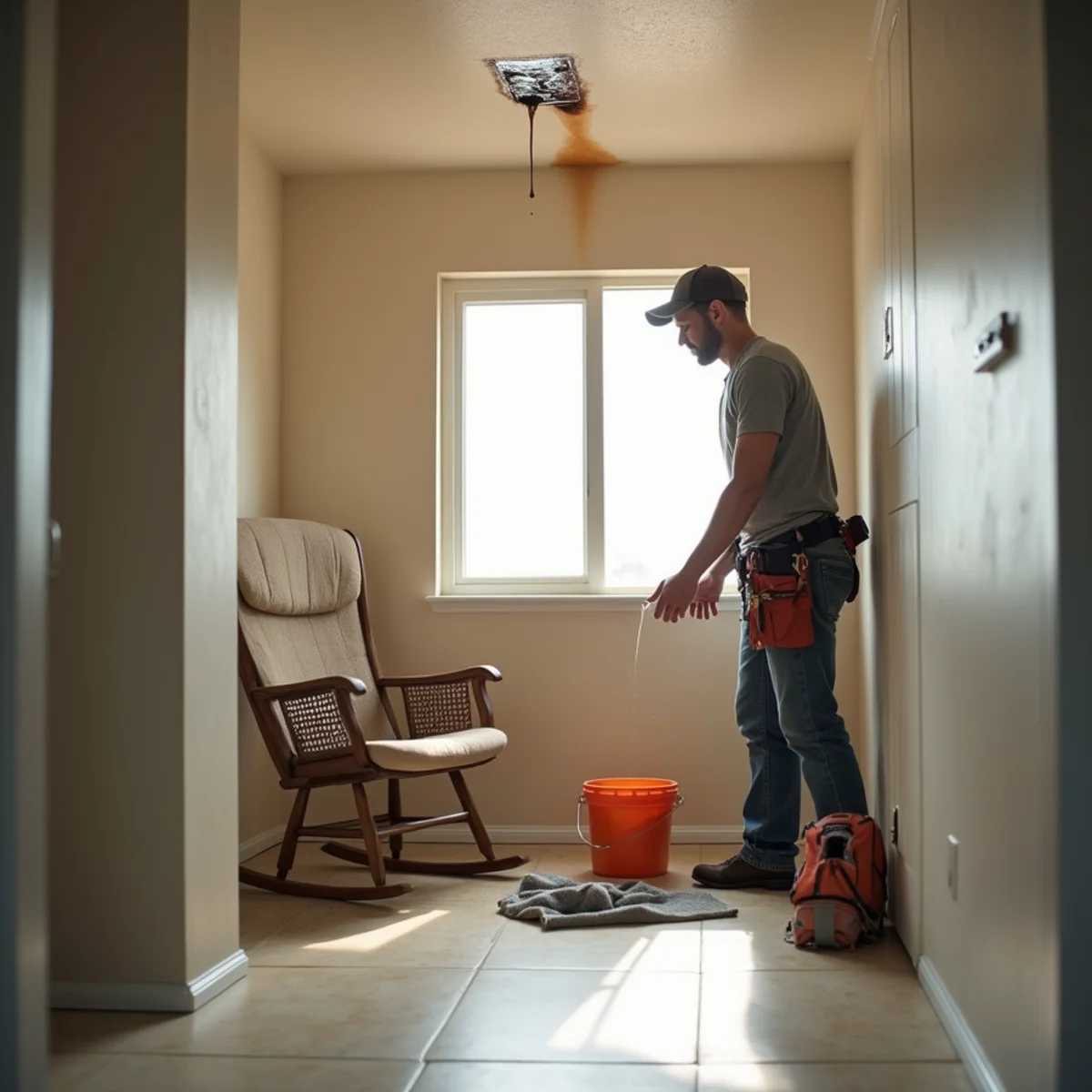
A roof leaking during rain has a way of causing panic — water dripping through a light fixture, a spreading stain, a scramble for buckets. The instinct to fix it right now is understandable, but the most important thing to know is that the smart response is calm and indoors. There is a clear order of steps that limits the damage and keeps everyone safe, and none of them involve climbing onto a wet roof in the middle of a storm.
Contain the water safely
Your first job is to stop the water from spreading and soaking into more of the house. Put a bucket, bin or large pot under each active drip, and lay old towels around it to catch splashing. Swapping in a second container before the first overflows saves you a bigger cleanup later. One useful trick: if water is dripping from a wide area, tie a length of string to the leak point and run the other end into your bucket, so the water follows the string down instead of scattering.
One safety rule comes before all of this: keep away from electricity near the leak. Water and wiring together are dangerous. If water is dripping near a light fixture, a ceiling fan or any electrical outlet, or if you see it bubbling behind a wall that has outlets, do not touch the fixture or stand in pooled water to reach it. If it is safe to get to your electrical panel, switching off power to the affected area removes the risk. When in doubt, stay out of the room and call an electrician.
Watch, too, for a ceiling that is sagging or bulging. Trapped water pooling above the drywall is heavy, and a loaded ceiling can come down without much warning. If you can see a bulge and it is safe to reach, some homeowners carefully make a small hole at the lowest point with a screwdriver to let the water drain into a bucket in a controlled way — relieving that weight is safer than letting it collapse on its own. If you are not confident, keep clear of the area and wait for help.
Protect belongings and electronics
Once the water is contained, move what you can out of its path. Furniture, rugs, electronics and anything with sentimental or financial value should be shifted to a dry part of the house. If something is too heavy to move, sliding a plastic sheet or tarp over it and lifting it off a wet floor helps.
Electronics deserve special care, because they combine two hazards — water damage to the device and a shock risk to you. Unplug electronics near the leak only if the area around the outlet is dry and you can reach it safely; if the outlet or the floor is wet, leave it and cut the power at the breaker instead. Getting valuables clear early is one of the emergency roof leak steps people skip in the rush, and it is often what saves the most.
Document for insurance
Before you clean everything up, take photos and video. Insurance claims go more smoothly with a clear record of what happened, and the evidence is easiest to capture while the damage is fresh. Photograph the drips, the stained ceiling or walls, any pooled water, and every damaged item, and note the date and the weather.
Keep your receipts for anything you buy to manage the emergency — tarps, buckets, even a hotel stay if the home becomes unlivable — since these costs are sometimes recoverable. To be clear about what to expect: a roofer can document the damage to support your claim, but the coverage decision rests with your insurance company, and no contractor can guarantee that a claim will be approved. Most policies also limit how long you have to report damage, so it is worth notifying your insurer promptly.
- Photograph and film the active leak, the stains and any standing water
- Photograph every damaged belonging before moving or discarding it
- Note the date, time and weather conditions when the leak began
- Save receipts for tarps, containers and other emergency expenses
- Report the damage to your insurer within the timeframe your policy allows
What not to do (don't climb up)
The single most important rule during an active leak is to stay off the roof. A roof is slippery when wet, and a roof that is already leaking may be structurally compromised in ways you cannot see from on top of it. Climbing up during a storm — often with wind, and sometimes near the edge — is how a roof problem becomes a serious injury. Whatever is happening up there can wait for dry conditions and the right equipment.
A few other don'ts. Do not go into the attic if water is coming through near wiring, or if the ceiling below looks ready to give way. Do not ignore a small leak in the hope it dries up on its own — even a minor one is soaking the wood decking (the sheathing beneath your roofing) and the framing between rainstorms. And do not smear a random sealant or patch from inside the attic expecting it to solve the problem; because water travels along the roof structure before it drips, the wet spot you see is rarely directly below the real opening, so an interior patch almost never lands in the right place.
When to call for emergency help
Some leaks can wait for a scheduled repair; others need attention now. If water is coming in steadily during a storm, if a ceiling is sagging under trapped water, if the leak is spreading fast or sits near electrical, or if a section of roof has clearly been damaged by wind, it is time to get professional help rather than manage it alone. A temporary protective measure, such as a securely fastened tarp installed by someone equipped to do it safely, can hold things until a full repair is possible once the weather clears.
For urgent situations, call (209) 758-8550 to check current urgent-service availability. Being ready with a few details — where the water is coming in, how fast, and what you have already done — helps make that call productive. Once the immediate emergency is handled and conditions are safe, a full inspection and repair addresses the underlying cause, so the same leak does not return with the next rain.
Frequently asked questions
Sources & further reading
- Consumer safety guidance
This article is general guidance. Confirm current code, permit, Title 24, insurance and warranty specifics with the relevant authority for your project.