Loading…
Roofing Services · Residential
Roof Maintenance in Oceanside, CA
Proactive upkeep that catches small issues before they become expensive leaks.

The best roof repair is the one you never need. Proactive maintenance is especially valuable near the coast, where salt, moisture and sun work on a roof year-round. Regular attention keeps small problems small.
Understanding roof maintenance in Oceanside
Roof maintenance is the quiet, ongoing work that keeps a roof doing its job long after installation day — and in Oceanside it matters more than almost anywhere. Three forces work on a coastal roof every month of the year: salt-bearing air that corrodes metal, a marine layer that keeps surfaces damp, and steady sun that dries out the flexible parts. None of them announces itself. Left alone, they simply shorten a roof's life a little at a time until a small, cheap problem turns into a soaked ceiling. A steady maintenance routine is how you get ahead of all three, so your roof reaches the full service life it was built for instead of aging out early.
This page walks through what coastal roof maintenance actually involves, how it differs from a one-off repair, how often an Oceanside roof needs it, and the mistakes that quietly cost homeowners the most. The goal throughout is simple and honest: keep the water moving, keep the seals intact, and keep growth from taking hold, so the materials you already paid for get to last.
Maintenance, inspection, repair: what's the difference?
It helps to separate three words that often get used interchangeably. A repair fixes something that has already broken — a leak, a cracked tile, a failed section of flashing. An inspection is a documented read on the roof's overall condition so you can plan ahead. Maintenance sits in front of both: it is the routine upkeep that keeps small problems from ever becoming repairs. A maintenance visit usually includes a careful look at the roof, but its real purpose is to act — to clear, treat, seal and adjust while everything is still easy to reach and cheap to fix. Of the three, maintenance is the one that quietly saves the most money, because it does its work before anything fails.
Why Oceanside's coast is hard on a roof
Every roof ages. A coastal roof simply ages faster, and it does so in specific, predictable ways. A home a few miles inland can often go years between any attention; the same roof a short distance from the water is under a different kind of pressure the whole time. Understanding why makes it clear why maintenance near the coast is less optional than it is elsewhere — and where a good visit spends most of its effort.
Salt air and corrosion
Salt-bearing air is the quiet worker. Fine salt settles on every metal part of a roof — nails, flashing, gutter hangers, vent collars — and it holds moisture against that metal, which speeds corrosion well beyond what the same hardware would see inland. A fastener that might hold for decades farther from the water can loosen its grip years earlier here. Because corrosion is slow and hidden, nothing drips until a rusted fastener or a thinned piece of flashing finally lets water past. Maintenance catches that early, while a touch of sealant or a swapped fastener is all it takes.
Marine-layer moisture and biological growth
The marine layer is the second force. Morning cloud and coastal humidity keep roof surfaces damp long after inland roofs have dried, and that lingering moisture is exactly what moss, algae and mildew need to take hold — especially on north-facing and shaded planes that never get much sun. Growth is not just cosmetic. Moss and its dark algae streaks hold water against the surface, work into the gaps between shingles or tiles, and keep the underlayment beneath damp. Treating it gently and early — never with a pressure washer, which drives water under the surface and strips protective granules — keeps it from shortening the roof's life.
Sun, heat and Santa Ana wind
Sun and wind round out the picture. Oceanside sees a lot of bright days, and steady ultraviolet light slowly hardens sealants and dries out the flexible parts of a roof, so any joint that depends on a good seal deserves periodic attention. Inland neighborhoods add heat, which stresses materials from above and the attic from below. Then there is wind: a strong Santa Ana event can lift shingles, nudge tiles out of place and loosen fasteners without leaving an obvious leak. That kind of damage can leave a roof looking perfectly intact yet no longer watertight, which is why a check after a big wind belongs in any sensible routine.
What a maintenance visit covers
A good maintenance visit is methodical, not a quick once-over. The exact list depends on your roof, but on a coastal home a handful of tasks do most of the good — and most of them target the small metal and sealed parts that fail first.
- Clearing gutters, valleys and downspouts so water leaves the roof quickly instead of backing up under the edge or pooling where the marine layer already keeps things damp.
- Removing leaves and debris that trap moisture against the surface, particularly in valleys and behind chimneys where it collects.
- Treating moss, algae and mildew with methods safe for the roofing material, then clearing the growth without high-pressure water.
- Inspecting and touching up sealant and caulk at penetrations — pipe boots, vents and skylight edges — before a dried-out bead lets water through.
- Checking flashing — the thin metal that seals the joints where the roof meets a wall, chimney or skylight — for rust, gaps and lifting.
- Looking over fasteners and materials for early corrosion, cracking, curling, slippage or granule loss, and flagging anything worth watching.
- Noting attic and ventilation indicators where accessible, since trapped heat and moisture age a roof from underneath.
Maintenance by roof type
Oceanside roofs are not all the same, and maintenance should match the material. The three most common systems here — tile, asphalt shingle, and flat or low-slope — each wear differently and each has its own weak points.
Tile roofs (clay and concrete)
Tile is everywhere on Oceanside's Spanish and Mediterranean homes, and it handles salt and sun remarkably well. The catch is that the tile you see is not the layer keeping water out — the underlayment beneath it is, and that layer usually wears out first, often while the tile still looks flawless. Maintenance on a tile roof means keeping valleys and pans clear of debris, watching for cracked or slipped tiles, and checking the flashing and the condition of the underlayment where it can be seen. It also means staying off the field: walking on tile the wrong way cracks it, so this is not a roof to climb on casually.
Asphalt shingle roofs
Shingle roofs show their age more openly. Here maintenance watches for granule loss — the protective mineral surface washing into the gutters — along with curling, lifting or missing shingles after wind, and the sealant strips and flashing that keep the edges and penetrations tight. Coastal sun is hard on the asphalt itself, drying it out over time, so keeping the surface clear of moisture-trapping debris and growth helps it hold up. Small issues on a shingle roof are usually quick to address when they are caught before a season of rain works them open.
Flat and low-slope roofs
Flat and low-slope sections — over garages, additions, modern designs and most commercial buildings — fail differently than sloped roofs. Water does not run off as fast, so ponding, clogged drains and separated seams are the usual culprits. Maintenance here focuses on keeping drains and scuppers clear, checking the membrane and its seams, and inspecting the flashing at parapets and penetrations. Because coastal roofs stay damp longer, standing water is especially worth correcting before it wears the membrane thin.
How often should an Oceanside roof be maintained?
For most Oceanside roofs, a yearly maintenance visit is a sensible baseline, with an added check after any major storm or strong Santa Ana wind. Some roofs benefit from a look twice a year: those shaded by trees or with several north-facing planes, where debris and growth collect fastest; flat and low-slope roofs, where drainage needs closer watching; and older roofs, which have less margin for a small problem to sit. Timing helps too. Late summer — after the dampest marine-layer months and before the winter rains — is a practical window, because anything that needs attention can be handled while the weather is dry rather than discovered during the first hard rain. We will suggest a rhythm that fits your specific roof rather than a schedule you do not need.
Signs your roof is due for attention
Between visits, a few things are worth watching from the ground — no ladder required. If you notice any of these, it is a good moment to schedule a maintenance visit.
- Green moss or dark algae streaks, especially on shaded, north-facing slopes.
- Debris building up in valleys or behind the chimney, or gutters that overflow when it rains.
- Granules collecting at downspout outlets — a sign a shingle surface is wearing.
- Sealant that looks cracked or dried out around vents, pipes or skylight edges.
- Shingles or tiles that look lifted, slipped or out of line after a windy stretch.
- Interior hints — a faint ceiling stain, a musty smell, or damp spots in the attic.
Common maintenance mistakes worth avoiding
A few well-meant habits do more harm than good on a coastal roof. Pressure washing tops the list: the force drives water under shingles and tiles and strips the protective granules that help a roof shed sun and rain, so gentle treatment is always the right call. Climbing onto the roof to clear it yourself is another — a roof is slick when damp and easy to damage underfoot, and tile in particular cracks under careless steps, so leave the on-roof work to someone equipped for it. Beyond those, the quiet mistakes are ones of neglect: letting gutters clog until water backs up under the edge, ignoring the shaded north side where growth starts, and sealing over corroded flashing instead of addressing what is underneath. Maintenance done right avoids all of these.
The value maintenance protects
Maintenance is not busywork — it protects money you have already spent. A roof installed well and then left alone still ages faster near the ocean than one that gets a little attention each year, and the difference over time is real. It is also worth knowing that many manufacturer material warranties and workmanship guarantees expect a roof to be reasonably maintained; neglect can complicate a future claim, and documented upkeep helps show the roof was cared for. Some maintenance you can do safely from the ground — watching for the signs above and keeping tree limbs from overhanging the roof. The work that involves being on the roof is best handled by someone equipped to do it without adding damage or risking a fall.
Commercial and multi-family maintenance plans
For commercial and multi-family properties, planned maintenance usually costs less over time than a run of reactive repairs — and it keeps a leak from disrupting the tenants or operations below. Buildings near the harbor or pier face the harshest mix: salt spray, seabird activity and constant sun all at once. A planned rhythm keeps their flat and low-slope roofs draining and sealed, and it comes with documentation you can hand to owners or use for budgeting and ownership records. For property managers, that paper trail is often as valuable as the work itself, because it turns roof spending from a surprise into a plan.
What you receive, and how it fits your other roof care
Every maintenance visit ends the same way: with a plain-language record of what we did and what we found. You get photos of the actual conditions, a note of anything worth watching, and honest guidance on what needs attention now versus what can wait — no pressure, and no surprises. Over time, those records give us a running sense of how your particular roof is aging, so the advice sharpens visit over visit. Maintenance also works hand in hand with a documented roof inspection, gutter care and attic ventilation — the details that keep water moving and heat and moisture from building up underneath. Whether your roof sits on a bungalow near the water in South Oceanside or a home in the warmer inland neighborhoods, the considerations differ, and we will walk you through what yours needs. To set up a maintenance visit or talk through a schedule, call (209) 758-8550.

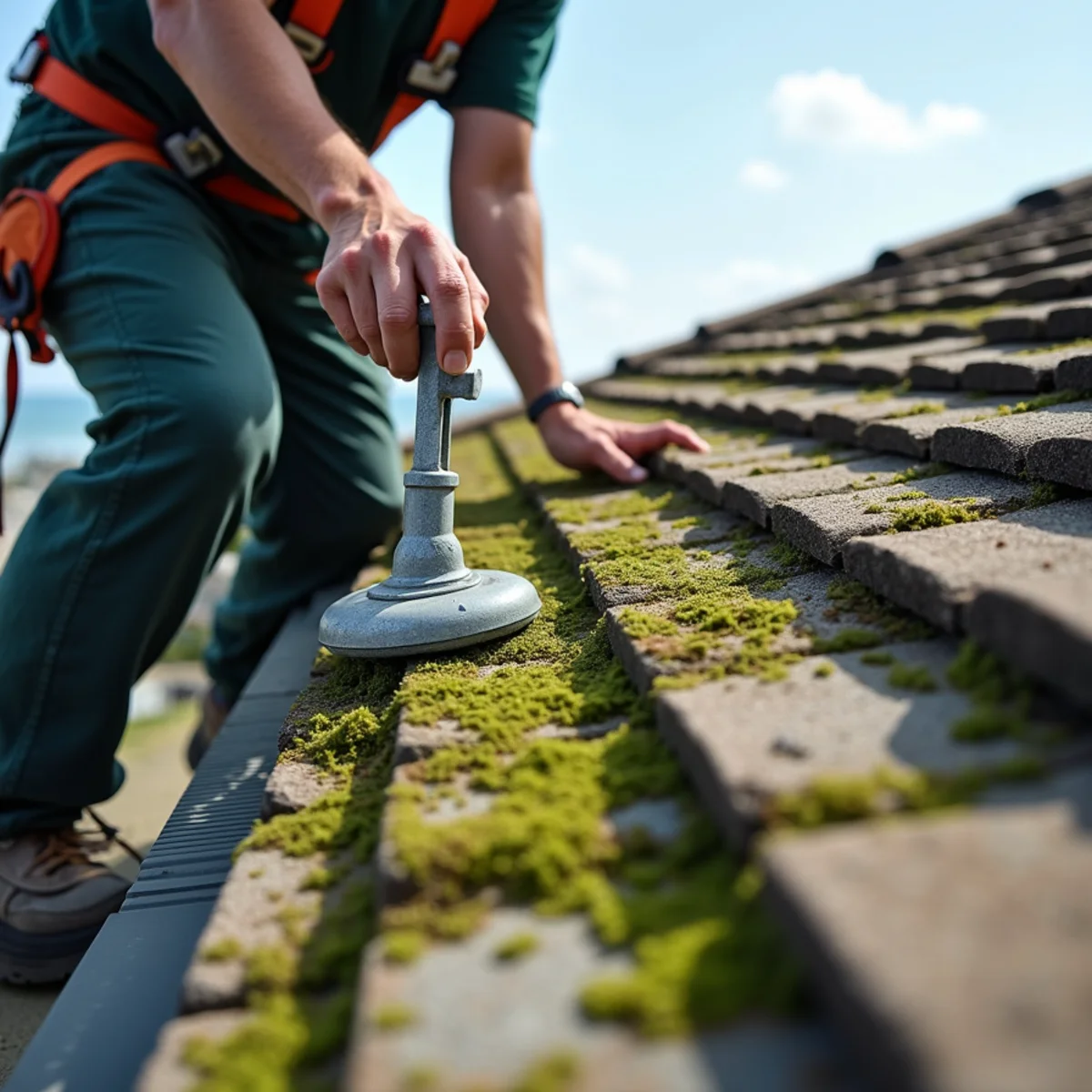
Signs you may need roof maintenance
- You want to extend the life of a roof in good condition
- Moss, mildew or debris is accumulating
- Gutters and downspouts need clearing
- You own a property where reactive repairs are disruptive
What's included
- Roof and component inspection
- Gutter cleaning and downspout flushing
- Moss, mold and mildew treatment common in marine-layer zones
- Sealant and flashing inspection and touch-up
- A written report with photos and recommendations
Our process
- 01
Assess
We inspect the roof and note maintenance items and any early warning signs.
- 02
Maintain
We clear debris, flush drainage, treat biological growth and touch up sealants as needed.
- 03
Report
We document what we did and flag anything worth watching.
Materials commonly involved
- Sealants and flashing touch-up materials
- Biological-growth treatments suited to roofing
Oceanside coastal considerations
- Marine moisture promotes moss and mildew, particularly on north-facing and shaded planes — routine treatment helps.
- Commercial properties near the harbor or pier face salt spray, seabird activity and constant sun; planned maintenance tends to cost less than reactive repairs.
What affects the scope of your project
- Roof size and complexity
- Amount of biological growth or debris
- Gutter and drainage condition
Every roof is different. The best next step is a property-specific evaluation — we'll explain what we find in plain language and lay out practical options.
Frequently asked questions
A yearly maintenance visit is a sensible baseline for most coastal roofs, with an added check after any major storm or strong Santa Ana wind. Roofs that are heavily shaded, flat or low-slope, or simply older often benefit from twice-yearly attention. Late summer, after the dampest months and before the winter rains, is a practical time to have it done.
An inspection is a documented read on your roof's overall condition so you can plan. Maintenance is the routine upkeep — clearing, treating, sealing and adjusting — that keeps small problems from ever becoming repairs. A maintenance visit usually includes a careful look at the roof, but its purpose is to act while issues are still easy and inexpensive to handle.
It genuinely helps, and more so near the coast. Salt, marine moisture and sun work on a roof year-round, and regular attention keeps small issues — clogged drainage, early growth, a dried-out seal — from turning into leaks that reach the decking below. Consistent upkeep lets the materials reach the service life they were built for.
No. Pressure washing drives water under shingles and tiles and strips the protective granules that help a roof shed sun and rain, which can do more harm than the moss itself. Moss and algae are better treated gently and cleared without high-pressure water.
Some of it, safely from the ground: watching for the warning signs, keeping tree limbs from overhanging the roof, and noticing when gutters overflow. The work that involves being on the roof is best left to someone equipped for it — a roof is slick when damp and easy to damage underfoot, and tile in particular cracks under careless steps. Please don't climb onto a wet or fragile roof.
Late summer — roughly after the dampest marine-layer months and before the winter rains — is a practical window, since anything that needs attention can be handled while the weather is dry. It is also worth a check after any strong wind event or storm, whatever the season.
Yes. We maintain flat and low-slope commercial and multi-family roofs, with attention to drainage, seams, membrane and flashing. We can also document the roof's condition for property managers and owners to support budgeting and ownership records.
It can. Many manufacturer material warranties and workmanship guarantees expect a roof to be reasonably maintained, and neglect can complicate a future claim. Documented maintenance helps show the roof was cared for. For the exact terms, check the specific warranty that applies to your roof.
Related services
Relevant roof types
Next step
Discuss Roof Maintenance in Oceanside
Tell us what you're seeing and we'll help you decide the sensible next step.