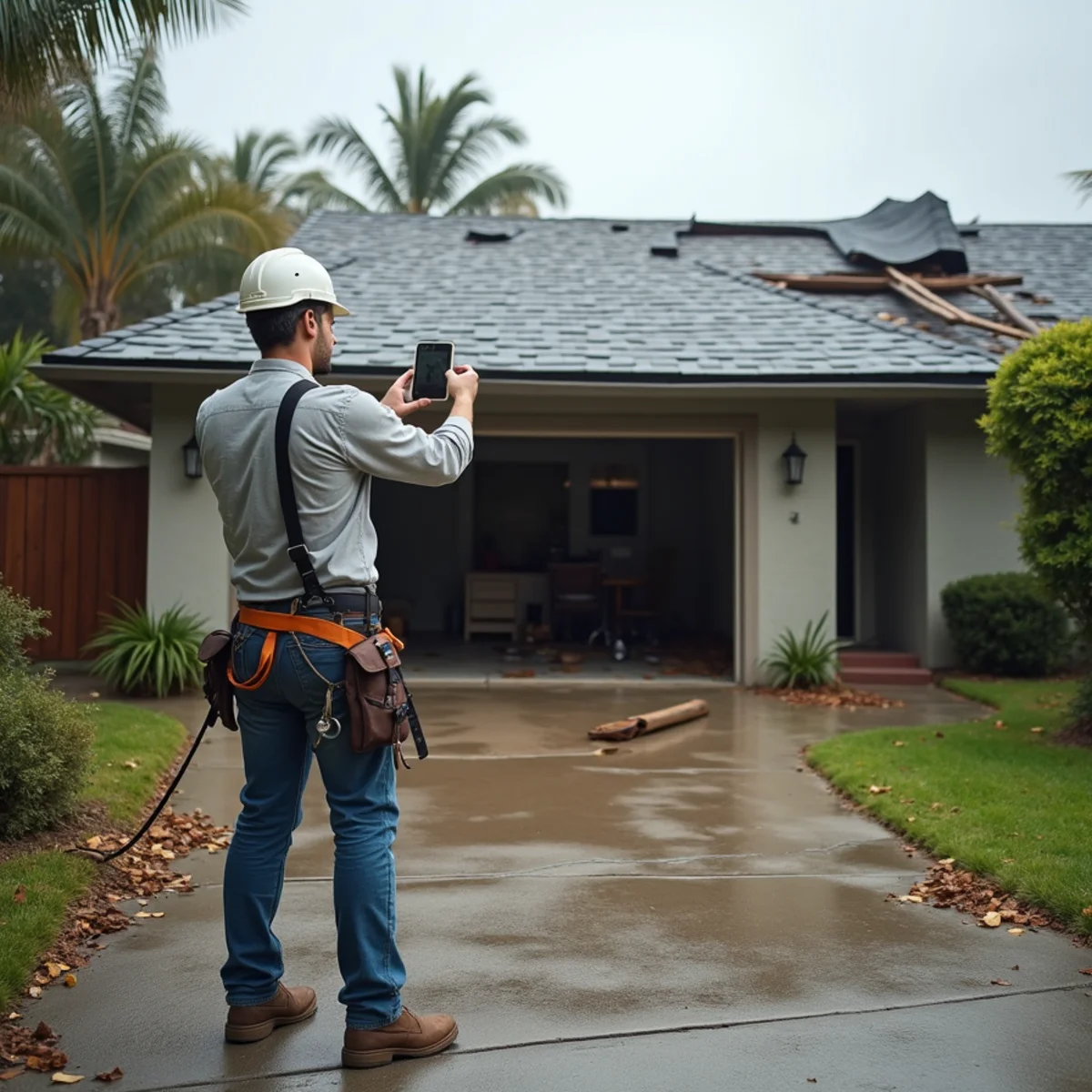
After a storm rolls through, the difference between a smooth insurance claim and a frustrating one often comes down to what you can show. Careful, well-organized records tend to move a claim along; thin or missing evidence tends to slow it down. This guide walks through how to document storm roof damage thoroughly and safely — and where the line sits between what you can do and what belongs to your insurer.
Safety first — stay off the roof
Before any documentation, one rule stands above the rest: stay off the roof. A roof that has just taken a storm may be wet, structurally weakened, or hiding damage that will not hold your weight, and no photograph is worth a fall. Almost everything you need for a strong claim can be gathered from the ground, from a ladder used only to look rather than to climb onto the roof, or from inside the house.
Documenting from a safe vantage point is not a compromise, either. Insurers and the contractors who prepare damage reports expect ground-level and interior evidence from a homeowner; the up-close roof assessment is a job for a professional with the training and equipment to do it safely.
- Take exterior photos from the ground or a stable ladder, never by climbing onto the roof
- Stay clear of downed power lines and anything the storm has made unstable
- Leave the close-up roof inspection to a professional who can carry it out safely
- If water is actively coming in, deal with safety and containment before anything else
What to photograph
Good storm damage photos of a roof tell a clear story, even when you do not have a true 'before' shot. The goal is coverage and context: wide photos that establish where the damage is, and closer photos that show what it is. Take more than you think you need — extra images cost nothing, and gaps in the record are hard to fill later.
A couple of habits make those photos more useful. Photos that carry a date, and ideally a timestamp, tie the damage to the storm, and most phones record this automatically — it is worth confirming the setting is on before you start. Keep the original images rather than edited or cropped versions, and back them up somewhere they will not be lost, since a claim can take time and you may need to refer to them more than once.
- Wide shots of each side of the house showing the whole roof and its condition
- Closer shots, zoomed from the ground, of lifted, missing, cracked or displaced roofing
- Any flashing — the metal sealing joints at chimneys, walls and vents — that looks bent or lifted
- Debris on the roof or in the yard, including anything that struck the house
- Gutters and downspouts holding granules, tile fragments or torn material
- Interior signs: ceiling stains, damp drywall, water spots and anything wet inside
- Attic views, if accessible and safe: daylight, damp insulation or wet decking
Recording the event details
Photographs show the damage; the surrounding details connect it to the storm that caused it. This part of roof insurance claim documentation is easy to overlook and genuinely useful, because a claim is stronger when the timeline is clear. Write it down while it is fresh — a short, dated note is easy to produce now and hard to reconstruct weeks later when an adjuster asks. The aim is a simple record that answers the obvious questions: what happened, when, and what you saw as a result.
- The date and approximate time the storm hit
- The kind of weather — high wind, hail, driving rain — and its rough severity
- Public records of the event, such as a local weather report or news coverage for that day
- When you first noticed the damage, inside or out
- Any temporary measures you took, such as placing a bucket or a tarp, with photos
- Receipts for any emergency expenses related to the damage
Working with a contractor's report
There is a limit to what a homeowner can safely and reliably assess, and that is where a roofing contractor's damage report comes in. A contractor can examine the roof up close — or with drone-assisted viewing where walking it is unsafe — and produce a written assessment with photographs of what they find. That report, paired with your own records, gives an adjuster a fuller picture than either would provide alone.
It is worth being clear about what that report can and cannot do. A contractor documents the damage and describes it in professional terms; the contractor does not decide your claim. The coverage decision rests entirely with your insurance company, and no roofer can guarantee that a claim will be approved, however thorough the documentation is. Be cautious of anyone who promises otherwise. A trustworthy contractor helps you present accurate information and then lets the insurer do its job. One more practical caution: hold off on permanent repairs until the damage has been documented and, ideally, seen by your insurer, since a repaired roof no longer shows what happened. Reasonable temporary steps to prevent further damage are expected, and photographing them before and after helps.
Timing and reporting deadlines
Insurance claims are time-sensitive, and this is where good intentions sometimes fall short. Most policies limit how long you have to report damage after it occurs, so the sooner you document and notify your insurer, the better. Waiting can complicate a claim, both because deadlines pass and because it becomes harder to tie the damage to a specific storm — and the longer an opening sits, the more likely the next weather makes it worse.
- Review your policy for the reporting window and what it requires
- Notify your insurer promptly once you have documented the damage
- Keep every record together — photos, notes, weather reports, the contractor's report and receipts
- Arrange a professional inspection as soon as it is safe, both to document fully and to prevent further damage
- Follow your insurer's process for adjuster visits and any additional information they request
The specifics of any claim — deadlines, coverage and what your policy requires — belong to your insurer and your policy, so confirm the details with them rather than assuming. What you control is the quality of your record. Document storm roof damage carefully and promptly, stay safe while you do it, and you give your claim the strongest foundation you can. If the damage needs urgent attention before the weather turns again, call (209) 758-8550 to check current urgent-service availability.
Frequently asked questions
Sources & further reading
- Insurance industry consumer guidance
This article is general guidance. Confirm current code, permit, Title 24, insurance and warranty specifics with the relevant authority for your project.