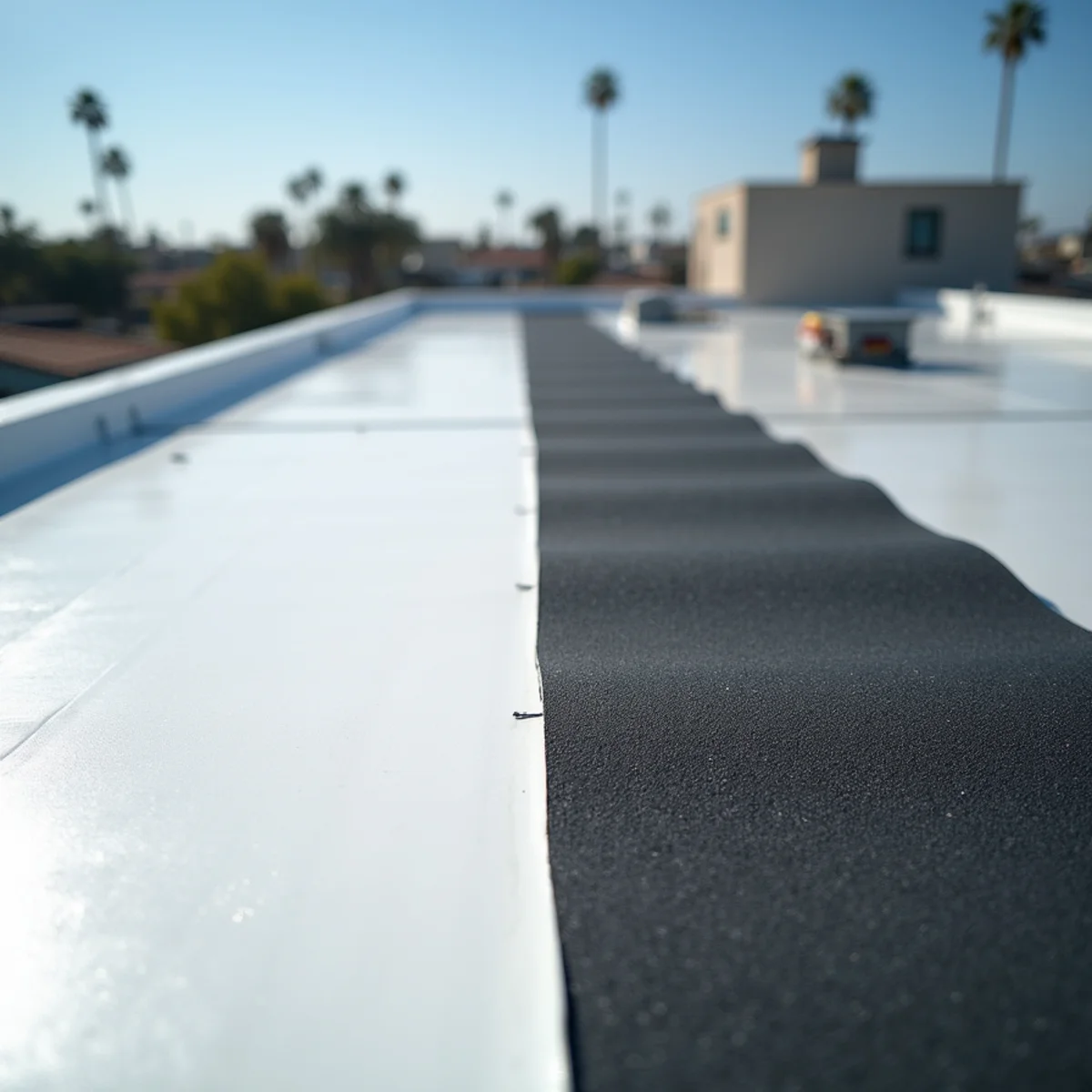
When a commercial low-slope roof needs replacing, two systems come up again and again: TPO and modified bitumen. Both can waterproof a flat roof well, but they work differently and suit different buildings, and choosing between them without understanding the trade-offs is how owners end up with a roof that does not quite fit. This TPO vs modified bitumen comparison lays out how each performs so the decision fits your property rather than a sales pitch.
How each system works
Both systems are membranes — continuous waterproof skins laid across a low-slope roof — but they are built from different materials and go down in different ways. TPO, short for thermoplastic polyolefin, is a single-ply membrane: a single layer of flexible plastic sheet, usually white, rolled out across the roof and joined at the seams with hot air that melts the sheets together into one welded surface. Because the seams are heat-welded rather than glued, a well-made TPO seam becomes part of the membrane itself.
Modified bitumen comes from a different lineage. It is asphalt — the same basic waterproofing material used for generations — modified with polymers that make it more flexible and durable, then reinforced and formed into rolls. It is installed in layers across the roof and can be applied several ways: torch-applied with an open flame, adhered with hot asphalt, or self-adhered with a peel-and-stick backing that needs no flame at all. That self-adhered option matters more than it sounds, and it comes up again below.
- TPO: a single-ply plastic sheet, usually white, with heat-welded seams
- Modified bitumen: polymer-reinforced asphalt in layers, applied by torch, hot asphalt or self-adhesive
- Both: continuous waterproof membranes made for flat and low-slope roofs
Reflectivity and energy
One of the clearest differences between the two is color, and color matters on a flat roof. TPO is typically white, and a white membrane is reflective — it bounces back a large share of the sunlight that a darker roof would soak up. On a big, sun-exposed commercial roof in Oceanside, that reflectivity can lower the roof's surface temperature and ease the cooling load on the building beneath, which tends to matter most on warm inland afternoons.
Modified bitumen is darker by nature, so a standard installation absorbs more heat. That gap can be narrowed — a reflective cap sheet or a light-colored coating over modified bitumen raises its reflectivity considerably — but out of the box, TPO has the edge on a roof where solar reflectance is a priority. If keeping cooling costs down on a large footprint is high on your list, that difference belongs near the top of your commercial roof membrane comparison.
Reflectivity is not the whole energy story, though. What sits under the membrane — the insulation across the deck — usually does more for a building's heating and cooling than the color of the surface, and both systems can be installed over the same insulation. So while TPO's white surface is a genuine advantage in the sun, it is worth weighing alongside the assembly as a whole rather than treating membrane color as the single deciding factor.
Installation and occupied buildings
For a building that stays occupied during the work — a medical office, a restaurant, an apartment building — how a roof goes down matters as much as how it performs afterward. This is where the installation method earns real attention, because some methods bring fumes, noise or open flame over a space full of people.
TPO's heat-welding uses hot air rather than an open flame, and self-adhered modified bitumen installs with no flame at all — both are gentler on an occupied building than a torch-applied system. The self-adhered route in particular keeps odor and fire risk low, which is why it often suits buildings that cannot simply close for the job. Whichever system you choose, the practical goal is the same: keep the disruption predictable and contained.
- Working in sections keeps part of the roof watertight throughout the job
- Flame-free methods — heat-welded TPO, self-adhered modified bitumen — reduce odor and fire risk over occupied space
- Scheduling the noisier stages around business hours limits disruption to tenants
- Clear communication keeps roof access and parking predictable for everyone below
Coastal/marine performance
Oceanside adds a coastal test that a comparison written for a dry inland climate would miss. Salt in the air, a marine layer that keeps roofs damp well into the morning, and strong sun the rest of the day all work on a membrane over time. Both systems can perform here, but their strengths line up differently.
TPO's reflective surface and welded seams stand up well to sun and hold together across large areas, though the quality of the seam welds is everything — a poorly welded seam is the weak point. Modified bitumen's layered, asphalt-based build handles persistent dampness well, and the self-adhered version installs without a flame in exactly the damp conditions a marine morning tends to produce. On lifespan, we will keep to ranges rather than promises: how long either system lasts here depends on the product, the quality of installation, drainage and upkeep, and honest longevity figures belong in the manufacturer's documentation rather than in a blanket claim. What is dependable is that both reward good drainage and regular maintenance, and both suffer without them.
Choosing for your property
So which is the best flat roof system? Neither one universally — the right answer depends on your building, and a roofer who names a winner without asking about your roof is skipping the important questions. A few considerations tend to settle it:
- Roof size and cooling priorities: a large, sun-exposed roof where cooling costs matter leans toward reflective TPO
- Occupied during the work: a building that cannot close leans toward flame-free methods, which self-adhered modified bitumen handles well
- Damp conditions: persistent marine moisture favors a system and method suited to installing and performing in the wet
- Existing roof and detailing: the current assembly, drainage and penetrations all shape which system fits best
- Long-term plan: how long you intend to hold the building affects how you weigh first cost against service life
The most useful next step is not to pick a membrane from a brochure but to have someone look at your actual roof — its size, slope, drainage, penetrations and condition — and weigh those against how the building is used and what you want to spend. Both TPO and modified bitumen are proven low-slope systems; the value is in matching the right one to your property. An on-site assessment turns this comparison into a clear recommendation, with no pressure toward the bigger job.
Frequently asked questions
Sources & further reading
- Manufacturer system documentation
This article is general guidance. Confirm current code, permit, Title 24, insurance and warranty specifics with the relevant authority for your project.