Loading…
Roof Types
Modified Bitumen Roofing in Oceanside, CA
Self-adhered membranes that suit damp, occupied buildings — no open flame.
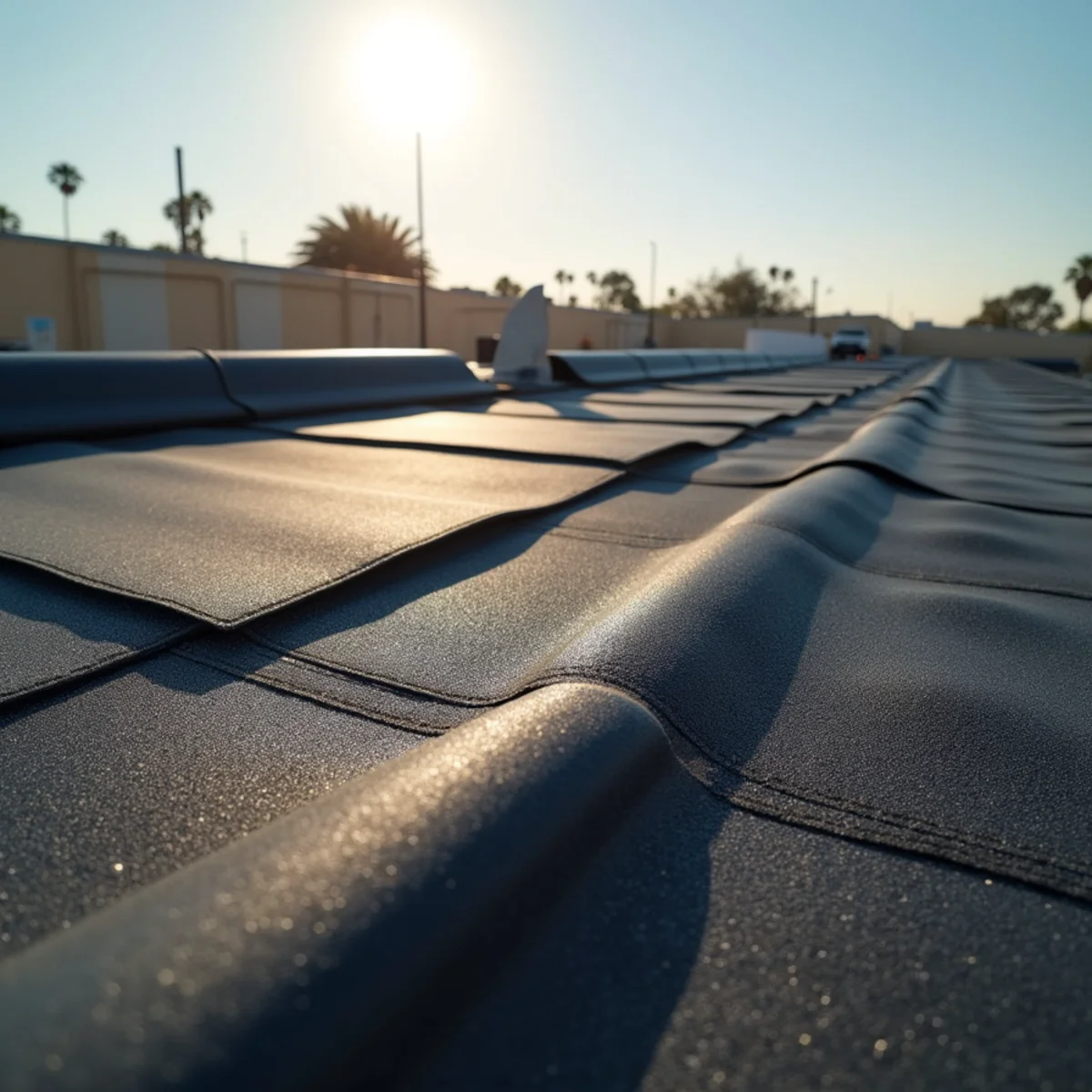
Modified bitumen is a durable membrane for flat and low-slope roofs. Self-adhered versions are especially well suited to the coast: they perform in persistent marine dampness and install without open flame, which matters for occupied buildings.
Modified Bitumen Roofing on Oceanside Homes
Modified bitumen is one of the oldest ideas in flat roofing brought up to date. At its heart is bitumen — the same asphalt-based waterproofing that has sealed low-slope roofs for generations — but reinforced with rubber or plastic modifiers and a woven mat so the finished sheet bends, stretches, and endures far better than plain asphalt ever could. It arrives in rolls, goes down in layers across the roof deck, and forms a thick, forgiving membrane built for the flat and low-slope surfaces a pitched-roof material simply cannot cover. For an Oceanside building with a flat section — a garage, an addition, a mid-century home, a rooftop deck, or a whole commercial box — it is one of the systems most worth understanding, because the way it is installed changes how well it copes with the coast.
What modified bitumen is made of
The name breaks into two parts. Bitumen is the asphalt compound that does the waterproofing — sticky, water-shedding, and proven, but on its own brittle in the cold and soft in the heat. The word modified is what fixes that: manufacturers blend in polymers that give the sheet flexibility and staying power, and they lock a reinforcing mat of polyester or fiberglass into the middle so it resists tearing and stretching. The result is a membrane that moves with a building as it heats, cools, and settles, instead of cracking under the strain.
Rubber-modified and plastic-modified sheets
There are two common families, and it helps to know the difference in plain terms. Rubber-modified sheets — the industry shorthand is SBS — stay flexible and elastic, which makes them forgiving through temperature swings and a natural match for self-adhered and cold-applied installation. Plastic-modified sheets — labeled APP — run tougher and more heat- and UV-tolerant, and are usually torch-applied. Neither is universally better; the right one depends on how the roof will be installed and what it has to put up with. On the coast, the flexible rubber-modified sheets pair especially well with the flameless, self-adhered method we tend to favor here.
Built up in layers, with backup baked in
Modified bitumen is rarely a single sheet. A typical system is built up from a base sheet or one or more ply sheets bonded to the deck, then a cap sheet — the top layer — bonded over them. Each layer is fully adhered to the one below, so the finished roof is two or three plies of waterproofing stacked together rather than one thin skin. That redundancy is one of the system's quiet strengths: if the top layer is nicked or worn, there is still waterproofing beneath it — a meaningful margin of safety on a roof people walk across to reach equipment.
The cap sheet often comes with a factory-applied surface of fine mineral granules — the same idea as the granules on an asphalt shingle. Those granules shield the asphalt below from ultraviolet light, which is the main thing that ages a bare membrane, and they add a little grip and fire resistance. It is a simple detail that does a lot of the quiet work of keeping the roof intact over the years.
Four ways to install it — and why the method matters here
Modified bitumen can go down several ways, and near the ocean the method matters as much as the membrane. Torch-applied — often called torch-down — uses an open propane flame to melt the underside of the sheet so it bonds as it is rolled out. Hot-mopped systems bond the layers with molten asphalt from a kettle. Cold-applied systems use an adhesive that needs no heat. And self-adhered sheets — sometimes called peel-and-stick — carry a factory adhesive on the back and bond on their own, with no flame and no kettle at all.
Why we usually favor self-adhered
For most Oceanside buildings we lean toward the self-adhered method, for practical reasons. It puts no open flame on the roof, which removes a genuine fire risk over an occupied space and near the dry vegetation that surrounds many coastal properties during Santa Ana season. It produces little of the smoke and asphalt odor a torch or hot kettle sends through a building's vents — a real consideration when people are living or working below. And it goes down cleanly and quickly. The trade-off worth naming: a self-adhered sheet needs a clean, dry, properly prepared deck to bond fully, and it bonds best in mild temperatures rather than a cold snap — conditions Oceanside offers more reliably than most places, which is part of why the method suits the climate.
How the coast tests a low-slope roof
A flat roof near the ocean takes stress from several directions at once, and modified bitumen has to answer all of them. The marine layer — the damp coastal air that lingers on many mornings — keeps roofs and decks wet for hours after inland surfaces have dried, so the surface spends more of its life damp, which is hard on any membrane. Salt-laden air corrodes the metal flashing — the sheet-metal pieces that seal the membrane where it turns up against a wall, a curb, or a pipe — and once flashing corrodes it stops sealing, which is why so many coastal leaks begin at the edges rather than in the open field of the roof. And the sun's UV slowly hardens any asphalt left exposed, which is exactly what the granulated cap sheet, and later a reflective coating, are there to slow down.
Drainage is still everything
Because a low-slope roof is too shallow to shed water by pitch alone — low-slope simply means it lacks the fall to drain the way a steep house roof does — it relies on deliberate drainage to carry water to drains and scuppers, the openings that let water spill off an edge or through a parapet wall. When those paths clog, or the roof settles into a hollow, you get ponding: water that sits for more than a day or two. Ponding is the quiet enemy of every flat roof, and the persistent damp of the marine layer only gives it more time to work. Modified bitumen stands up to occasional wetting well, but no membrane is meant to sit under standing water indefinitely, so getting the drainage right is part of getting the roof right.
Tough underfoot, and honest to repair
One reason modified bitumen has kept its place on low-slope roofs is that it is genuinely durable and easy to fix. The built-up thickness of two or three plies resists punctures from foot traffic better than some thinner single-layer membranes — a real advantage on a roof people cross to service air-conditioning units, vents, or solar equipment. And when damage does happen, the repair is well understood and rarely dramatic: a patch of compatible membrane bonded over the trouble spot restores the seal. There is no exotic part to source and no proprietary tooling required, which keeps repairs straightforward for years to come.
Energy, reflectivity, and California's Title 24
In its bare form, modified bitumen is a dark surface that absorbs heat rather than reflecting it. That is a starting point more than a flaw, because reflectivity can be added. A light-colored reflective coating — a liquid that cures into a continuous skin over a sound membrane — bounces sunlight back and lowers the roof's heat gain, and a lighter-shade granulated cap sheet helps as well. Roofers and code officials measure this with the Solar Reflectance Index, or SRI: a single number for how much sunlight a surface reflects and how well it sheds the heat it does absorb. A higher SRI means a cooler roof under the same sun.
This matters for more than comfort. California's Title 24 energy standards call for cool-roof performance on many low-slope roofs, using that SRI value as the yardstick — though the specifics depend on the roof, the insulation, the climate zone, and the type of work, and there are exceptions written into the code. The standards are also updated on a cycle, so rather than assume a particular version applies, we confirm the current edition and how it applies with the authority having jurisdiction, and we would encourage any owner to do the same. It keeps a project from being built to an outdated assumption.
The honest trade-offs
No roofing system is all upside, and it is fair to be plain about where modified bitumen has limits. None of these are dealbreakers — they are simply the shape of the trade-off.
- It belongs on flat and low-slope roofs, not steep ones — on a pitched roof, a shedding material like shingle, tile, or metal is the right tool.
- Bare modified bitumen is not reflective, so on a hot, sun-exposed roof you will likely want a lighter granulated surface or a reflective coating to manage heat gain.
- Like every membrane roof, it lives or dies by its seams and flashing, which means the detailing at edges and penetrations has to be done carefully.
- Self-adhered sheets need a clean, dry, well-prepared deck and mild installation temperatures to reach full bond, so surface prep and timing are not corners to cut.
- It still depends on good drainage; no membrane is designed to sit under standing water for long.
How it compares to the alternatives
Modified bitumen is one of several ways to waterproof a flat roof, and the honest comparison is about fit, not a ranking. Each system has conditions where it leads and conditions where another serves better.
Versus single-ply membranes
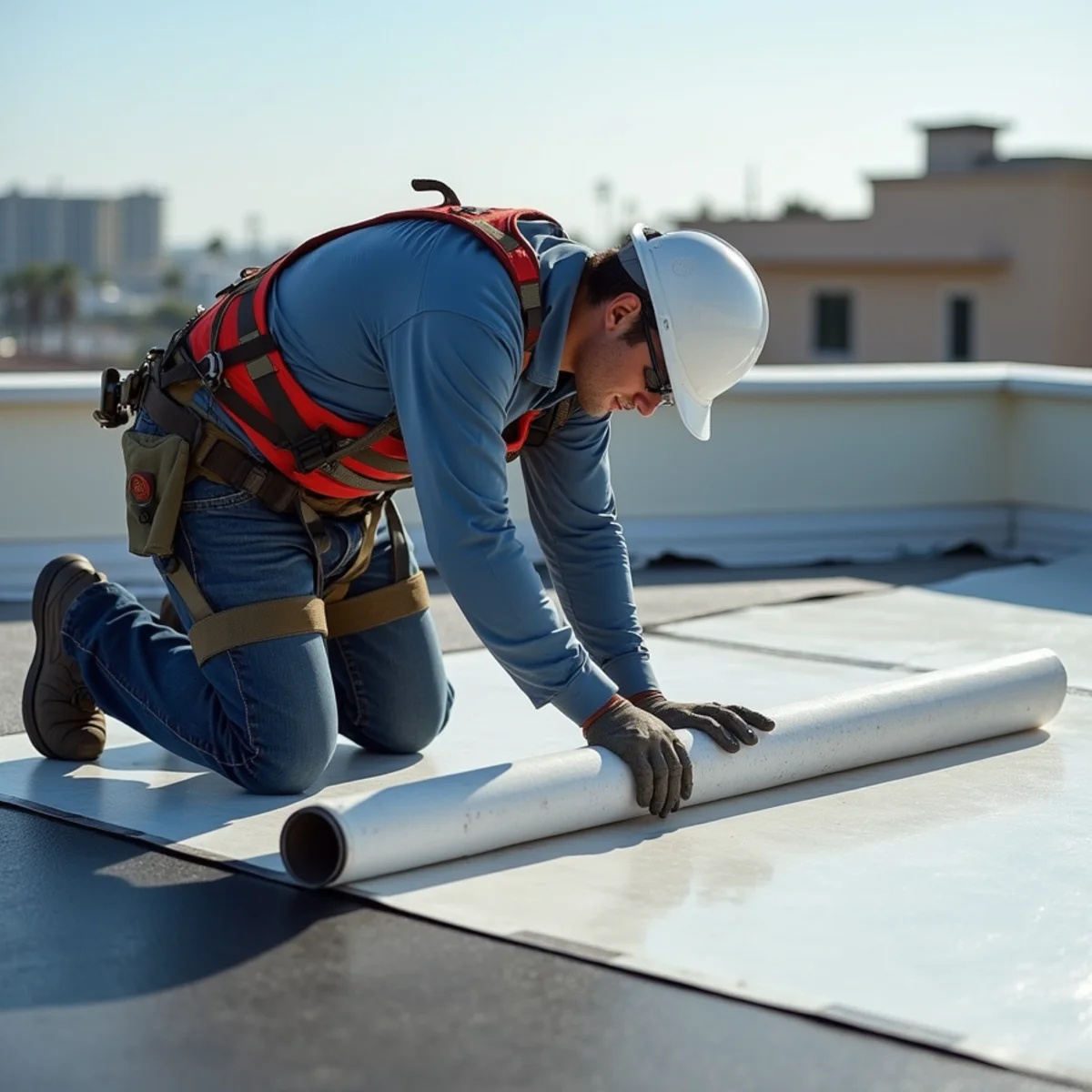
Single-ply membranes — the wide, often white sheets welded into one continuous layer — reflect more sunlight in their bare state and cover large, open commercial roofs efficiently. Modified bitumen answers with its multi-ply redundancy and its toughness underfoot, and with a self-adhered install that avoids the flame some methods require. On a big, sun-baked commercial box, a reflective single-ply often leads; on an occupied building, a damp shaded roof, or a roof that sees heavy foot traffic, modified bitumen frequently fits better.
Versus built-up (tar-and-gravel) roofing
Traditional built-up roofing — layers of asphalt and felt topped with gravel, the classic tar-and-gravel roof — is a close cousin and a proven performer, but it is installed with hot asphalt and all the fumes and equipment that come with it. Modified bitumen delivers similar multi-ply protection in a cleaner, faster, and — in self-adhered form — flameless package, which is why it has taken over much of the ground built-up roofing once held.
Torch-down versus self-adhered
Within the modified-bitumen family itself, the choice usually comes down to torch-down versus self-adhered. Torch-down bonds with an open flame and can be the right call on some projects, but that flame is a real hazard over an occupied space and near dry brush. Self-adhered gives up the flame entirely while keeping the membrane's strengths — which, for most of the coastal buildings we see, is the safer and more practical way to go.
What it costs, as a category
As a relative category, modified bitumen tends to sit in the middle of the flat-roof range — generally more than a bare single-layer patch and less than a heavy premium assembly — though every roof is priced on its own facts. What actually drives the figure is rarely the membrane alone: the condition of the deck underneath, how much tear-off the old roof requires, the amount of flashing and the number of penetrations to detail, the drainage work a roof needs, and whether you add a reflective coating all move it. The value case rests on the system's durability, its repairability, and the way a sound membrane can be recoated later to add years before a full replacement — so the sensible way to weigh cost is over the life of the roof, not by the first invoice alone.
Best-fit buildings and how to decide
Self-adhered modified bitumen tends to make the most sense on occupied commercial buildings that cannot tolerate flame or fumes, on damp or shaded low-slope roofs where moisture lingers, and on residential flat sections, additions, garages, and rooftop decks where an open flame would be unwelcome. It is a practical, proven answer to exactly the conditions Oceanside serves up. Whether it beats a reflective single-ply membrane for your building depends on the specifics — there is no universal winner, and any roofer who names one before seeing your roof is guessing.
A handful of questions point you toward the right call: Is the building occupied while the work happens, which would favor a flameless, low-odor install? How damp and shaded does this roof stay, given its exposure? Do you want reflectivity now, or would you rather start with the membrane and add a coating later? And how will the seams, flashing, and drainage be handled, since that detailing is where a flat roof succeeds or fails? We will walk you through the answers for your specific roof — no surprises, just the system that actually fits.
Keeping a modified-bitumen roof watertight
A flat roof is out of sight, which makes it easy to forget — but a little deliberate upkeep is what turns a good membrane into a long-serving one. The habits are simple and none of them are urgent on their own; the point is to catch small things while they are still small.
- Keep drains, scuppers, and gutters clear so water always has a path off the roof and never has a reason to pond.
- Inspect the seams and the flashing at edges, walls, and penetrations periodically, since these are the first places a membrane roof lets go.
- Watch for blisters — spots where trapped air or moisture lifts the membrane into a bubble — and have them addressed before they split.
- Clear debris and trim back overhanging growth that traps damp against the surface in the marine layer.
- Consider a reflective coating as the surface ages or when heat gain becomes a concern, both to cool the roof and to extend the membrane's life.
Advantages
- Performs in marine-layer dampness
- Self-adhered systems avoid fire risk during install
- Durable and repairable
- Good for occupied buildings
Limitations to weigh
- Best on low-slope roofs
- Requires careful seam and flashing work
- Not reflective unless coated
Coastal considerations
- Self-adhered modified bitumen outperforms traditional torch-down in the marine layer's persistent damp and avoids open flame.
- A reflective coating can be added where heat gain is a concern.
Maintenance
- Inspect seams and flashing
- Keep drainage clear
- Consider a reflective coating over time
Common repairs
- Seam and blister repair
- Flashing repair
- Penetration sealing
Energy considerations
A reflective coating over modified bitumen can improve heat performance on sun-exposed roofs.
Questions to ask before choosing this material
- Is a self-adhered system right for my occupied building?
- How will seams and flashing be detailed?
- Should a reflective coating be added?
- How is drainage managed?
Frequently asked questions
It is a membrane for flat and low-slope roofs made from asphalt-based bitumen reinforced with rubber or plastic modifiers and a woven mat. It goes down in two or three bonded layers — base or ply sheets with a cap sheet on top — to form one thick, waterproof surface with built-in redundancy, so it keeps water out even where a pitched roof's shedding action isn't available.
Neither is universally better, but self-adhered has real advantages on the coast. It installs with no open flame and little odor, which is safer over occupied buildings and dry vegetation, and it bonds well in the mild, damp conditions the marine layer creates. Torch-down still has its place, but for most coastal buildings we tend to favor the flameless approach.
Service life varies with the system, the installation quality, drainage, sun exposure, and upkeep, so we avoid quoting a single figure. Well-installed and maintained, it can serve a long time on a low-slope roof, and a sound membrane can often be recoated to add more years before a full replacement. We give realistic expectations for your specific roof.
Yes — that is one of the strengths of the self-adhered version. Because it needs no open flame and no kettle of hot asphalt, it produces far less fire risk, smoke, and fume than torch-down or hot-mopped methods, which makes it a sensible fit for stores, offices, apartments, and homes where people cannot easily clear out during the work.
It depends on the building. A reflective single-ply membrane often leads on large, sun-exposed commercial roofs where reflectivity and open area matter most. Modified bitumen frequently fits better on occupied buildings, damp or shaded roofs, and roofs that see foot traffic, thanks to its multi-ply toughness and flameless self-adhered install. We match the system to your roof rather than crowning one winner.
Bare modified bitumen is a dark, non-reflective surface, so a lighter granulated cap or a reflective coating is often used to raise its Solar Reflectance Index (SRI). California's Title 24 requires cool-roof performance for many low-slope roofs, but whether yours qualifies depends on the project, and the standards are updated on a cycle — we confirm the current edition and its applicability with the authority having jurisdiction.
It handles foot traffic better than many thinner single-layer membranes because of its built-up thickness, which is one reason it suits roofs people cross to service equipment. It is still a roof, not a walkway, so avoid dragging tools or heavy loads and step carefully around seams and flashing — but reasonable maintenance traffic is well within what it is built for.
Blisters are spots where trapped air or moisture lifts the membrane into a bubble; they should be addressed before they split. Edge and corner leaks usually trace to aging flashing, which corrodes faster in salt air, or to ponding from poor drainage. We look for the underlying cause — flashing, drainage, or a seam — rather than only patching the symptom.
Often, yes — if the membrane is still fundamentally sound. A reflective coating applied over a clean, repaired surface can restore protection, cut heat gain, and add years before a full replacement is needed. Whether recoating is the right move depends on the roof's condition, so we assess the membrane, seams, and flashing first and give you a straight recommendation.
Related services
Next step
Considering Modified Bitumen Roofing?
Let's talk through whether it's the right fit for your Oceanside property.