Loading…
Roof Types
TPO Roofing in Oceanside, CA
A reflective, energy-efficient single-ply membrane for larger commercial flat roofs.
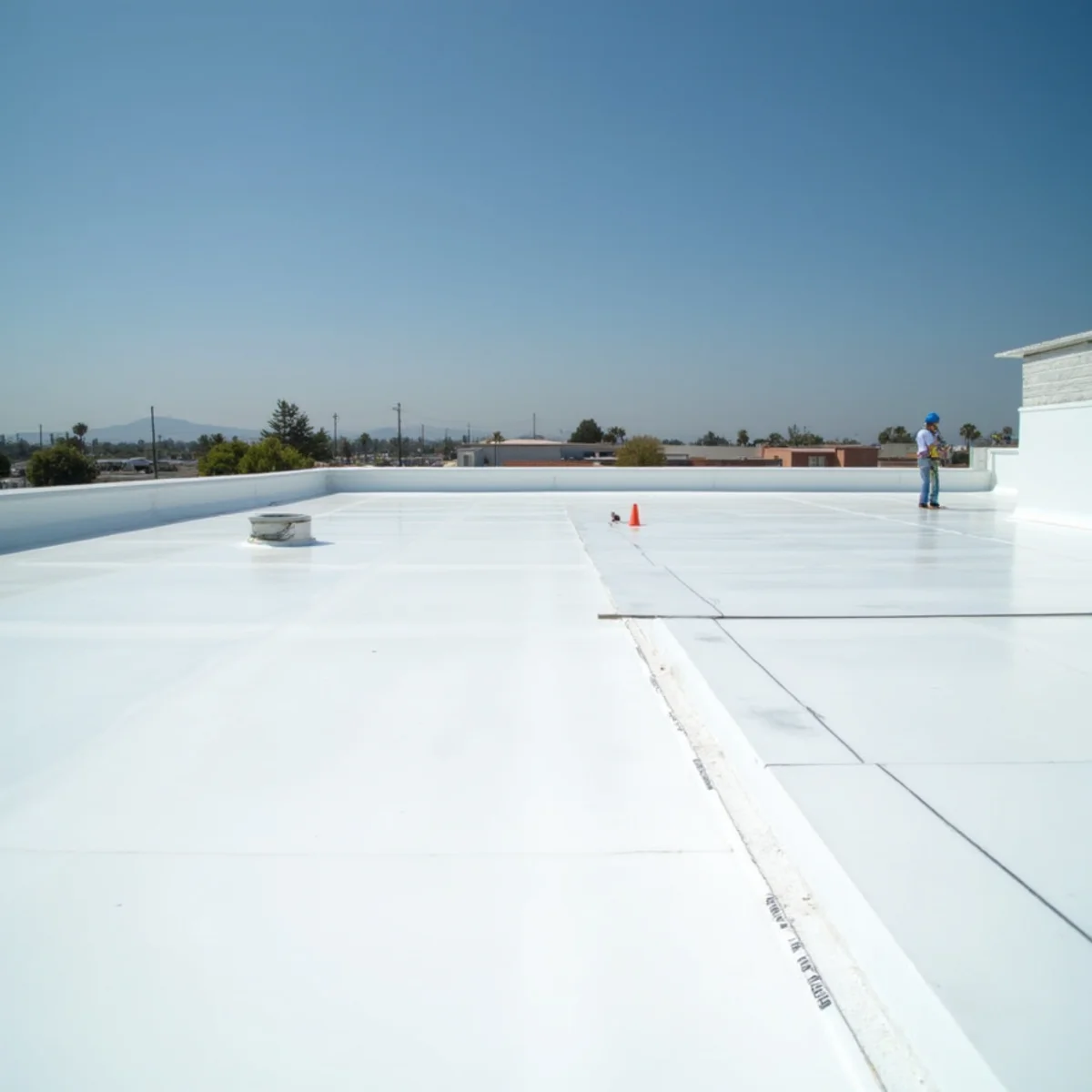
TPO (thermoplastic polyolefin) is a white, single-ply membrane that reflects heat and resists many of the stresses of a coastal climate. It's a common choice for restaurants, retail and other commercial buildings where cooling costs and larger flat areas are in play.
TPO Roofing on Oceanside Homes
TPO — thermoplastic polyolefin — is a single-ply roofing membrane, which means the entire roof is waterproofed by one manufactured sheet rather than by several layers built up on site. It arrives in wide rolls, most often bright white, that are rolled out across a low-slope roof (a roof too shallow to shed rain by pitch alone) and joined into one continuous, watertight surface. TPO has become one of the most common choices on commercial and low-slope buildings around Oceanside, and for understandable reasons: it is light, reflective, and quick to cover large areas. It is not, however, the automatic answer for every flat roof. The honest way to look at it is as one strong option among several — and this page walks through what TPO is, where it fits, how it performs on the coast, what it asks of you in upkeep, and how it stacks up against the systems you might weigh against it.
What TPO is, and how a single-ply membrane works
TPO belongs to a family of flat-roof materials called single-ply membranes — thin, factory-made sheets that do the whole waterproofing job on their own. The thermoplastic part is the key to how it goes together: the material softens with heat and fuses to itself, so where two sheets overlap they are heat-welded, melted together with a hot-air tool into a bond that, done well, is as strong as the sheet itself. Running through the middle of the sheet is a reinforcing layer, a woven fabric called a scrim, that gives a thin membrane real strength and resistance to tearing.
Membranes come in different thicknesses, measured in thousandths of an inch, or mils. A thicker sheet generally shrugs off punctures and foot traffic better and weathers longer, which is worth understanding when you compare quotes, because not all TPO is the same gauge. This is a different animal from an older built-up roof, where felt and asphalt are stacked into a thick assembly. A single-ply membrane trades that bulk for a light, uniform skin — faster to install and easier to inspect, but dependent on the quality of its seams and details rather than on sheer thickness.
How TPO is attached, and why it matters in coastal wind
A membrane has to be held down against wind, and there is more than one way to do it. In a mechanically fastened system, the sheets are screwed to the deck along the seams with plates and fasteners, hidden under the next overlapping sheet. In a fully adhered system, the membrane is glued to the layer beneath across its whole underside for a smooth, uniform hold. Which one suits your roof depends on the deck, the building, and the wind it faces.
That last point is not academic near the water. Wind uplift — the suction a strong gust creates as it flows over a roof, trying to peel the membrane up at the edges and corners — is a real design question in Oceanside's coastal breezes, and the perimeters and corners where uplift is strongest get extra attachment. Beneath the membrane there is usually insulation and a cover board, a firm panel that gives the sheet a solid, even surface to bond to and helps it resist punctures from above. These layers you never see are part of why one TPO roof outlasts another.
The reflective surface, cool roofing, and California's Title 24
The feature people notice first is the color. A white TPO roof reflects a large share of the sunlight a dark roof would soak up, keeping the roof and the space beneath it cooler. On a big, sun-exposed commercial roof, that reflectivity is not window dressing — it can ease the cooling load through Oceanside's warm inland afternoons, which is why owners of restaurants, retail spaces, and offices often look at TPO first.
How well a surface reflects is captured in a single number, the Solar Reflectance Index, or SRI: the higher the value, the more sunlight bounces away instead of turning into heat. California's Title 24 energy standards call for cool-roof performance on many low-slope roofs, and a reflective membrane is one common way to meet it. The standards are updated on a cycle, though, so rather than assume a particular version governs your project, we confirm the current edition and how it applies with the authority having jurisdiction — and we would encourage any owner to do the same. Reflectivity also earns the most away from the immediate coast, where the marine layer already keeps things mild; Oceanside's warmer inland stretches feel the benefit more clearly.
Where TPO fits best
TPO is at its best on genuinely low-slope roofs with large, open areas — a store, a warehouse, an office, a multi-tenant strip, the flat expanse over a commercial building. The more uninterrupted roof there is baking in the sun, the more the reflective surface and the economy of a single sheet pay off. It is a weaker fit for roofs chopped up by equipment and penetrations, for anything that is not truly low-slope, and for homeowners chasing a particular architectural look — a white membrane is a working surface, not a decorative one. The goal is to match the membrane to the roof, not to crown one product the winner for every building.
A note on restaurants and rooftop grease
Restaurants deserve a specific caution. Owners often look at TPO for the cooling benefit, and across most of the roof it serves fine — but the area downwind of a kitchen exhaust fan, where airborne grease and animal fats settle, is hard on TPO, which does not resist those oils especially well over time. Another weldable thermoplastic membrane, PVC, stands up to grease and chemical exposure better and is frequently the wiser pick around cooking exhaust. If your building has a commercial kitchen, that detail is worth raising before you settle on a membrane, because the right answer may be TPO across the field and a grease-resistant membrane where the exhaust lands.
Seams, flashing, and drainage — where a TPO roof is won or lost
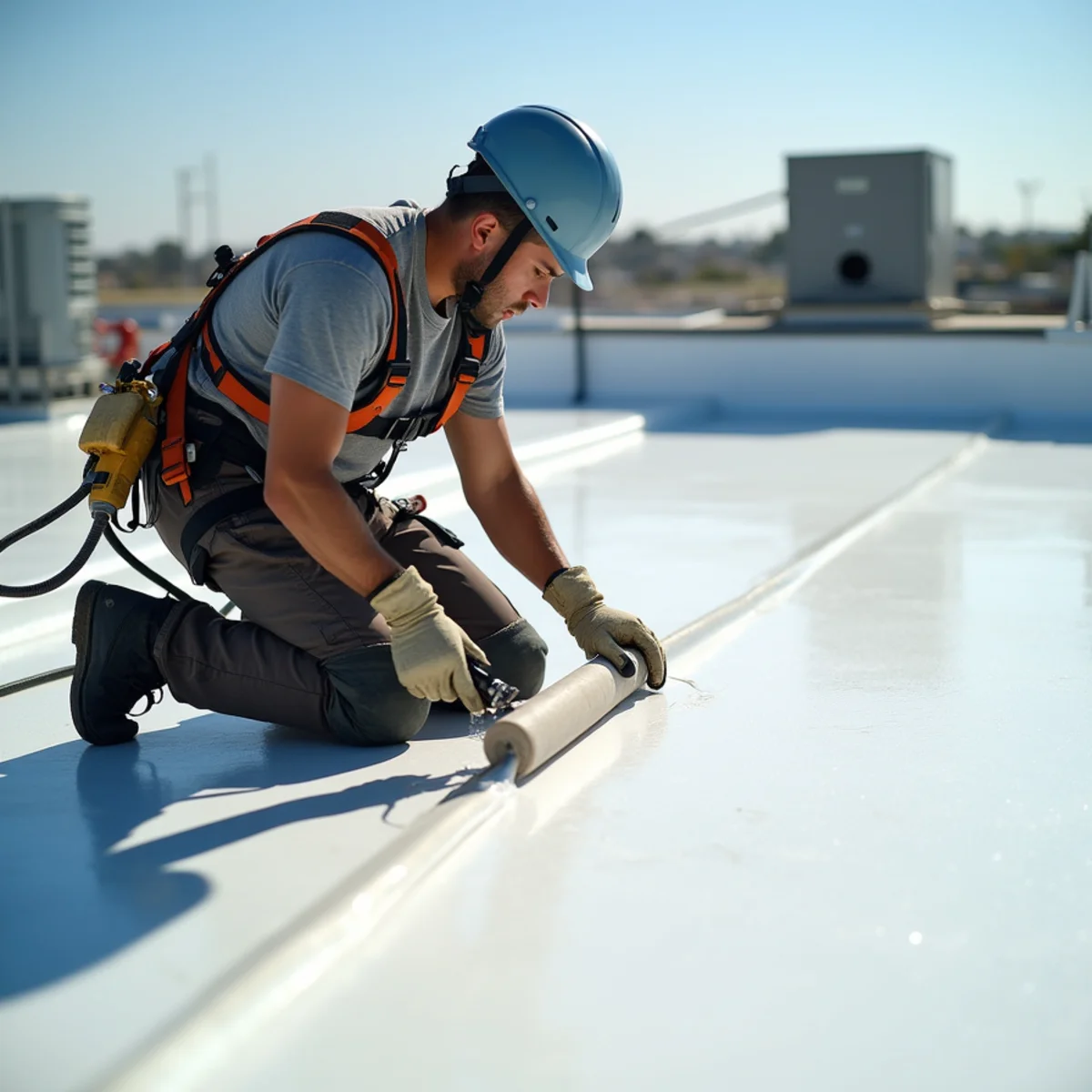
The single most important thing about a TPO roof is how its seams are made. Where two sheets overlap, they are heat-welded into a bond that, done right, is as strong as the membrane itself; done poorly, that same seam is the weakest line on the roof and the first place it leaks. Skilled welding, with the crew checking the welds as they go, is most of what separates a membrane that holds up from one that does not.
Flashing is the other half. Flashing is the material that seals the membrane wherever it stops running flat and turns up a parapet wall, wraps a curb, or collars a pipe, drain, or rooftop unit. Those penetrations — anything that pokes through the roof — are where a large share of flat-roof leaks begin, because each one is sealed by hand. And because TPO is still a low-slope roof, drainage remains everything: the reflective surface does nothing for water that ponds, meaning it sits for more than a day or two, in a low corner. Sound welds, careful flashing, and drainage that actually moves water off the roof are the three things to get right.
How TPO holds up on the Oceanside coast
On the coast, TPO holds up reasonably well to salt and moisture, and its reflectivity is a genuine plus under strong sun. The details around it need coastal-grade thinking, though. Salt-laden air corrodes ordinary metal — the fasteners, edge metal, and flashing that anchor and seal the membrane — faster than it does inland, so corrosion-resistant components matter on a coastal reroof; standard galvanized hardware can give out years before the membrane does.
The marine layer keeps a roof damp well into the morning, which is hard on any spot already holding water, so drainage and seam integrity carry even more weight here than they would inland. And years of ultraviolet sun slowly weather the top surface of any single-ply membrane. That is part of why membrane thickness matters at install and why a fresh reflective coating later can extend a roof's life — the surface takes the brunt of the exposure.
The honest limitations
No membrane is without trade-offs, and TPO's are worth naming plainly. It is a single layer, so a dropped tool, dragged equipment, or sharp debris can puncture it more easily than they would a thick, multi-ply system — a real consideration on a roof people cross regularly to service rooftop units. Quality varies between products and gauges more than the shared name suggests, so TPO on two different quotes is not necessarily the same roof. It belongs on low-slope roofs only. And its performance leans heavily on installation quality; a well-specified membrane welded by an unpracticed hand is still a leak waiting to happen. None of these rule TPO out — they simply argue for a thoughtfully chosen membrane and a careful install.
Maintenance and common repairs
TPO is low-maintenance, not no-maintenance. A short, regular routine keeps it watertight and stretches its service life, and most repairs are well understood when they come up.
- Inspect the welded seams and the flashing at edges and penetrations — these are the first points to fail.
- Keep drains and scuppers clear so the roof never ponds.
- Patch punctures promptly; a compatible piece of membrane heat-welded over the spot is a standard, reliable fix.
- Watch the hand-sealed details around anything that pokes through the roof, where the sealing ages fastest.
- Have the roof looked at after any work by other trades — HVAC or solar crews often walk on it and set equipment down.
How TPO compares to other flat-roof systems
Choosing a flat roof is really a choice among a handful of proven systems, each with its own strengths. It helps to see where TPO sits relative to the alternatives you are most likely to be offered, rather than judging it in isolation.
TPO vs. modified bitumen
Modified bitumen is an asphalt-based membrane with a long track record on low-slope roofs. It is tougher underfoot and more forgiving of foot traffic and impact because it is built up in layers, and self-adhered versions install without the open flame of older torch-down work — a real advantage on occupied coastal buildings. In its bare form, though, it is a dark surface that soaks up heat rather than reflecting it. TPO answers with reflectivity and a lighter, faster single-sheet install. Where the roof is large, sun-exposed, and cooling matters, TPO often leads; where the roof takes heavy traffic, or dampness lingers, or the building cannot tolerate any flame, modified bitumen frequently fits better.
TPO vs. other single-ply membranes
Two other single-plies come up often. EPDM is a black synthetic rubber sheet — durable and long-proven, but its dark color absorbs heat, the opposite of TPO's reflective strength, so it suits situations where reflectivity is not the priority. PVC is TPO's close cousin, another weldable thermoplastic; it typically costs more but resists grease and chemicals better, which is why it is often chosen around restaurant exhaust and industrial rooftops. TPO tends to sit in the middle — reflective like a white PVC, generally more economical, and a sound default where grease and chemical exposure are not the deciding factors.
TPO vs. built-up and older systems
A built-up roof — the classic tar-and-gravel assembly of stacked felt and asphalt — is heavy, proven, and thick, but slow to install and dark unless it is surfaced with gravel or a reflective coating. A single-ply membrane trades that mass for a light, reflective, quicker-to-install skin. On a large, low-slope commercial roof, that trade often favors a membrane like TPO; the older built-up assemblies still have their place on certain buildings and are sometimes what an existing roof is best repaired to match.
What TPO costs, in relative terms
We will not put a price on a page, because the real number depends on the size and shape of your roof, whether the old roof is torn off or covered over, the insulation and cover board beneath, the attachment method, and how many penetrations have to be detailed. In relative terms, though, TPO tends to sit in the moderate range for a flat-roof system — generally more approachable up front than a premium single-ply like PVC, competitive with modified bitumen, and economical over large areas where one sheet covers ground quickly. The reflectivity can also shave something off cooling costs over the years, which belongs in the math alongside the install price rather than being counted separately.
How long a TPO roof lasts
A well-installed, well-maintained TPO roof can serve dependably for a long stretch when the membrane is a sound thickness, the seams are welded properly, and the roof is kept clear and inspected. We avoid promising an exact number, because service life swings widely with membrane gauge, sun and salt exposure, foot traffic, drainage, and upkeep. A thin membrane on a neglected, ponding roof gives out far sooner than a thicker one kept clean and dry. The controllable factors — thickness at install, weld quality, and steady maintenance — are where you buy yourself years, and they are worth spending attention on up front.
Restoring and recoating a TPO roof
A membrane roof does not have to reach full tear-off to get a second wind. If the field of the roof is still sound but the surface is weathering, a reflective coating can be rolled or sprayed over it — a light-colored liquid that cures into a continuous skin, renews the reflectivity, and adds years before a full replacement is needed. Restoration like this is often less disruptive and less costly than a tear-off, and it keeps a building running while the work happens. It only makes sense on a roof that is fundamentally sound, though — a coating hides nothing and fixes no failing seam — so an honest inspection comes first, and we will tell you straight whether your roof is a candidate.
How to decide — questions worth asking
If TPO is on your shortlist, a handful of questions cut straight to what matters. Is my roof genuinely low-slope enough for a single-ply membrane? What thickness of membrane are you proposing, and how will the seams be welded and checked? How will the roof be attached given our coastal wind — mechanically fastened or fully adhered? Are the fasteners, edge metal, and flashing corrosion-resistant for salt air? How does water drain off this roof today, and where does it pond? And if there is a commercial kitchen, is TPO the right membrane around the exhaust, or would a grease-resistant one serve better?
We will give you straight answers for your building, and we will tell you honestly if another system would suit you better. TPO is a strong choice where reflectivity and large, low-slope areas line up; it is not the automatic answer for every flat roof. We would rather match the membrane to your roof — no surprises — than sell you the same thing we sell everyone.
Advantages
- Energy-efficient reflectivity
- Strong welded seams
- Good value for larger areas
- Resists many coastal stresses
Limitations to weigh
- Requires skilled seam welding
- Detailing at penetrations is critical
- Best on genuinely low-slope roofs
Coastal considerations
- TPO's reflectivity helps on sun-exposed coastal commercial roofs.
- Proper drainage and seam detailing remain essential in the marine environment.
Maintenance
- Inspect welded seams and flashing
- Keep drains clear
- Address punctures promptly
Common repairs
- Seam and flashing repair
- Puncture patching
- Penetration detailing
Energy considerations
TPO's reflective surface reduces rooftop heat gain, which can help lower cooling costs.
Questions to ask before choosing this material
- Is my roof low-slope enough for a single-ply membrane?
- How will seams and penetrations be detailed?
- How is drainage handled?
- What's the plan for future maintenance?
Frequently asked questions
TPO stands for thermoplastic polyolefin. It is a single-ply roofing membrane, meaning one manufactured sheet does the whole waterproofing job, laid across a low-slope roof and heat-welded into a continuous surface. It is usually bright white and reflective, which is why it is common on commercial and low-slope buildings where cooling and large flat areas are in play.
It varies, so we avoid quoting an exact figure. A sound-thickness membrane with well-made welds, good drainage, and regular upkeep can serve dependably for a long stretch, while a thin membrane on a neglected, ponding roof gives out much sooner. Membrane thickness, sun and salt exposure, foot traffic, and maintenance are the factors that move the number.
It can be. TPO holds up reasonably well to salt air and marine moisture, and its reflectivity is a real plus under strong coastal sun. The key is coastal-grade details: corrosion-resistant fasteners, edge metal, and flashing, since ordinary galvanized hardware corrodes faster near the ocean, plus drainage and seam quality that stand up to the marine layer's persistent dampness.
Neither is universally better; it depends on the building. TPO leads where the roof is large, sun-exposed, and cooling matters, thanks to its reflective surface and lighter, faster install. Modified bitumen, especially self-adhered, often fits better where the roof takes heavy foot traffic, where dampness lingers, or where an occupied building cannot tolerate the open flame of torch-down work.
Most TPO leaks start in one of three places: a poorly made seam weld, a puncture in the single-layer membrane from dropped tools or dragged equipment, or the hand-sealed flashing where the roof turns up a wall or wraps a pipe, drain, or rooftop unit. Ponding water in a low spot with poor drainage makes any of these worse over time.
Often yes for the cooling benefit, with one caution. The area downwind of a kitchen exhaust fan, where airborne grease and animal fats settle, is hard on TPO, which does not resist those oils especially well. A grease-resistant weldable membrane such as PVC is frequently the better pick right around the exhaust, sometimes paired with TPO across the rest of the roof.
Yes. Punctures and seam issues are usually fixed by heat-welding a compatible patch of membrane over the trouble spot. And if the field of the roof is still sound but the surface is weathering, a reflective coating can be applied over it to renew reflectivity and add years before a full replacement. Restoration only makes sense on a fundamentally sound roof, so an honest inspection comes first.
A reflective TPO membrane is one common way to meet cool-roof requirements, which are measured by a value called the Solar Reflectance Index (SRI). Whether your specific project must comply depends on slope, insulation, and other factors, and the standards are updated on a cycle. We confirm the current edition and how it applies with the authority having jurisdiction rather than assuming.
Mostly it is a commercial and low-slope material, but it does appear on homes with flat or low-slope sections — over a garage, an addition, or a modern flat-roofed design. It is not suited to steep, visible roof slopes, and its plain white working surface is not chosen for looks, so on most houses it fits the flat portions rather than the whole roof.
Related services
Next step
Considering TPO Roofing?
Let's talk through whether it's the right fit for your Oceanside property.