Loading…
Roofing Services · Commercial
Flat Roof Repair in Oceanside, CA
Repair of flat and low-slope membrane sections on homes and businesses.
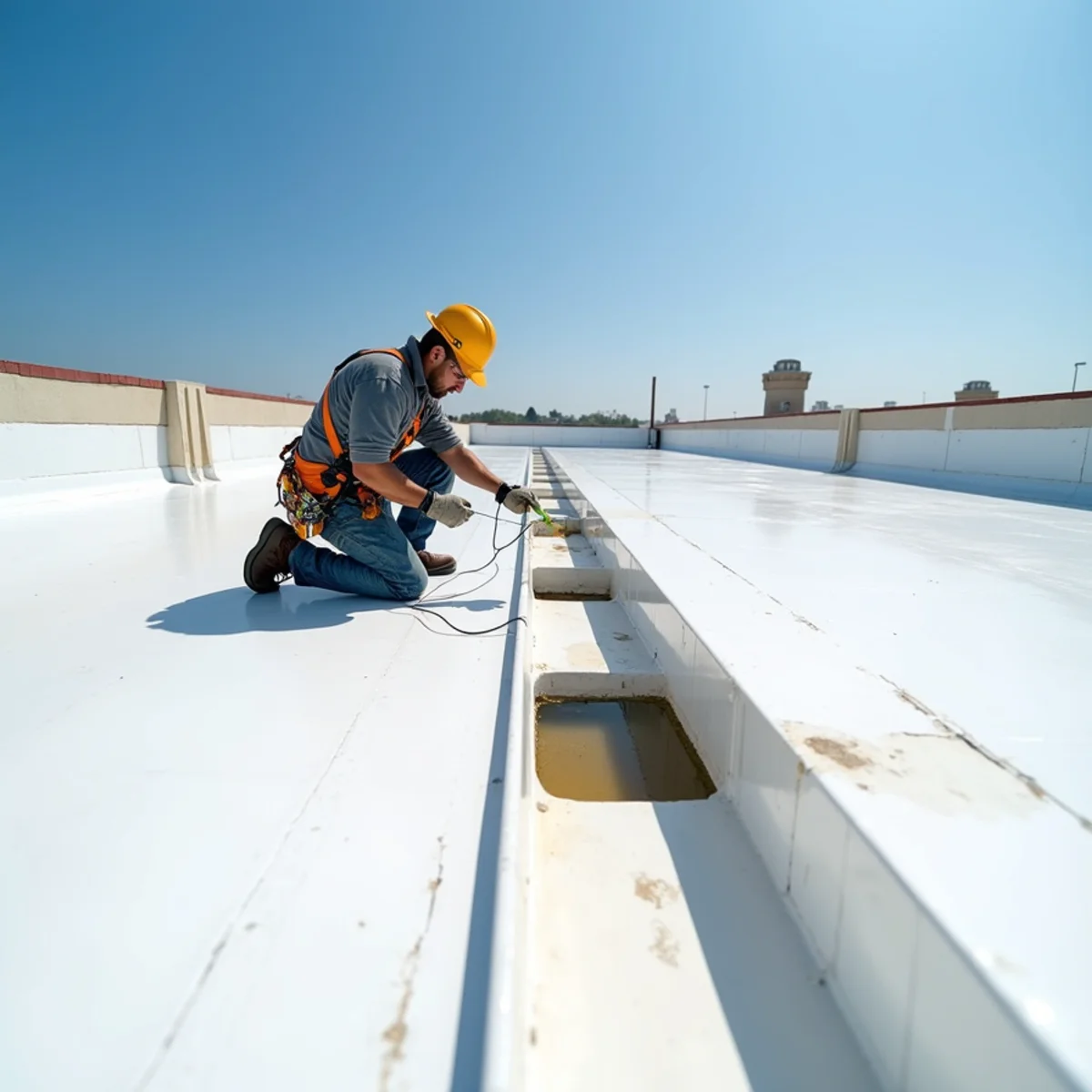
Many Oceanside properties have flat or low-slope sections — over garages, additions, modern designs and commercial buildings. These systems fail differently than sloped roofs: ponding water, seam separation and drainage problems are common culprits.
Understanding flat roof repair in Oceanside
Flat and low-slope roofs are all over Oceanside — capping garages and room additions, crowning mid-century and modern homes, and covering nearly every commercial and multi-family building in town. They ask for little attention, which is exactly why they get forgotten until a stain shows up on a ceiling below. This page walks through how these roofs work, why they leak, what an honest repair looks like on the coast, and how to tell a fix that will hold from a roof that has quietly moved past patching. The aim is to give you enough to make a sound decision about your own roof before anyone sets foot on it.
What a flat roof really is
No roof is truly flat. What we call a flat roof is really a low-slope roof — one built with just enough tilt to walk water toward a drain or an edge, but nowhere near the angle of a shingled house roof. A common rule of thumb in the trade is around a quarter-inch of fall for every foot of run: gentle enough that you would not notice it standing on the roof, but enough, in theory, to keep water moving.
Because that slope is so slight, a low-slope roof cannot count on steepness to shed rain the way a pitched roof does. Instead it depends on two things working together: a continuous waterproof membrane — a single sealed skin stretched across the whole roof — and a drainage path that actually carries water off. When either one falters, water lingers. And a flat roof that holds water is a flat roof on its way to a leak.
The flat-roof systems you'll find around Oceanside
Flat roofs come in a handful of families, and knowing which one you have shapes how it gets repaired. On local homes and buildings you'll mostly run into:
- Single-ply membrane — a rolled sheet of flexible plastic or rubber (the common types go by initials like TPO, PVC and EPDM) welded or adhered into one surface. Repairs here center on the seams where the sheets meet.
- Modified bitumen — an asphalt-based membrane in rolls, either self-adhered or torch-applied. The self-adhered kind is a frequent choice near the coast because it goes down without an open flame and tolerates damp conditions.
- Built-up roofing — the traditional layers of asphalt and felt topped with gravel, sometimes called tar-and-gravel. Older Oceanside buildings often wear this, and it tends to show its age as a cracked, dried-out surface.
- Spray foam and coatings — a sprayed or rolled-on surface that cures into a seamless skin, used to renew a roof that is still sound rather than tear it off.
Signs your flat roof needs attention
A low-slope roof tends to signal trouble in fairly specific ways. Any one of these is worth a closer look before it becomes a leak:
- Ponding — water still sitting a day or two after the rain has stopped, often marked by rings, silt lines or darker stains once it dries.
- Blisters and bubbles, where trapped moisture or air has lifted the membrane away from the layer beneath it.
- Split or open seams — the joints between membrane sheets — pulling apart as the roof heats and cools through the day.
- Alligatoring — a cracked, scaly pattern on older built-up and coated roofs where the sun has baked the top layer brittle.
- Failed flashing at parapet walls, curbs, drains and roof penetrations, which is where a large share of flat-roof leaks actually begin.
- Fresh stains, bubbling paint or a musty smell on the ceiling of the room below.
Ponding water: the flat-roof problem that hides in plain sight
Of all the things that go wrong on a flat roof, ponding is the one owners most often shrug off. It looks harmless — just a puddle that will surely dry. It usually does dry, and then it returns with the next rain in the exact same spot. Standing water that lingers more than a day or two is not a cosmetic quirk; it is the roof telling you it is not draining the way it was designed to, and left alone it steadily wears the surface out.
Why the water stops moving
A puddle that keeps coming back is pointing at something specific. The usual causes are:
- Clogged drains and scuppers — leaves, silt and roofing grit block the outlets and water backs up behind them. This is the most common cause and the easiest to prevent.
- Too little slope — if the original fall toward the drains was marginal, even a well-built roof will pool in the low spots.
- Structural deflection — over years the deck and framing can sag slightly under load, creating a dip the water finds and settles into.
- Compressed or wet insulation beneath the membrane, which slumps into a shallow bowl that collects water.
- Rooftop obstructions — curbs, mechanical units and pipe penetrations that dam the flow and pool water on their uphill side.
Why standing water is worth taking seriously
Water is heavy. A wide, shallow pond adds real weight to a roof that was not built to carry it, which can deepen the very dip that caused the pooling in the first place. Sitting water also drives harder on seams and flashing than passing rain ever does, feeds moss and algae, and — on the coast — keeps the surface damp long enough for salt and sun to do extra damage. A pond does not have to be leaking today to be quietly shortening the roof's life.
What Oceanside's coast does to a flat roof
A flat roof a few miles from the water lives a harder life than the same roof would inland, and the reasons are worth understanding because they shape how a repair should be built.
Salt air is the quiet one. It corrodes the metal a flat roof depends on — drain bodies, scupper linings, edge metal, flashing and fasteners — so a coastal repair should lean on corrosion-resistant components rather than standard hardware. The marine layer adds a second pressure: morning after morning the roof sits damp well past sunrise, which slows drying, feeds algae and mildew, and means the surface is rarely bone-dry when work would otherwise begin. Add the steady Southern California UV, which hardens and shrinks some membranes over time, and the occasional Santa Ana wind that can catch a lifted seam or loose edge and peel it back, and you have a roof being worked from several directions at once. None of it is cause for alarm — it simply argues for materials and details chosen for salt and sun, not for a generic climate.
Why the leak is rarely where the drip is
On a pitched roof, gravity keeps water heading in one direction, so tracing a leak is fairly direct. A flat roof gives water room to wander. It can slip in at a tired seam, travel along the top of the deck or between layers of the system, and finally surface at a low point several feet from where it entered. That is why a dab of sealant placed under the interior stain so often fails — it seals a spot the water was only passing through on its way somewhere else. Finding the true point of entry, not just the wet spot, is most of what makes a flat-roof repair hold.
How we track a flat-roof leak to its source
Because water hides its trail, we trace rather than guess. We look at the roof and the space below it together, then work through the usual suspects — seams, flashing, drains and every penetration — since that short list accounts for the large majority of leaks. Where a source is stubborn, we can isolate sections of the roof to narrow down where water is truly getting in, and where it helps safe, accurate diagnosis we can bring in moisture-detection methods that read dampness trapped under the membrane. Coastal roofs carry one extra wrinkle: the marine layer wets the deck on its own, so we take care to separate a genuine leak from surface moisture that simply never dried out.
What makes a flat-roof repair actually last
A durable repair is less about the patch than about everything around it. The surface has to be clean and genuinely dry before anything new goes down — a membrane or sealant laid over damp material will not bond, and it will fail again. In a climate where the roof is seldom dry first thing, that patience matters, and it is one reason coastal flat-roof work often runs later in the day, once the morning damp has burned off.
From there, the repair has to be made with materials compatible with the existing system, because not every product bonds to every membrane. Self-adhered modified bitumen is a common pick for coastal repairs — it installs without a torch and handles damp well. And wherever drainage is feeding the leak, we address that too, so the fix removes the cause rather than dressing the symptom.
Correcting drainage, not just the leak
Because so many flat-roof problems trace back to water that would not leave, a lasting fix often means improving the way the roof drains. Depending on what we find, that can involve:
- Clearing and, where needed, adding or enlarging drains and scuppers so the roof can actually shed a heavy rain.
- Building up the low spots — tapered insulation panels or a sloped filler can restore the fall a tired roof has lost, so water heads for the drains instead of pooling.
- Adding a cricket — a small sloped ridge that steers water around a chimney, curb or rooftop unit that has been damming it.
- Choosing a surface suited to any water that still lingers, since some coatings and membranes stand up to occasional ponding far better than others.
Repair, restore, or replace
Not every tired flat roof needs tearing off, and the honest answer usually lands in one of three buckets. A roof that is broadly sound and leaking at a seam, a flashing detail or a single ponding area is a straightforward repair — that describes most flat-roof calls, and a good repair on a roof with life left is money well spent. A roof that is worn across the surface but still solid underneath may be a candidate for a restoration coating that renews the skin without a full tear-off. But a roof where water has soaked into the insulation and will not dry has generally reached the end — you cannot patch or coat your way out of wet insulation, and sealing it in only hides the damage. We will tell you plainly which of the three your roof is, and why.
What shapes the scope of a repair
Flat-roof repairs vary widely in size, and a few factors drive most of that difference:
- The system type and its age — an older built-up roof asks for different handling than a newer single-ply membrane.
- How far the failure has spread — one open seam is a quick fix; widespread blistering is not.
- Whether the insulation or deck below has taken on water, which turns a surface repair into something larger.
- The drainage design, and whether slope, drains or scuppers need correcting.
- Access and rooftop clutter — the pipes, units and equipment a crew has to work around.
Common mistakes that turn a small leak into a big one
Most flat roofs that fail early are not undone by a storm — they are undone by well-meant shortcuts. The ones we see most often:
- Smearing caulk or roof cement under the interior stain, which seals a spot the water was only crossing and buys a few weeks at best.
- Treating ponding as harmless and letting it work on the same low spot season after season.
- Coating or patching over wet insulation, which traps the moisture and hides a problem that keeps growing underneath.
- Using a patch material that is not compatible with the existing membrane, so the repair never truly bonds.
- Letting drains and scuppers stay clogged — the cheapest problem to prevent and one of the most common reasons a flat roof leaks.
What to expect when you call us
When you reach out about a flat roof, the first step is a straight look — at the roof, its drainage and the space below — and a plain-language read on what is actually wrong. You get photos of what we find, an explanation you can follow without a roofing background, and options rather than a single take-it-or-leave-it number. If water is actively coming in, call (209) 758-8550 to check current urgent-service availability, and we will walk you through how to limit the damage in the meantime. What we will not do is push you toward more roof than your building needs.
When flat-roof repair pairs with other work
A flat-roof repair rarely lives entirely on its own. If the roof is sound but sun-worn, a reflective coating can extend it and ease cooling costs at the same time — worth weighing before you commit to repeated patches. On a commercial or multi-family building, a repair is a natural moment to set up a maintenance rhythm that catches the next issue early. And where a leak has traveled far or crossed into a pitched section, it may tie into broader leak tracing or drainage and gutter work. We will point out where combining efforts saves you money, and where it simply is not needed.
Signs you may need flat roof repair
- Standing water (ponding) that doesn't drain
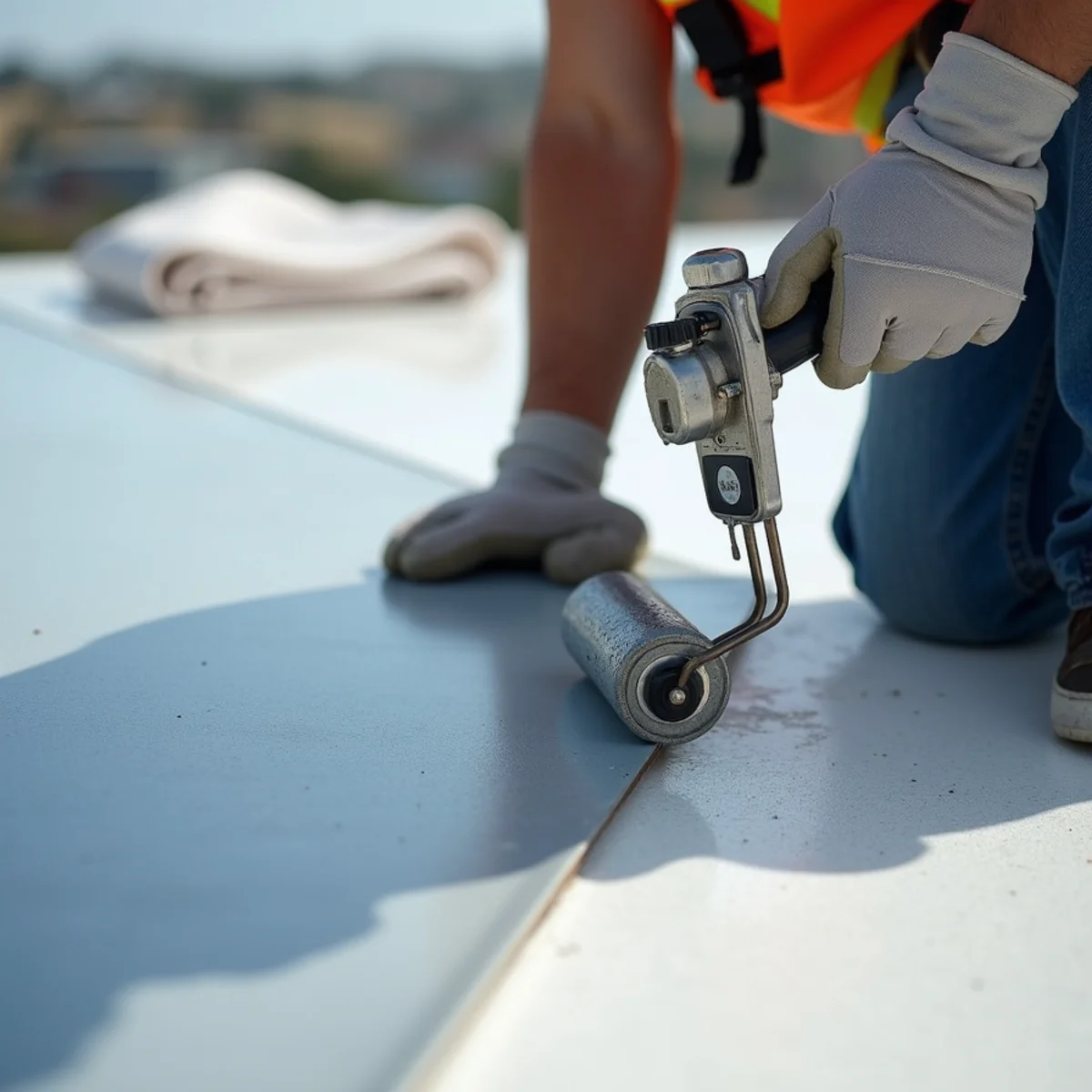
- Cracks, blisters or separated seams in the membrane
- Leaks over an addition, garage or commercial space
- Deteriorated flashing at parapets or penetrations
What's included
- Membrane repair for TPO, modified bitumen and similar systems
- Seam and flashing repair
- Drainage correction and ponding mitigation
- Penetration sealing
Our process
- 01
Inspect
We locate the failure — seams, flashing, penetrations or drainage.
- 02
Repair
We repair the membrane and correct drainage where it's contributing.
- 03
Verify
We confirm the area sheds water properly and check surrounding details.
Materials commonly involved
- TPO and modified-bitumen repair materials
- Self-adhered systems for damp conditions
- Flashing and drainage components
Oceanside coastal considerations
- Self-adhered modified bitumen performs well in the marine layer's dampness and avoids open-flame installation.
- Ponding is harder on coastal roofs exposed to constant moisture; correcting drainage matters.
What affects the scope of your project
- System type and age
- Extent of membrane and seam failure
- Drainage design
- Access
Every roof is different. The best next step is a property-specific evaluation — we'll explain what we find in plain language and lay out practical options.
Frequently asked questions
There isn't a single figure, because a repair can be anything from resealing one seam to rebuilding drainage and replacing wet insulation. The main drivers are the system you have, how far the failure has spread, whether the deck or insulation below is wet, and how much drainage correction is needed. The most useful number is one tied to your actual roof after a look, not a blanket estimate — and we would rather give you that than a guess.
Most flat-roof problems are localized — a seam, a flashing detail, a puncture or one ponding area — and repair honestly, keeping years of life in the roof. Replacement enters the picture when leaks keep surfacing in new places, when large areas have blistered or gone brittle, or when water has saturated the insulation beneath the membrane. We will tell you which side of that line your roof sits on, with photos of what we found.
It is more serious than it looks. Standing water that lingers past a day or two adds weight, works harder on seams and flashing than passing rain, and on the coast keeps the surface damp long enough for salt and sun to do extra damage. It usually signals that the roof is not draining as designed, so the real fix is to address the drainage rather than wait for the leak to arrive.
Water on a low-slope roof can enter at a small, easy-to-miss failure — a hairline seam, a tired flashing, a pinhole at a penetration — then travel sideways beneath the membrane and surface far from where it got in. So the roof can look clean where you are standing while the real breach sits several feet away. Tracing the true point of entry is the heart of a repair that actually holds.
It depends heavily on the system, the quality of the drainage, and how much sun and salt it takes, so any single number would be misleading. What reliably extends the life of any flat roof is keeping drains clear, catching seam and flashing issues early, and not letting water pond. Steady attention buys far more years than the material label on its own.
Yes, and it matters more than people expect. A membrane or sealant laid over damp material will not bond, and it will fail again. Near the coast the roof is rarely dry first thing, so proper repairs often wait until the morning marine damp has burned off. That patience is part of what makes the fix last.
There is no single best; it depends on your roof, its slope and its exposure. What matters more than the material name is that the metal components resist salt corrosion, the system tolerates the marine layer's dampness, and the surface handles UV and any occasional ponding. We match the system to your roof rather than to one product on a sales sheet.
Yes. The same principles apply to a flat section over a garage or addition and to a full commercial low-slope roof — membranes, seams, flashing and drainage all behave the same way. On occupied commercial buildings we plan the work to keep disruption down and, where the roof allows, keep part of it watertight throughout.
Related services
Relevant roof types
Next step
Discuss Flat Roof Repair in Oceanside
Tell us what you're seeing and we'll help you decide the sensible next step.