Loading…
Roofing Services · Commercial
Roof Coatings in Oceanside, CA
Reflective coatings that protect and extend flat and low-slope roofs.
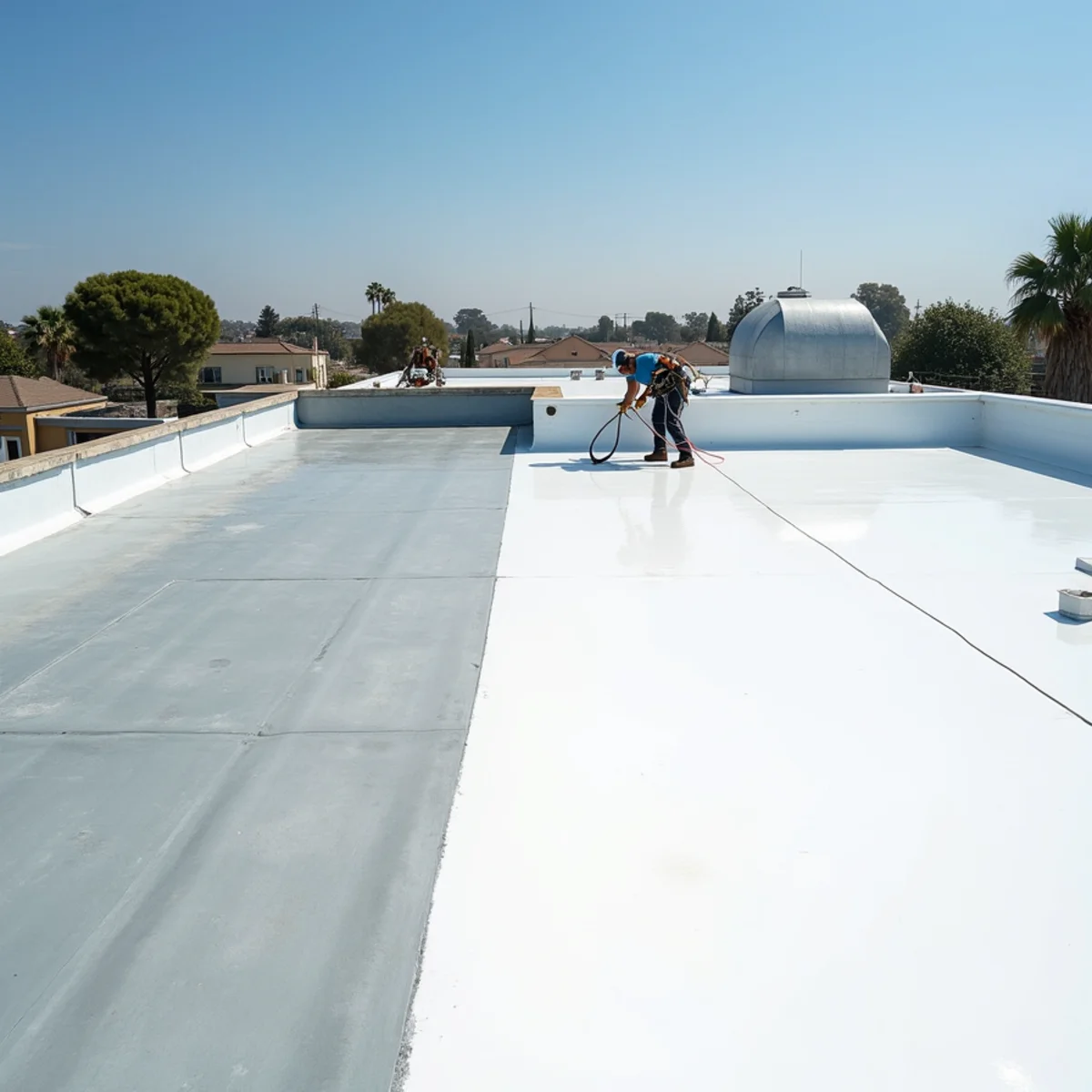
Roof coatings can restore and extend the life of a flat or low-slope roof that's still structurally sound. A reflective coating adds a protective, seamless layer that sheds water and reflects sunlight — useful on Oceanside commercial roofs where cooling costs and sun exposure matter.
Understanding roof coatings in Oceanside
If your Oceanside building carries a flat or low-slope roof that is showing its age but has not truly failed, a coating is often the smartest next move — and one of the most misunderstood. A roof coating is not paint, and it is not a patch. It is a liquid-applied membrane: a fluid that rolls or sprays on wet and cures into one continuous, flexible skin across the whole roof. Put on the right roof, it renews a worn surface, reflects the coastal sun, and can add years of service without the cost and upheaval of a full tear-off. Put on the wrong roof, it hides trouble instead of fixing it. The entire craft is telling those two roofs apart, and the sections below walk you through how we do it, what the materials are, and how to decide whether a coating actually fits your roof.
Why flat and low-slope roofs are the ones that get coated
Most of the buildings that benefit from coatings wear a low-slope roof — one with just enough pitch to nudge water toward drains, but nowhere near the angle of a house roof. Low-slope means the roof cannot count on steepness to shed rain, so it relies on a continuous waterproof membrane: a sealed skin of material stretched across the deck. The vulnerable line on any such roof is the seam, where two sheets of that membrane join. Seams, along with the flashing at edges and the spots where pipes and units pass through, are where flat roofs most often begin to leak as they age.
A coating answers that weakness directly. Because it is applied in one pass over everything, it cures into a monolithic surface with no new joints — it bridges the old seams rather than adding fresh ones. That is why coatings suit membranes, metal panels and built-up roofs, and why you rarely see them used to renew a steep tile or shingle roof, where water is shed by overlap and slope instead of by a sealed skin. If your roof is flat enough to walk comfortably and drains toward a few points, it is likely the kind of roof a coating was made for.
The main coating materials, and what each is good at
Coatings are sold as families of material rather than a single product, and the right one depends far more on your roof than on any sales sheet. In plain terms, these are the categories you are choosing among, along with an elastomeric — meaning stretchy — quality that lets a good coating move with the roof as it heats and cools:
- Acrylic coatings — water-based and highly reflective, they hold up well against sun and UV and are a sensible fit for a low-slope roof that drains cleanly. They are less at home where water tends to sit, because prolonged ponding can soften them over time.
- Silicone coatings — the usual pick where water lingers. Silicone shrugs off standing water and constant coastal dampness better than most, which matters on a roof with a stubborn low spot or heavy marine-layer moisture. The trade-offs are that its surface can hold dirt and grow slick, so it is chosen for its waterproofing, not its footing.
- Polyurethane coatings — the toughest against abrasion and foot traffic, which makes them a candidate on roofs people walk to service rooftop units, or in high-wear areas that take a beating.
- Spray polyurethane foam roofs — a foam roof itself is usually finished with a protective coating, and renewing that top coat before it wears through is a routine, expected part of owning one.
What the Oceanside coast asks of a low-slope roof
A roof here works two shifts. All day the sun bakes a flat surface with nowhere to hide, and every night the marine layer settles damp across it; layer in salt-laden air off the water and the daily hot-dry-to-cool-wet swing, and you have conditions that age a membrane faster than a drier inland climate would. Salt corrodes the metal flashing and fasteners at the edges. UV slowly hardens and shrinks some membranes until they pull tight and split. And because low-slope roofs drain slowly, ponding water gets more time to work on seams and soft spots.
That is where a reflective surface earns its keep. A light-colored coating bounces back a large share of the sunlight a dark roof would otherwise soak up — engineers measure this as solar reflectance index, or SRI, essentially how much sun a surface returns rather than absorbs. On a big, sun-exposed commercial roof, a cooler surface can mean a cooler building beneath it and less strain on air conditioning through the warm inland afternoons. California's energy code has steadily pushed many low-slope roofs toward these cool-roof surfaces for exactly that reason, so a reflective coating often lines up with where the code is already headed.
Which roofs can actually take a coating
Two questions decide whether a roof is coatable: what it is made of, and what shape it is in. On material, coatings are made to go over most common low-slope systems — single-ply membranes such as TPO and EPDM, modified bitumen, older built-up (tar-and-gravel) roofs, metal panels and spray-foam roofs — though each surface needs the right primer and preparation, and not every coating bonds to every substrate. Matching the coating to the existing roof is part of the job, not a detail to skip.
Condition is the harder gate, and it is non-negotiable. A good coating candidate is a roof that is watertight or very close to it, structurally solid, and — this is the one that catches people — dry underneath. A coating renews a surface; it cannot dry out a roof that has already taken water into its insulation or decking. Sealing wet insulation beneath a fresh skin simply traps the moisture and hides the rot while it spreads. Where access and conditions allow, an infrared or moisture scan is an available method that can flag damp areas under the membrane before we commit to coating over them, so the surface we renew is one worth renewing.
When a coating is right — and when it is the wrong tool
A coating is worth serious consideration when a flat or low-slope roof is aging on the surface but still sound below, when you want to extend its service life and hold off a full replacement, or when a reflective surface would help with heat on a sun-drenched building. On that kind of roof, a coating seals minor cracks and weathering, reinforces the weak points, reflects the sun, and buys real time at a fraction of the disruption of a tear-off.
It is the wrong tool when the roof is leaking in many places at once, when water has already gotten into the insulation and will not dry, or when the deck or structure below is failing. In those cases a coating only postpones the reckoning at added cost. This is exactly the moment you want a contractor willing to say no — we would rather turn down a coating that cannot last than take on work that leaves you worse off, so every coating we do starts with an honest look at whether the roof beneath is a candidate at all.
Coating versus full replacement: how to weigh it
For an owner or property manager, this is a budget decision as much as a building one. A restoration coating renews a serviceable roof from the top down — no tearing off the old system, far less debris, and usually less time with a building disrupted or partly closed. When the roof qualifies, that makes it one of the more cost-effective ways to get more years out of what you already own, and it can push a large capital replacement further down the road so it lands as a planned project rather than an emergency.
What a coating cannot do is substitute for replacement on a roof that has genuinely failed. If the membrane is broadly saturated, if the insulation is wet, or if you have already patched the same areas again and again, the running cost of chasing leaks usually argues for a new membrane or a full reroof instead. The right answer is whichever one protects the building for the least money over the years ahead — and that depends entirely on the roof you actually have, which is why the look comes before the recommendation.
How we prepare and apply a coating
The coating gets the attention, but the preparation is what decides whether it lasts. A coating is only ever as good as its bond to the roof and the repairs underneath it, and most of a well-run job is spent getting the surface ready before a drop of coating goes down. Here is what that work involves, step by step.
Inspect and check for hidden moisture
We start by confirming the roof is a candidate: sound structure, drainage that works, and — critically — no trapped water below the surface. This is where a moisture check matters most, because everything after it is wasted if we seal moisture in. If the roof is not ready for a coating, this is the stage where we say so plainly and talk through repair or replacement instead.
Clean and prepare the surface
A coating will not stick to years of grime, chalked-up old membrane or biological growth. The whole roof is cleaned so the coating bonds to the surface itself and not to the layer of dirt on top of it. On the coast that also means removing the salt residue and organic film that build up on a roof sitting under the marine layer.
Repair and reinforce the weak points
Splits, blisters and failed flashing get fixed before anything is coated over them, because a coating renews a surface — it does not repair a hole. Then the vulnerable details are reinforced: seams, drains, curbs and every penetration where movement and water concentrate are often embedded with a reinforcing fabric so the coating is thickest and strongest exactly where roofs fail first.
Prime and apply to the right thickness
With the right primer for the substrate down, the coating is rolled or sprayed across the roof — often in more than one pass — to build the thickness the material is designed to reach. That thickness, measured in mils, is what determines how the finished membrane performs and how long it lasts, so applying enough of it, evenly, is not a corner to cut. Coastal timing plays in here too: the surface has to be dry and the weather settled, which in the marine layer often means starting once the morning damp has burned off rather than at first light.
What to expect while the work happens
One of the quiet advantages of a coating is how much less it disrupts a working building than a tear-off does. There is no old roof being ripped up and hauled away over your tenants' heads, and many coating systems install without open flame and with far less odor than a torch-applied roof — which matters over an occupied restaurant, office or apartment. Where the roof allows, we work in sections and schedule around your hours so the building keeps running.
The trade-off is that coatings are weather-dependent. They need a dry surface and time to cure, so the schedule follows the coastal forecast — dry days, and enough warmth and airflow for the material to set. We will give you a realistic window for your roof rather than a promise the marine layer cannot keep, and we plan the work so the roof is protected at every stage rather than left open to a surprise shower.
A coated roof is not set-and-forget
It is worth being clear-eyed about this: a coating extends a roof, it does not make it maintenance-free. Drains still need to be kept clear so water moves off the roof, and the surface benefits from a periodic look to catch a lifted edge or a scuffed spot before it opens up. Over time the coating itself weathers, and the practical, expected way to keep the benefit going is to recoat before the existing layer wears through — a straightforward job that renews the surface again without ever getting back to bare roof.
Handled that way, a coating becomes part of a rhythm rather than a one-time fix, and that rhythm is what quietly stretches a roof's life. Roofs that get ignored after coating tend to give back the years the coating bought them; roofs that get a light, regular touch tend to keep them.
Common mistakes that cut a coating's life short
Most coating failures are not the coating's fault — they trace back to shortcuts in preparation or the wrong product for the roof. The ones we see most often are worth naming so you know what good work avoids:
- Coating over trapped moisture — the single most costly mistake, because it seals water into the roof instead of keeping it out.
- Skipping the surface prep — applying over a dirty or chalked roof, so the coating never truly bonds and starts letting go within a season or two.
- Choosing a product that cannot handle standing water on a roof that ponds, then watching it soften where water sits.
- Applying it too thin — spreading the material to cover more area than it should, which leaves a membrane that fails early.
- Ignoring the drainage — coating the surface while leaving the clogged drains and low spots that caused the wear in the first place.
Where a coating fits with the rest of your roof
A coating rarely stands entirely on its own. It pairs naturally with flat-roof repair, because the splits, seams and flashing get addressed first and the coating locks the whole surface in behind them. It fits inside a preventive-maintenance plan, where a documented survey tells you whether a roof is ready to coat or still has repair to do. And for many Oceanside commercial properties it is one option on a longer menu that runs from targeted repair to full replacement — the right one only when the roof underneath earns it.
That is the through-line on everything here: look first, explain what we find in plain terms, and recommend the coating only when it genuinely serves the building rather than the invoice. If you want a straight read on whether your flat or low-slope roof is a coating candidate, call (209) 758-8550 and we will walk you through it — including whether your money is better spent somewhere else.
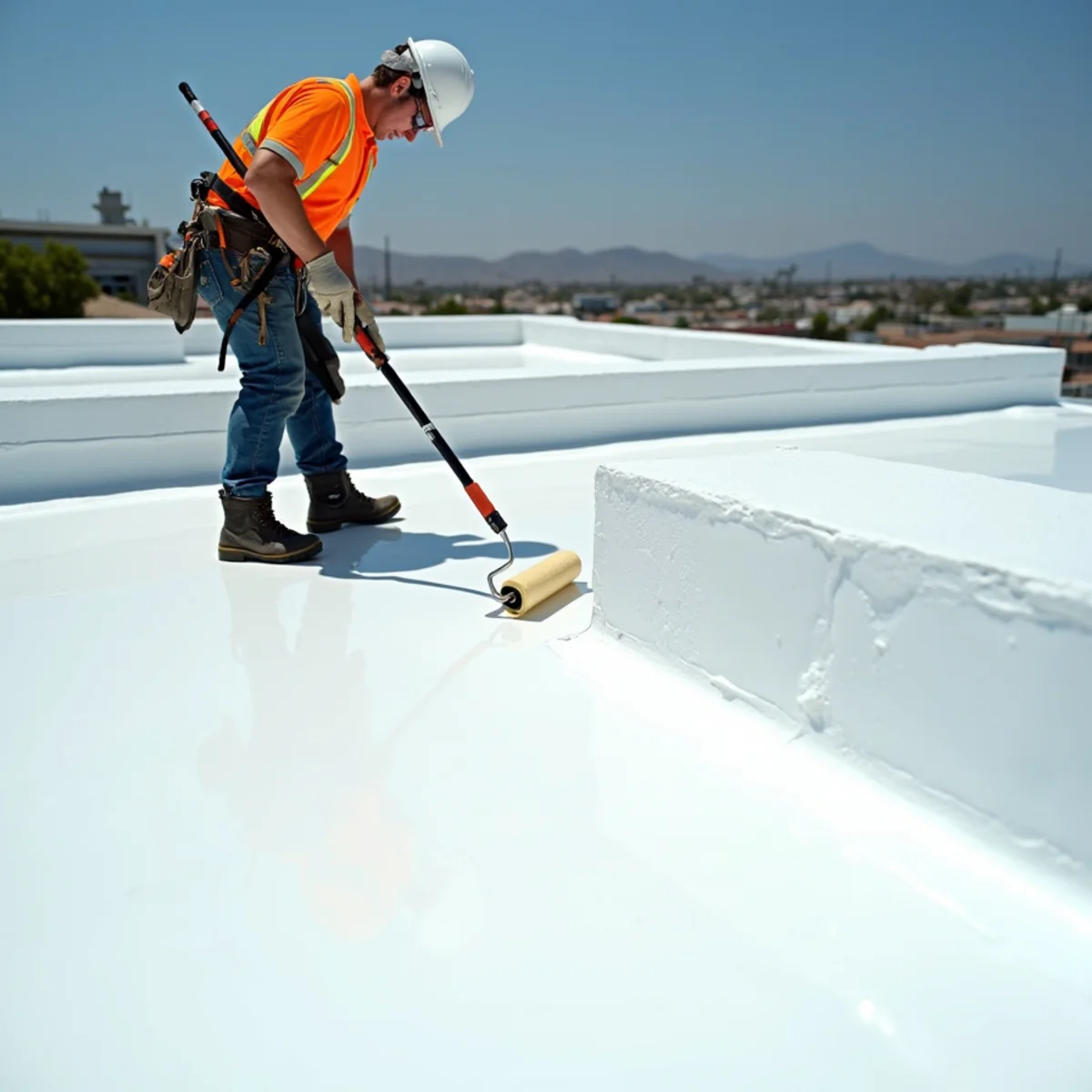
Signs you may need roof coatings
- A flat roof that's aging but not failed
- Minor leaks and surface wear on a low-slope roof
- High cooling costs from a dark, heat-absorbing roof
- A commercial roof you want to extend before replacement
What's included
- Assessment of whether the roof is a good coating candidate
- Surface preparation and repair of the substrate
- Application of a reflective coating system
- Detailing at seams, penetrations and edges
Our process
- 01
Evaluate
We confirm the roof is sound enough to coat rather than replace.
- 02
Prepare
We clean, repair and prepare the surface so the coating bonds properly.
- 03
Coat
We apply the coating system and detail the transitions and penetrations.
Materials commonly involved
- Reflective roof coating systems
- Primers and surface preparation materials
- Reinforcement at seams and details
Oceanside coastal considerations
- Reflective coatings can help manage heat on sun-exposed coastal commercial roofs.
- Coating is only appropriate on a roof that is still fundamentally sound — we'll tell you honestly if replacement is the better path.
What affects the scope of your project
- Roof condition and substrate
- Area and access
- Amount of prep and repair needed
Every roof is different. The best next step is a property-specific evaluation — we'll explain what we find in plain language and lay out practical options.
Frequently asked questions
A roof coating is a liquid that is rolled or sprayed onto an existing flat or low-slope roof and cures into one continuous, flexible waterproof skin. Because it goes on in a single pass, it forms a seamless surface that bridges the old seams where flat roofs most often leak, while reflecting sunlight and shielding the aging membrane underneath. It renews a sound roof rather than replacing a failed one.
It varies with the material used, how thick it is applied, the roof's condition and the coastal exposure, so no honest contractor can give you one fixed number for every roof. What is dependable is the pattern: a well-prepared coating adds years of service, and the practical way to keep the benefit going is to recoat before the existing layer wears through, which renews the surface again without a tear-off.
When a roof qualifies, yes — coating renews the surface without the labor, debris and disruption of tearing off the old system, so it is usually the more cost-effective way to get more years out of a sound roof. It is not a bargain, though, on a roof that has already failed; sealing over wet insulation or widespread damage just postpones a replacement at added cost.
Acrylic coatings are highly reflective and hold up well to sun and UV, which suits a low-slope roof that drains cleanly, but they are less at home where water pools. Silicone coatings resist standing water and constant coastal dampness better, so they are the usual choice on roofs with a stubborn low spot or heavy marine-layer moisture — though silicone can hold dirt and grow slick. The right one depends on your specific roof.
Only if the leaks are minor and the roof is still sound and dry underneath. A coating restores a surface and can seal small cracks and weathering, but it cannot fix a roof that has taken water into its insulation or decking. If moisture is trapped below the membrane, coating over it hides the damage while it spreads, so we check for hidden moisture before recommending a coating at all.
A light-colored reflective coating bounces back a large share of the sunlight a dark roof would otherwise absorb, which lowers the roof's temperature and can ease the load on air conditioning — most noticeably on a big, sun-exposed roof through warm inland afternoons. The exact savings depend on the building, the roof and how it is used, so we frame it as a real benefit rather than a guaranteed figure.
Coatings are made to go over most common low-slope systems — single-ply membranes such as TPO and EPDM, modified bitumen, older built-up tar-and-gravel roofs, metal panels and spray-foam roofs — each with the right primer and preparation. Steep tile and shingle roofs are generally not coated this way, since they shed water by slope and overlap rather than a sealed membrane.
Preparation is most of the job. The whole roof is cleaned so the coating bonds to the surface and not to years of grime, splits and failed flashing are repaired first, and the seams, drains and penetrations are reinforced where water concentrates. The surface then has to be genuinely dry before the primer and coating go down — which in the marine layer often means working later in the day once the morning damp has burned off.
Yes. A coating extends a roof, it does not make it maintenance-free. Drains still need clearing, the surface benefits from a periodic look to catch a lifted edge or scuff early, and over time the coating weathers and is meant to be recoated before it wears through. Roofs that get that light, regular attention tend to keep the years the coating bought them.
Related services
Relevant roof types
Next step
Discuss Roof Coatings in Oceanside
Tell us what you're seeing and we'll help you decide the sensible next step.