Loading…
Oceanside Neighborhoods
Roofing in Downtown Oceanside
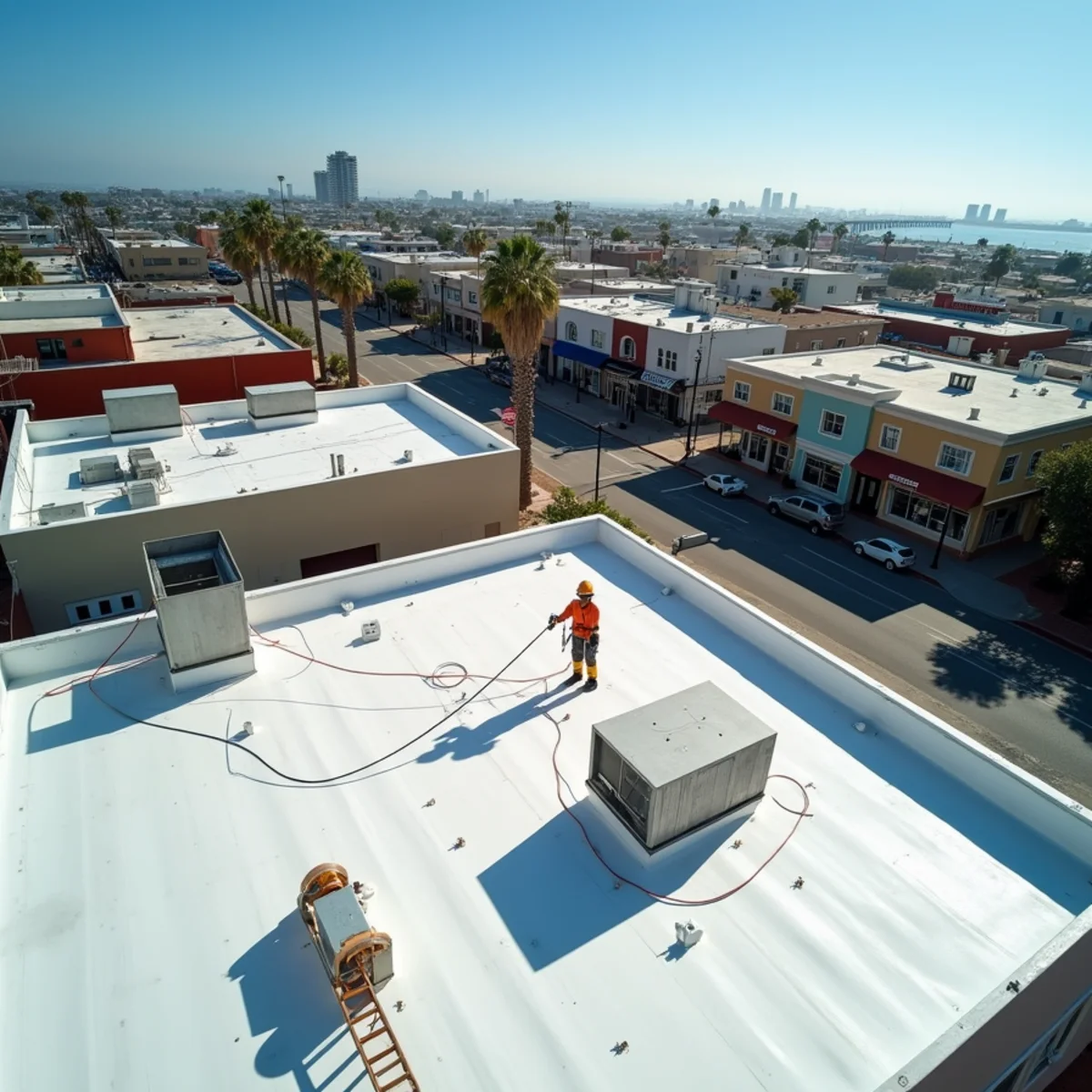
Downtown Oceanside blends residential, commercial and mixed-use buildings close to the coast. Roofing here spans pitched residential roofs and the flat, low-slope roofs common on commercial and multi-family properties — all facing significant coastal exposure.
Common property styles
Downtown Oceanside includes older homes, apartments, restaurants and retail buildings, with a high share of flat and low-slope commercial roofs alongside pitched residential ones.
Roofing materials you'll see here
- Flat and low-slope membranes (TPO, modified bitumen)
- Roof coatings
- Tile and shingle on residential buildings
Exposure considerations
Close to the ocean and the pier, downtown buildings face salt spray, moisture and constant sun. Corrosion-resistant components and proper drainage on flat roofs are especially important.
Maintenance guidance
Commercial and multi-family roofs downtown benefit from preventive maintenance, since salt spray and sun accelerate wear. Planned upkeep tends to cost less than reactive repairs.
Roofing Considerations Specific to Downtown Oceanside
Downtown Oceanside packs more kinds of roof into a few blocks than almost anywhere else in the city. Walk from the pier back toward the Coast Highway corridor and you pass early beach cottages, courtyard apartments, brick storefronts, busy-kitchen restaurants, and newer mixed-use blocks with shops below and homes above. Some of those roofs pitch and shed water the way most people picture a roof doing; many more are flat or low-slope, hidden behind parapet walls where the sidewalk never sees them. The two kinds age and fail in completely different ways, and they sit in one of the saltiest, sunniest pockets of Oceanside. Working out which kind covers your space — and what the coast is doing to it — is where every good roofing decision downtown starts.
A downtown built in many eras
Downtown's buildings span a century, and each era left a different roof behind. The older beach cottages and bungalows were built simply and re-covered more than once, so what looks like one roof is often layers of history stacked up. Mid-century courtyard apartments brought broad low-slope roofs tucked behind low parapet walls. The masonry storefronts along the commercial spine tend to hide flat, built-up roofs behind their facades. Newer mixed-use blocks carry large flat membrane fields crowded with equipment for the businesses and apartments below.
Knowing roughly when your building went up tells you a lot before anyone climbs a ladder. An older home may have aging underlayment — the water-resistant layer beneath the surface that does the real waterproofing — under a tired shingle or tile finish. A mid-century apartment may be on its second or third low-slope roof. None of that is a problem by itself; it just points to where the real questions are.
Coastal exposure a few blocks from the pier
Downtown sits close to the water without being right on it, and that middle ground shapes everything. The marine layer — the low morning cloud and damp that rolls in off the ocean — keeps roof surfaces wet well into the day, and the afternoon onshore breeze carries salt inland. It is not the direct spray you get at the harbor's edge, but it is steady and works on a roof year-round. Salt goes after the metal first: the fasteners (the nails and screws holding things down) and the flashing (the metal seals at a roof's joints, edges and penetrations). Sun and heat then dry out sealants and age membranes and shingles from above. So material choices downtown lean toward corrosion-resistant metals and surfaces built to take constant ultraviolet. It is gentler than the harbor but harsher than the inland neighborhoods a few miles east — worth remembering when you compare notes with a friend whose roof sits in drier, hotter air.
Flat and low-slope roofs, the downtown workhorse
So much of downtown is flat or low-slope that these roofs deserve their own explanation. A pitched roof sheds water by angle — gravity does the work. A flat roof has almost no angle to rely on, so it depends on two things instead: a continuous waterproof membrane across the whole surface, and a drainage plan that actually moves water off the building. That membrane might be a single-ply sheet, a multi-layer modified-bitumen system, an older built-up roof of layered felt and asphalt, or an existing roof renewed with a fluid-applied coating. They differ in the details but share one job — form an unbroken skin over the building.
That changes what goes wrong. Instead of a slipped tile, the trouble shows up as ponding (water sitting in a low spot instead of draining), seams that have pulled apart, blisters where moisture is trapped under the membrane, and flashing worn at the edges. Many downtown flat roofs are ringed by parapet walls, and the metal coping on top of them is a common place for leaks to start.
Why drainage decides a flat roof's life
On a flat roof, drainage is not a detail — it is the whole game. Water leaves through internal drains or through scuppers (openings that let it escape through a parapet wall), and a well-built roof is gently tapered so water runs toward them instead of pooling. When a drain clogs with leaves, grit or bird debris, water backs up and sits — and standing water plus salt plus all-day sun is about the hardest thing you can ask a membrane to take. Keeping drains and scuppers clear is the cheapest, highest-value habit an owner can keep downtown. A slow-draining corner today is often next winter's interior leak.
Restaurants, rooftop equipment and the penetration problem
Downtown's restaurants and shops put a lot of hardware on their roofs, and every piece of it is a hole through the waterproof surface that has to stay sealed. Kitchen exhaust fans, grease ducts, air-conditioning units, refrigeration lines, plumbing vents and roof hatches all penetrate the membrane, and each one is a place water can find its way in as seals age. Restaurant roofs carry an extra wrinkle: grease from kitchen exhaust settles on the surrounding membrane and can break some materials down over time, so grease containment around the exhaust and a bit more attention there pay off. On a busy block, it is usually these penetrations — not the open field of the roof — where the leaks actually begin.
The pitched residential and small-apartment side
Turn onto the residential streets and the roofs change character. Older downtown homes tend to wear shingle or tile, and smaller apartment buildings mix pitched roofs with low-slope sections tucked behind. The issues owners run into here echo the rest of coastal Oceanside: underlayment that has aged beneath a surface that still looks fine from the street, fasteners and flashing that were never chosen for salt air and have started to corrode, and attic ventilation that has quietly stopped doing its job. The fixes are familiar — corrosion-resistant fasteners and flashing, quality underlayment beneath the shingle or tile, and enough ventilation to let the roof breathe. The building may be small, but the coast treats it the same as the shop next door.
Ventilation, cool roofs and the energy code
Heat matters downtown in two ways. On pitched residential roofs, balanced attic ventilation — air flowing in low and out high — lets built-up heat and moisture escape, which helps the roof last and keeps the rooms below more comfortable. On the flat roofs over shops and apartments, a light-colored or reflective surface (often called a cool roof) bounces away a good share of the sun's heat instead of letting it soak into the building, which can ease the load on air conditioning for the spaces underneath. There is a code angle too: California's energy standards, known as Title 24, can require a reflective or cool-roof surface on certain re-roofing projects. Whether it applies depends on your building and the scope of the work, so it is worth confirming before you settle on a material.
Mixed-use means sorting out who owns the roof
One thing that catches downtown owners off guard is figuring out who is actually responsible for the roof. In a mixed-use building with shops below and homes above, or in a condo arrangement, the roof is often shared — so a repair or replacement may involve a homeowners association, a property manager, or the terms of a commercial lease rather than a single owner acting alone. On a leased storefront, whether the landlord or the tenant handles the roof is spelled out in the lease, and it is worth knowing before a leak forces the question. Downtown has also seen considerable redevelopment over the years, so certain visible or exterior changes can come with design considerations. Sorting out responsibility and any review requirements early keeps a roofing project from stalling halfway through.
What downtown owners commonly run into
Across those different buildings, a handful of issues come up again and again downtown.
- Ponding water over a clogged internal drain or scupper — often the first step toward an interior leak.
- Seams and flashing that have separated or worn, especially around rooftop equipment and along parapet walls.
- Corroded fasteners and flashing on both flat and pitched roofs, courtesy of steady salt air.
- Membrane near restaurant kitchen exhaust broken down by grease and heat.
- Gulls and other birds nesting or dropping debris that blocks drains — a very real coastal-downtown problem.
- Aging underlayment beneath shingle or tile on older homes, well before the surface looks worn.
- Blisters and soft spots where moisture has worked its way into an older flat-roof assembly.
Preventive maintenance for downtown businesses
For the flat commercial and multi-family roofs that cover so much of downtown, a preventive rhythm almost always costs less over time than waiting for a leak. A twice-a-year look — plus a check after any big storm — catches the small things while they are cheap: clearing drains and scuppers, resealing tired penetrations, touching up worn flashing, and renewing a coating before the membrane underneath is compromised. Salt and sun age a roof quietly, so the failures that blindside a business are usually the ones nobody was watching for. For an occupied shop or restaurant, that upkeep can be planned in sections and scheduled around business hours, so the doors stay open while the work gets done. A little documentation of the roof's condition each visit also gives an owner or property manager something real to budget from.
Repair, recoat or replace?
When something is wrong, the question downtown is usually whether to repair a spot, renew the whole surface with a coating, or tear off and replace. A localized leak on an otherwise sound roof is often a straightforward repair. A flat roof that is broadly worn but still structurally solid can sometimes be extended with a fluid-applied coating that forms a fresh, reflective skin over the old one — less disruptive and less costly than a full tear-off. But when a roof has trapped moisture, failed seams across the field, or a deck that has softened underneath, replacement is the honest answer, because a coating over a wet or failing roof only hides the problem. The right call depends on what an inspection actually finds, not a rule of thumb. We will look carefully, explain what we see in plain language, and lay out the options without a pitch.
Planning a roofing project downtown
A few practical notes make downtown projects go smoother. Because so many roofs sit over occupied businesses and homes, timing and access matter — coordinating with tenants, property managers or an association early avoids surprises later. Most re-roofs, tear-offs and structural repairs require a permit, and downtown's mix of commercial and residential buildings means the requirements can vary by property, so it is worth confirming the specifics with the City of Oceanside before work begins. Whatever covers your space, the approach is the same: figure out which world your roof belongs to, understand what the coast is doing to it, and make a plan that fits the building and the budget. We will walk you through what we find and what it means, so there are no surprises once the work starts.
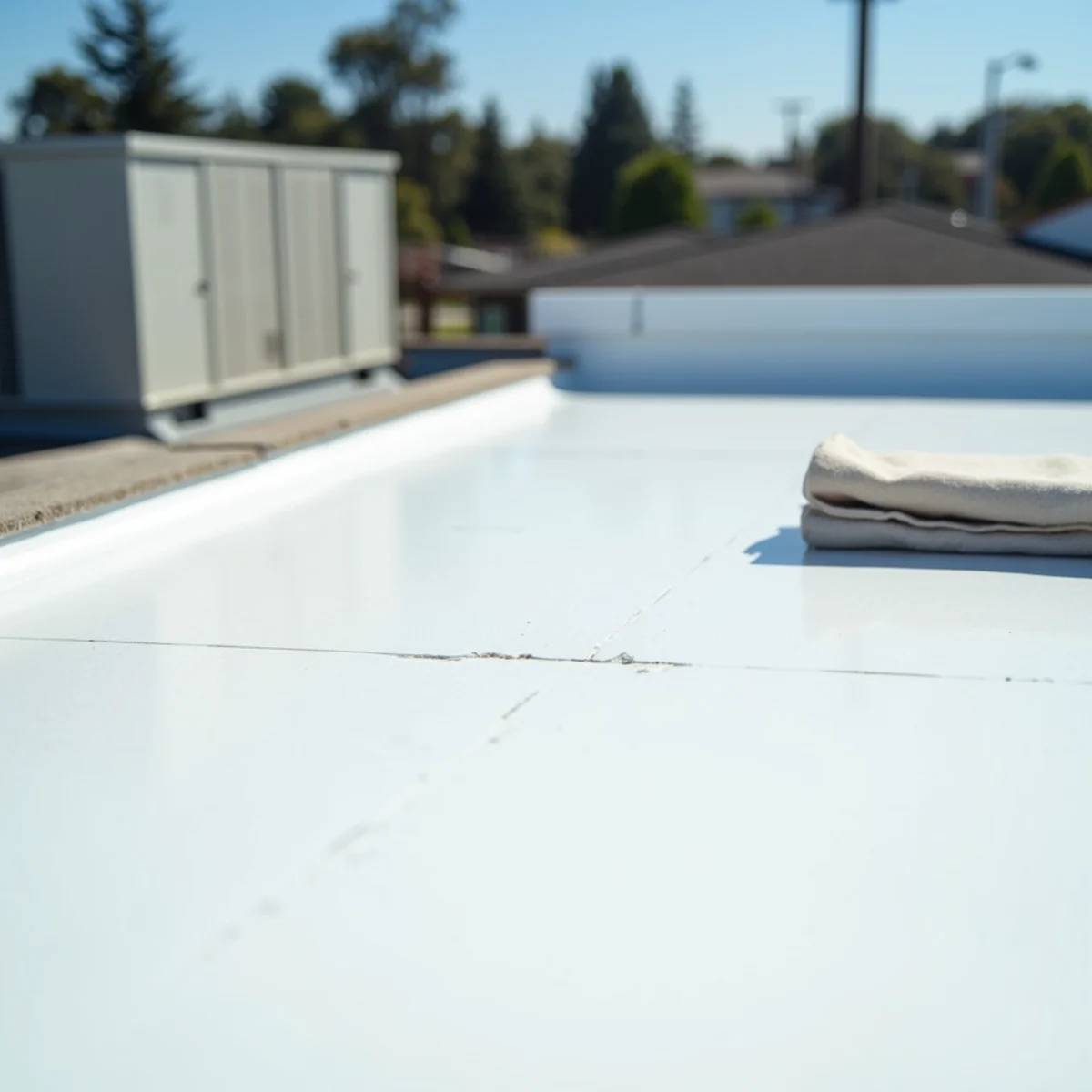
Not sure where your roof stands?
Try the Roof Condition Assessment for a quick, general read — it doesn't replace an on-site inspection.
Frequently asked questions
Downtown has a high share of commercial, retail and mixed-use buildings, and those tend to be built with flat or low-slope roofs rather than pitched ones. You will still find pitched roofs on the older homes and some small apartments, but much of the district is covered by flat roofs hidden behind parapet walls.
Usually it is water that cannot drain — ponding over a clogged drain or scupper — along with separated seams and worn flashing around rooftop equipment. On restaurant roofs, grease from kitchen exhaust can add to the wear near the vents. Keeping drains clear prevents a lot of it.
The steady salt air corrodes metal fasteners and flashing, and the all-day sun ages surfaces from above, so corrosion-resistant metals and surfaces built for constant ultraviolet make sense here. It is a gentler environment than the harbor's edge but harsher than the inland neighborhoods a few miles east.
Sometimes. If the roof is broadly worn but still structurally sound and dry, a fluid-applied coating can renew the surface and buy real time. But if there is trapped moisture, failed seams across the field, or a softened deck, a coating only hides the problem and replacement is the honest answer. An inspection tells you which situation you are in.
Most re-roofs, tear-offs and structural repairs do, and downtown's mix of commercial and residential buildings means the requirements can vary by property. It is best to confirm the specifics with the City of Oceanside before work begins.
It is often shared. Depending on how the building is set up, a repair or replacement may involve a homeowners association, a property manager, or the terms of a commercial lease rather than a single owner acting alone. It helps to sort out who is responsible before planning any work.
A preventive rhythm — roughly twice a year, plus a check after any big storm — tends to cost less over time than waiting for a leak. Keeping drains and scuppers clear between visits is the single most valuable habit for a flat roof in this coastal setting.
They can be. A reflective, light-colored cool-roof surface helps a flat roof shed heat, which can ease air-conditioning load for the spaces below. California's energy code, Title 24, can also require a reflective surface on certain re-roofing projects, so it is worth confirming what applies to your building.
Relevant services
Nearby Oceanside areas
Downtown Oceanside
Roofing Help in Downtown Oceanside
Tell us what you're seeing and we'll help you take the next sensible step.